
Andere Kunden interessierten sich auch für
 The Unknown Peace Agreement19,90 €
 Writings on the State and International Relations53,99 €
 Chernobyl Liquidators. The Unknown Story47,55 €
 The Labour Party and the 2023 General Elections in Nigeria29,99 €
 The Contemporary State36,99 €
 Financial Engineering in Sustainable Funding of Urban Development in the EU15,99 €
") The Transformations of the Venezuelan Electoral System (1958/2010)36,99 €
The Transformations of the Venezuelan Electoral System (1958/2010)36,99 €

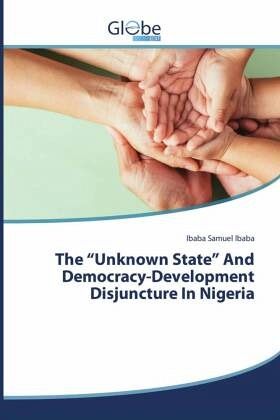
This book examines the democracy-development disjuncture in Nigeria. Anchored in a political economy framework, and thematic approach, the book explains this contradiction with the innovative conceptualisation of the "unknown state"; synthesized from dysfunctional state concepts such as the failed State, collapsed State, virtual State, shadow state, rotten State, and fragile State; and consolidated with terminologies such as "absentee father" "ghost worker", "unknown gunmen", "unknown soldier", and "unknown government". It argues that development failure under democracy is a logical outcome of a political economy of dysfunction created by an interactive relationship between the "Unknown State", "Banqueting Table Politics," "Banqueting Political Class", and "Patrimonial Ethnic Citizenry", which has entrenched anti-developmental practice and behavior.