
Andere Kunden interessierten sich auch für
 The Vanishing Race: The Last Great Indian Council; a Record in Picture and Story ..., Participated in by Eminent Indian Chiefs From Nearly22,99 €
 The Chicago Race Riots15,99 €
 The Negro in Chicago32,99 €
 Eleazer Williams Not the Dauphin of France: A Lecture Read Before the Chicago Historical Society December 4, 190214,99 €
 The Diary of James K. Polk During His Presidency, 1845 to 1849: Now First Printed From the Original Manuscript in the Collections of the Chicago Histo26,99 €
 On Vanishing13,99 €
 The Vanishing Generation14,99 €







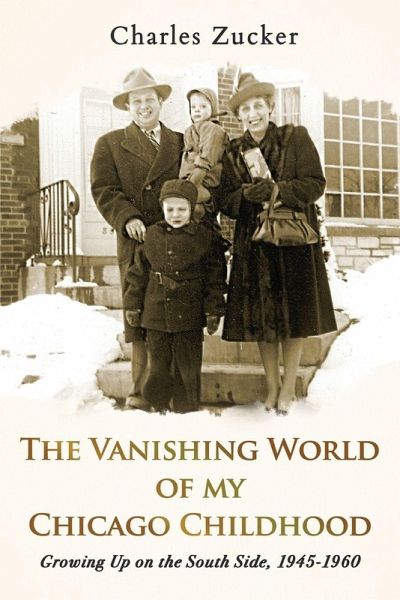
"In the modern world we have invented ways of speeding up invention, and people's lives change so fast that a person is born into one kind of world, grows up in another, and by the time his children are growing up, lives in still a different world." -Margaret Mead, People and Places (Cleveland and New York: The World Publishing Company, 1959) The Vanishing World of My Chicago Childhood is a delightful memoir of growing up in Chicago in the 1950s-but it is much more than that. The author argues that childhood has changed dramatically over the last seventy years-and not for the better. Zucker and his neighborhood pals played games outside almost constantly when the weather permitted. Sixteen-inch softball, basketball, touch football, marbles, kick-the-can, and yo-yos were among their favorites. They also constructed their own soapbox cars, built miniature golf courses, chased butterflies, hunted snakes, camped overnight in vacant lots, and shot bows-and-arrows. When bad weather forced the kids indoors, they played a wide variety of board games, listened to music, and read books. In contrast, the author observes that children today often spend hours indoors playing electronic games on phones, computers, or TVs, leaving them with little time for outdoor play. The author notes, however, that the infotainment revolution-and the roots of modern American childhood-began when he was a kid. In the 1950s, American families began purchasing television sets en masse. Although he admits that American families-including his own-enjoyed watching television, he believes its arrival in American homes marked the beginning of a growing social isolation that has had profound consequences for both children and adults. As a result, the childhood and the world that Zucker experienced growing up on the South Side of Chicago have largely vanished today.