
Andere Kunden interessierten sich auch für
 The Very Long Game30,99 €
 Unit X16,99 €
 Economic Warfare in the 21st Century107,99 €
 Disruptive and Game Changing Technologies in Modern Warfare106,99 €
 Disruptive and Game Changing Technologies in Modern Warfare106,99 €
 European Participation in International Operations83,99 €
 The US-China Military and Defense Relationship during the Obama Presidency106,99 €
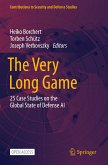
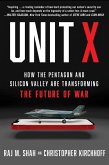
This open access book is the outcome of a unique multinational effort organized by the Hamburg-based Defense AI Observatory (DAIO) to portray the current state of affairs regarding the use of artificial intelligence (AI) by armed forces around the world. The contributions span a diverse range of geostrategic contexts by providing in-depth case studies on Australia, Canada, China, Denmark, Estonia, Finland, France, Germany, Greece, India, Iran, Israel, Italy, Japan, the Netherlands, Russia, Singapore, South Korea, Spain, Sweden, Taiwan, Turkey, Ukraine, the UK, and the United States. The book does not speculate about the future implications of AI on armed forces, but rather discusses how armed forces are currently exploring the potential of this emerging technology. By adopting a uniform analytical framework, each case study discusses how armed forces view defense AI; how they are developing AI-enhanced solutions, adapting existing structures and processes, and funding their defense AI endeavors; to what extent defense AI is already fielded and operated; and how soldiers and officers are being trained to work with AI.
This is the most comprehensive analysis of its type to date, representing a valuable resource for defence policymakers, industry and innovation units seeking to make sense of and accelerate the adoption of evolving global military AI landscapes. The Very Long Game outlines the contemporary applications of AI in the military. The sociotechnical approaches that connect practitioners and AI models with established systems of control remain an open and evolving challenge for militaries globally. (Callum Hamilton and Adam J Hepworth, Australian Army Journal, researchcentre.army.gov.au, Vol. 21 (3), 2025)