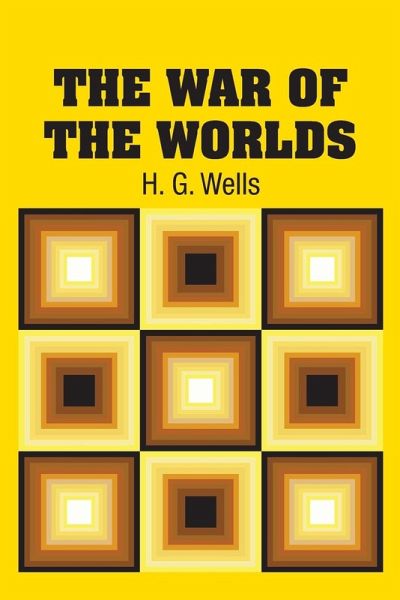
A remastered printing of H.G. Well's classic The War of the Worlds The Emotion Recognition Visualization (ERV) series contains volumes of literary masterpieces reprinted in full, then bound with deeply meaningful art. This volume of "The War of the Worlds" offers a visualized glimpse into the emotional landscape of the novel. The text of this literary classic was analyzed using machine learning and natural language processing techniques. The research returned data containing a happiness ranking for every word in each chapter. That information was formed into the art on the cover of this novel,…mehr
A remastered printing of H.G. Well's classic The War of the Worlds The Emotion Recognition Visualization (ERV) series contains volumes of literary masterpieces reprinted in full, then bound with deeply meaningful art. This volume of "The War of the Worlds" offers a visualized glimpse into the emotional landscape of the novel. The text of this literary classic was analyzed using machine learning and natural language processing techniques. The research returned data containing a happiness ranking for every word in each chapter. That information was formed into the art on the cover of this novel, as well as on the interior pages (printed in full color). More information about the methods used and a list of other volumes in this series can be found at https: //tiffanyfrance.com/ml-books/ A portion of the proceeds from the sale of the volumes in the ERV series will be donated to Project Gutenberg in support of their mission.
H.G. Wells, born on September 21, 1866, in Bromley, England, became one of the most influential English writers of the late 19th and early 20th centuries. Often referred to as the "father of science fiction," his works like The War of the Worlds (1898) and The Time Machine (1895) introduced pioneering ideas about time travel, alien invasions, and humanity's future. His writings often tackled social issues, including class inequality, technology, and human progress, blending adventure with philosophical exploration.Wells studied biology at the Normal School of Science in London under Thomas Henry Huxley and worked as a teacher before turning to writing. His early novels were shaped by scientific advancements and often warned of the potential dangers of unchecked experimentation. Works like The Invisible Man (1897) and The Island of Doctor Moreau (1896) explored the moral and ethical consequences of science, while his utopian writings envisioned a more ideal future.Beyond fiction, Wells was an outspoken political activist, advocating for social reforms and global peace. He critiqued capitalism and imperialism in works like The Shape of Things to Come (1933), outlining his vision for a world government. Despite some political setbacks, Wells continued to shape literature and political thought, leaving a legacy that still influences science fiction and speculative writing today.
Es gelten unsere Allgemeinen Geschäftsbedingungen: www.buecher.de/agb
Impressum
www.buecher.de ist ein Internetauftritt der buecher.de internetstores GmbH
Geschäftsführung: Monica Sawhney | Roland Kölbl | Günter Hilger
Sitz der Gesellschaft: Batheyer Straße 115 - 117, 58099 Hagen
Postanschrift: Bürgermeister-Wegele-Str. 12, 86167 Augsburg
Amtsgericht Hagen HRB 13257
Steuernummer: 321/5800/1497
USt-IdNr: DE450055826