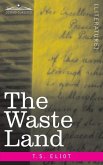
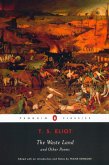
The Waste Land is a profound poem that examines the fragmented and disillusioned state of the world after World War I. Through its innovative structure and multiple voices, it captures the despair, decay, and alienation of post-war society, weaving together cultural references, myths, and allusions. The poem delves deeply into human experience, portraying the struggle between destruction and rebirth, hope and despair. It contrasts the harshness of spring with the comfort of winter, symbolizing the conflicting forces of renewal and stagnation. Various characters, from a disenchanted typist to…mehr
The Waste Land is a profound poem that examines the fragmented and disillusioned state of the world after World War I. Through its innovative structure and multiple voices, it captures the despair, decay, and alienation of post-war society, weaving together cultural references, myths, and allusions. The poem delves deeply into human experience, portraying the struggle between destruction and rebirth, hope and despair. It contrasts the harshness of spring with the comfort of winter, symbolizing the conflicting forces of renewal and stagnation. Various characters, from a disenchanted typist to the blind seer Tiresias, represent the alienation and confusion in modern life, revealing a world fractured by war and devoid of meaning. As the poem progresses, it suggests that despite the overwhelming sense of fragmentation, there remains a possibility for spiritual redemption and emotional connection. The final sections emphasize the importance of compassion, understanding, and human connection in overcoming the chaos of a broken world. Through its use of language, form, and imagery, The Waste Land remains a seminal work that has had a lasting impact on literature, offering profound insight into the modern human condition.
Thomas Stearns Eliot, (1888 - 1965) was a British essayist, publisher, playwright, literary and social critic and "one of the twentieth century's major poets". He moved from his native United States to England in 1914 at the age of 25, settling, working and marrying there. He eventually became a British subject in 1927 at the age of 39, renouncing his American citizenship. Eliot attracted widespread attention for his poem "The Love Song of J. Alfred Prufrock" (1915), which was seen as a masterpiece of the Modernist movement. It was followed by some of the best-known poems in the English language, including "The Waste Land" (1922), "The Hollow Men" (1925), "Ash Wednesday" (1930), and "Four Quartets" (1943). He was also known for his seven plays, particularly "Murder in the Cathedral" (1935) and "The Cocktail Party" (1949). He was awarded the Nobel Prize in Literature in 1948, "for his outstanding, pioneer contribution to present-day poetry".
Es gelten unsere Allgemeinen Geschäftsbedingungen: www.buecher.de/agb
Impressum
www.buecher.de ist ein Internetauftritt der buecher.de internetstores GmbH
Geschäftsführung: Monica Sawhney | Roland Kölbl | Günter Hilger
Sitz der Gesellschaft: Batheyer Straße 115 - 117, 58099 Hagen
Postanschrift: Bürgermeister-Wegele-Str. 12, 86167 Augsburg
Amtsgericht Hagen HRB 13257
Steuernummer: 321/5800/1497
USt-IdNr: DE450055826