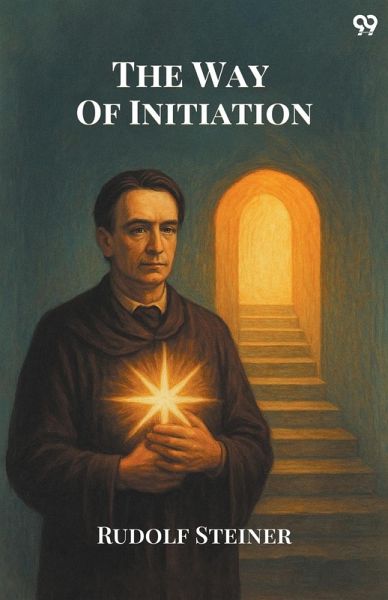
The way of initiation or how to attain knowledge of the higher worlds examines the potential for inner transformation through disciplined spiritual practice. It presents a structured path toward heightened perception, suggesting that individuals possess dormant capacities that, when cultivated, allow for access to dimensions beyond the material. The work emphasizes personal responsibility in developing awareness, highlighting the role of intentional stillness, attentiveness, and reverence. It explores the contrast between modern skepticism and ancient insights, positioning spiritual experience…mehr
The way of initiation or how to attain knowledge of the higher worlds examines the potential for inner transformation through disciplined spiritual practice. It presents a structured path toward heightened perception, suggesting that individuals possess dormant capacities that, when cultivated, allow for access to dimensions beyond the material. The work emphasizes personal responsibility in developing awareness, highlighting the role of intentional stillness, attentiveness, and reverence. It explores the contrast between modern skepticism and ancient insights, positioning spiritual experience as a counter to intellectual doubt. The narrative suggests that contemporary life, with its emphasis on external knowledge, often obscures the path to deeper understanding. By turning inward, individuals can awaken faculties attuned to the nonphysical, enabling perception of subtle realities. The emphasis on reverent contemplation and the quieting of the self underscores the belief that true knowledge arises from a purified inner life. Rather than offering quick revelation, the book outlines a patient unfolding of awareness rooted in effort, humility, and devotion. It challenges readers to reconsider the boundaries of perception and to undertake a personal journey toward insight that transcends ordinary experience.
Rudolf Joseph Lorenz Steiner was born in 1861 to Johann Steiner and Franziska Blie. He emerged as a prominent figure in philosophy, spirituality, and cultural renewal during the late 19th and early 20th centuries. Initially recognized for his scholarly work on GOETHE, Steiner s intellectual journey gradually shifted toward metaphysical and esoteric inquiries. His early education at the Vienna University of Technology and later studies at the University of Rostock provided a strong foundation in science and philosophy, which he later integrated into his spiritual explorations. He claimed the existence of clairvoyant abilities and developed a system of knowledge he called spiritual science, aiming to bridge the material and spiritual worlds. Steiner s teachings influenced a range of fields, including education, medicine, agriculture, and architecture. He founded the anthroposophical movement, which sought to apply spiritual understanding to practical life. His architectural legacy includes the Goetheanum, a center for cultural and spiritual activities. Although he attracted both admiration and criticism, his commitment to fostering human development through inner knowledge and social responsibility left a lasting impact. Steiner died in 1925 in Switzerland, leaving behind a substantial body of work that continues to inspire alternative approaches to learning, healing, and spiritual inquiry.
Es gelten unsere Allgemeinen Geschäftsbedingungen: www.buecher.de/agb
Impressum
www.buecher.de ist ein Internetauftritt der buecher.de internetstores GmbH
Geschäftsführung: Monica Sawhney | Roland Kölbl | Günter Hilger
Sitz der Gesellschaft: Batheyer Straße 115 - 117, 58099 Hagen
Postanschrift: Bürgermeister-Wegele-Str. 12, 86167 Augsburg
Amtsgericht Hagen HRB 13257
Steuernummer: 321/5800/1497
USt-IdNr: DE450055826