

Andere Kunden interessierten sich auch für
 The Works of the Rev. Hugh Binning; Volume 241,99 €
 The Works of the Rev. Hugh Binning; Volume 146,99 €
 The Works of William Perkins, Volume 1036,99 €
 In the Shadow of the Rock22,99 €
 The Shorter Writings of George Gillespie, Volume 136,99 €
 The Excellencies of God22,99 €
 The Works of William Perkins, Volume 936,99 €
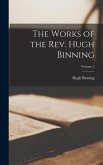
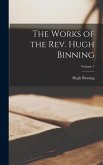
Hugh Binning (1627-1653) lived at a time when politics and religion were inexorably intertwined. Binning trained as a Philosopher - believing that philosophy was the servant of theology but that both should be taught in parallel. Binning's writing forms an important bridge between the 17th century, when philosophy in Scotland was heavily dominated by Calvinism, and the 18th century when there was a greater degree of independence between theology and allied philosophy. Of his speaking style, it was said: "There is originality without any affectation, a rich imagination, without anything fanciful or extravert, the utmost simplicity, without a thing mean or trifling." - The Religious Magazine, 1830 Table of Contents: Preface by the Editor The Life of Mr. Hugh Binning 1. The Common Principles of the Christian Religion 2. The Sinner's Sanctuary 3. Fellowship with God 4. Heart Humiliation 5. A Useful Case of Conscience 6. A Treatise of Christian Love 7. Sermons on the Most Important Subjects of Practical Religion