A research-based instructional approach that cultivates critical thinking, empathy, and inquiry through collaborative environmental and societal modeling. In The Worldbuilding Workshop, Trent Hergenrader and Stephen Slota explore collaborative worldbuilding as an educational tool for deconstructing and analyzing the planet’s most urgent, relevant, and mind-boggling questions. Their process unfolds across six stages configured to promote learner reflection on governmental, economic, social, and cultural forces. They look at how different people experience these forces under different…mehr
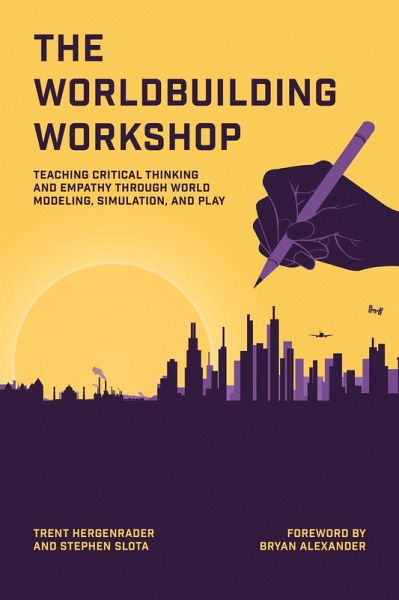
A research-based instructional approach that cultivates critical thinking, empathy, and inquiry through collaborative environmental and societal modeling. In The Worldbuilding Workshop, Trent Hergenrader and Stephen Slota explore collaborative worldbuilding as an educational tool for deconstructing and analyzing the planet’s most urgent, relevant, and mind-boggling questions. Their process unfolds across six stages configured to promote learner reflection on governmental, economic, social, and cultural forces. They look at how different people experience these forces under different socioeconomic and sociocultural conditions and what each of us can do to effectuate change in our shared reality. The book details the relationship between worldbuilding and contemporary learning theories; methods by which instructors and learners can co-develop accurate representations of various worlds; and how simulation and role-play activities can be applied to support learner discovery and creativity.
Trent Hergenrader and Stephen Slota; foreword by Bryan Alexander
Inhaltsangabe
Contents Foreword Acknowledgments Prologue Part I: Foundation 1. Around the World in 300 Pages A Simple Cup of Coffee Complexity, Generalizations, and Stereotypes Critical Thinking and Empathy What is Worldbuilding (and What Can We Do With It)? 2. Road to Contemporary Learning Theory Where Did You Come From, Where Did You Go? One Fateful Day Roots of Educational Psychology The Learning Theorists The Information Age and BeyondS ituating Cognition What About Worldbuilding? Onward and Upward 3. Theory to Practice Targeting Transfer Welcome to Pripyat Philosophy and Psychology Introducing ADDIE Designing Instruction A Theory of Worldbuilding Pulling It All Together What’s Next? 4. Collaboration and Community Identity, Positioning, and Social Constructivism Of Termites and Men Communities of Practice CoPs for the Classroom From Here to There 5. Assessment Alphanumeric Grading Standards-Based Assessment Ungrading Feedback Scaling Assessment On the Horizon Part II: Concepts 6. Worlds in Space and Time Scope: Worlds in Space Sequence: Worlds in Time Macro and Micro 7. Structures and Substructures Governance Economics Social Relations Cultural Influences Synthesis Social Forces In Closing 8. Examining Life-Worlds Through Demographics Nominal and Quantitative Descriptions Narrative and Qualitative Descriptions Essentialisms, Stereotypes, and Drawing Wrong Conclusions Using Demographics to Explore Lived Experiences Someone Else’s Shoes 9. Class Preparations Developing Your Project Overview Stage One: Project Purpose and Length Stage Two: Scheduling Primary and Secondary Sources Unlearn What You Have Learned Wikipedia as a Source of Information Stage Three: Introducing the Project Preparations Complete 10. Wikipedia as a Model for Worldbuilding Getting Started Organizing Entries Wiki Management Part III: World Modeling 11. Constructing the World Narrative Charting Complexity Quantitative Approaches to Modeling Worlds Qualitative Approaches to Modeling Worlds Drafting the World Metanarrative 12. Cataloging People, Places, and Things How Many Entries? Entries for People Entries for Places Entries for Things Groups, Events, and Other Types of Entries You've Got a World... Now What? 13. Simulations The Sims Simulations for Worldbuilding Social and Environmental Changes on a Timeline Black Swan Events Wicked Problems Simulations in the Classroom 14. Role-Play A Cautionary Tale Role-Playing Perspectives The Worlds of El Cid Consequences for Actions Successes and Failures Using Role-Play to Virtually Experience Worlds 15 Wrap-Up and Critical Reflection Large-Group Debriefing Self-Accounting Peer Evaluation Big, Messy Affairs Epilogue: Notes from the End of the World Part IV: Case Studies Case Study IHistory - Eric Morgan Case Study IIBritish Literature - Luke Strohm Case Study IIIPhilosophy - Rebecca Scott Case Study IVPhysics - Tori Wagner Case Study VHonors - Wendi Sierra Case Study VILabor Stories - Ching-In Chen Notes Index
Contents Foreword Acknowledgments Prologue Part I: Foundation 1. Around the World in 300 Pages A Simple Cup of Coffee Complexity, Generalizations, and Stereotypes Critical Thinking and Empathy What is Worldbuilding (and What Can We Do With It)? 2. Road to Contemporary Learning Theory Where Did You Come From, Where Did You Go? One Fateful Day Roots of Educational Psychology The Learning Theorists The Information Age and BeyondS ituating Cognition What About Worldbuilding? Onward and Upward 3. Theory to Practice Targeting Transfer Welcome to Pripyat Philosophy and Psychology Introducing ADDIE Designing Instruction A Theory of Worldbuilding Pulling It All Together What’s Next? 4. Collaboration and Community Identity, Positioning, and Social Constructivism Of Termites and Men Communities of Practice CoPs for the Classroom From Here to There 5. Assessment Alphanumeric Grading Standards-Based Assessment Ungrading Feedback Scaling Assessment On the Horizon Part II: Concepts 6. Worlds in Space and Time Scope: Worlds in Space Sequence: Worlds in Time Macro and Micro 7. Structures and Substructures Governance Economics Social Relations Cultural Influences Synthesis Social Forces In Closing 8. Examining Life-Worlds Through Demographics Nominal and Quantitative Descriptions Narrative and Qualitative Descriptions Essentialisms, Stereotypes, and Drawing Wrong Conclusions Using Demographics to Explore Lived Experiences Someone Else’s Shoes 9. Class Preparations Developing Your Project Overview Stage One: Project Purpose and Length Stage Two: Scheduling Primary and Secondary Sources Unlearn What You Have Learned Wikipedia as a Source of Information Stage Three: Introducing the Project Preparations Complete 10. Wikipedia as a Model for Worldbuilding Getting Started Organizing Entries Wiki Management Part III: World Modeling 11. Constructing the World Narrative Charting Complexity Quantitative Approaches to Modeling Worlds Qualitative Approaches to Modeling Worlds Drafting the World Metanarrative 12. Cataloging People, Places, and Things How Many Entries? Entries for People Entries for Places Entries for Things Groups, Events, and Other Types of Entries You've Got a World... Now What? 13. Simulations The Sims Simulations for Worldbuilding Social and Environmental Changes on a Timeline Black Swan Events Wicked Problems Simulations in the Classroom 14. Role-Play A Cautionary Tale Role-Playing Perspectives The Worlds of El Cid Consequences for Actions Successes and Failures Using Role-Play to Virtually Experience Worlds 15 Wrap-Up and Critical Reflection Large-Group Debriefing Self-Accounting Peer Evaluation Big, Messy Affairs Epilogue: Notes from the End of the World Part IV: Case Studies Case Study IHistory - Eric Morgan Case Study IIBritish Literature - Luke Strohm Case Study IIIPhilosophy - Rebecca Scott Case Study IVPhysics - Tori Wagner Case Study VHonors - Wendi Sierra Case Study VILabor Stories - Ching-In Chen Notes Index
Es gelten unsere Allgemeinen Geschäftsbedingungen: www.buecher.de/agb
Impressum
www.buecher.de ist ein Internetauftritt der buecher.de internetstores GmbH
Geschäftsführung: Monica Sawhney | Roland Kölbl | Günter Hilger
Sitz der Gesellschaft: Batheyer Straße 115 - 117, 58099 Hagen
Postanschrift: Bürgermeister-Wegele-Str. 12, 86167 Augsburg
Amtsgericht Hagen HRB 13257
Steuernummer: 321/5800/1497
USt-IdNr: DE450055826