
The WTO Regime on Government Procurement
Challenge and Reform
Herausgeber: Arrowsmith, Sue; Anderson, Robert D.
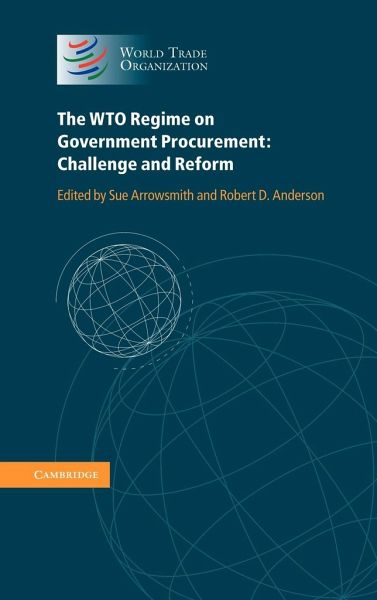
The WTO Regime on Government Procurement
Challenge and Reform
Herausgeber: Arrowsmith, Sue; Anderson, Robert D.
- Gebundenes Buch
- Merkliste
- Auf die Merkliste
- Bewerten Bewerten
- Teilen
- Produkt teilen
- Produkterinnerung
- Produkterinnerung
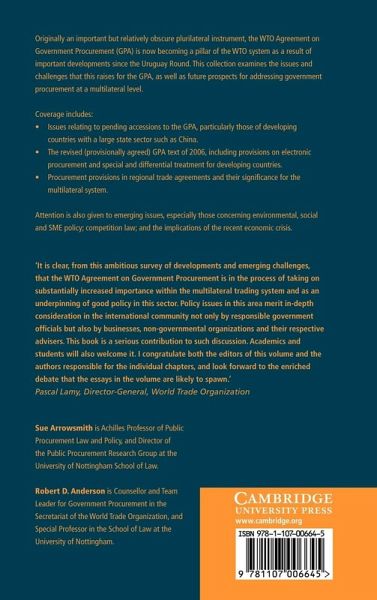
Explores the increasing importance of the WTO Agreement on Government Procurement in the multilateral trading system and the resulting challenges.
Explores the increasing importance of the WTO Agreement on Government Procurement in the multilateral trading system and the resulting challenges.
Produktdetails
- Produktdetails
- Verlag: Cambridge University Press
- Seitenzahl: 896
- Erscheinungstermin: 4. Januar 2013
- Englisch
- Abmessung: 235mm x 157mm x 52mm
- Gewicht: 1422g
- ISBN-13: 9781107006645
- ISBN-10: 1107006643
- Artikelnr.: 32552863
- Herstellerkennzeichnung
- Libri GmbH
- Europaallee 1
- 36244 Bad Hersfeld
- gpsr@libri.de
- Verlag: Cambridge University Press
- Seitenzahl: 896
- Erscheinungstermin: 4. Januar 2013
- Englisch
- Abmessung: 235mm x 157mm x 52mm
- Gewicht: 1422g
- ISBN-13: 9781107006645
- ISBN-10: 1107006643
- Artikelnr.: 32552863
- Herstellerkennzeichnung
- Libri GmbH
- Europaallee 1
- 36244 Bad Hersfeld
- gpsr@libri.de
Part I. The WTO Regime on Government Procurement: 1. The WTO regime on
government procurement: past, present and future; Part II. Expanding the
Scope of the Agreement on Government Procurement: Accession and Coverage:
2. Forging a more global procurement market: issues concerning accessions
to the agreement on government procurement; 3. Accession to the agreement
on government procurement: the case of China; 4. India's possible accession
to the agreement on government procurement: what are the pros and cons?; 5.
The benefits to developing countries of accession to the government
procurement agreement: the case of Chinese Taipei; 6. The coverage
negotiations for the agreement on government procurement: context, mandate,
process and prospects; 7. A case study of coverage issues: Canada's
sub-central coverage under the agreement on government procurement; 8. The
procurement of state trading companies under the WTO agreements: a proposal
for a way forward; 9. Addressing purchasing arrangements between public
sector entities - what can the WTO learn from the EU's experience?; Part
III. Revision of the Procedural Rules and Other Transparency Provisions of
the Agreement on Government Procurement: 10. The revised agreement on
government procurement: changes to the procedural rules and other
transparency provisions; Part IV. Developing Countries in the WTO
Procurement Regime: 11. Special and differential treatment for developing
countries under the agreement on government procurement: the current text
and new provisions; 12. Building sustainable capacity in public
procurement; 13. Untying aid through the agreement on government
procurement: a means to encourage developing country accession to the
agreement and to improve aid effectiveness?; Part V. Economic and Social
Development (Horizontal Policies) in Government Procurement: 14. The
national treatment and exceptions provisions of the agreement on government
procurement and the pursuit of horizontal policies; 15. The limited case
for permitting SME procurement preferences in the agreement on government
procurement; 16. Social policies in procurement and the agreement on
government procurement: a perspective from South Africa; Part VI.
Enforcement and Remedies: 17. Constructing a system of challenge procedures
to comply with the government procurement agreement; 18. Designing
effective challenge procedures: the EU's experience with remedies; 19. The
design and operation of a bid challenge mechanism: the experience of Hong
Kong; Part VII. Multilateralism and Regionalism: 20. Government procurement
provisions in regional trade agreements: a stepping stone to GPA
accession?; 21. A case study of regionalism: the EU-Cariforum economic
partnership agreement; Part VIII. Challenges and New Directions: 22.
Ensuring integrity and competition in public procurement markets: a dual
challenge for good governance; 23. Developing multilateral rules on
government procurement: the value of soft law; 24. Work of UNCITRAL on
government procurement: purpose, objectives, and complementarity with the
work of the WTO; 25. Global procurement law in times of crisis: new buy
American policies and options in the WTO legal system; 26. Procurement
rules in times of crisis: lessons from US government procurement in three
episodes of 'crisis' in the 21st century.
government procurement: past, present and future; Part II. Expanding the
Scope of the Agreement on Government Procurement: Accession and Coverage:
2. Forging a more global procurement market: issues concerning accessions
to the agreement on government procurement; 3. Accession to the agreement
on government procurement: the case of China; 4. India's possible accession
to the agreement on government procurement: what are the pros and cons?; 5.
The benefits to developing countries of accession to the government
procurement agreement: the case of Chinese Taipei; 6. The coverage
negotiations for the agreement on government procurement: context, mandate,
process and prospects; 7. A case study of coverage issues: Canada's
sub-central coverage under the agreement on government procurement; 8. The
procurement of state trading companies under the WTO agreements: a proposal
for a way forward; 9. Addressing purchasing arrangements between public
sector entities - what can the WTO learn from the EU's experience?; Part
III. Revision of the Procedural Rules and Other Transparency Provisions of
the Agreement on Government Procurement: 10. The revised agreement on
government procurement: changes to the procedural rules and other
transparency provisions; Part IV. Developing Countries in the WTO
Procurement Regime: 11. Special and differential treatment for developing
countries under the agreement on government procurement: the current text
and new provisions; 12. Building sustainable capacity in public
procurement; 13. Untying aid through the agreement on government
procurement: a means to encourage developing country accession to the
agreement and to improve aid effectiveness?; Part V. Economic and Social
Development (Horizontal Policies) in Government Procurement: 14. The
national treatment and exceptions provisions of the agreement on government
procurement and the pursuit of horizontal policies; 15. The limited case
for permitting SME procurement preferences in the agreement on government
procurement; 16. Social policies in procurement and the agreement on
government procurement: a perspective from South Africa; Part VI.
Enforcement and Remedies: 17. Constructing a system of challenge procedures
to comply with the government procurement agreement; 18. Designing
effective challenge procedures: the EU's experience with remedies; 19. The
design and operation of a bid challenge mechanism: the experience of Hong
Kong; Part VII. Multilateralism and Regionalism: 20. Government procurement
provisions in regional trade agreements: a stepping stone to GPA
accession?; 21. A case study of regionalism: the EU-Cariforum economic
partnership agreement; Part VIII. Challenges and New Directions: 22.
Ensuring integrity and competition in public procurement markets: a dual
challenge for good governance; 23. Developing multilateral rules on
government procurement: the value of soft law; 24. Work of UNCITRAL on
government procurement: purpose, objectives, and complementarity with the
work of the WTO; 25. Global procurement law in times of crisis: new buy
American policies and options in the WTO legal system; 26. Procurement
rules in times of crisis: lessons from US government procurement in three
episodes of 'crisis' in the 21st century.
Part I. The WTO Regime on Government Procurement: 1. The WTO regime on
government procurement: past, present and future; Part II. Expanding the
Scope of the Agreement on Government Procurement: Accession and Coverage:
2. Forging a more global procurement market: issues concerning accessions
to the agreement on government procurement; 3. Accession to the agreement
on government procurement: the case of China; 4. India's possible accession
to the agreement on government procurement: what are the pros and cons?; 5.
The benefits to developing countries of accession to the government
procurement agreement: the case of Chinese Taipei; 6. The coverage
negotiations for the agreement on government procurement: context, mandate,
process and prospects; 7. A case study of coverage issues: Canada's
sub-central coverage under the agreement on government procurement; 8. The
procurement of state trading companies under the WTO agreements: a proposal
for a way forward; 9. Addressing purchasing arrangements between public
sector entities - what can the WTO learn from the EU's experience?; Part
III. Revision of the Procedural Rules and Other Transparency Provisions of
the Agreement on Government Procurement: 10. The revised agreement on
government procurement: changes to the procedural rules and other
transparency provisions; Part IV. Developing Countries in the WTO
Procurement Regime: 11. Special and differential treatment for developing
countries under the agreement on government procurement: the current text
and new provisions; 12. Building sustainable capacity in public
procurement; 13. Untying aid through the agreement on government
procurement: a means to encourage developing country accession to the
agreement and to improve aid effectiveness?; Part V. Economic and Social
Development (Horizontal Policies) in Government Procurement: 14. The
national treatment and exceptions provisions of the agreement on government
procurement and the pursuit of horizontal policies; 15. The limited case
for permitting SME procurement preferences in the agreement on government
procurement; 16. Social policies in procurement and the agreement on
government procurement: a perspective from South Africa; Part VI.
Enforcement and Remedies: 17. Constructing a system of challenge procedures
to comply with the government procurement agreement; 18. Designing
effective challenge procedures: the EU's experience with remedies; 19. The
design and operation of a bid challenge mechanism: the experience of Hong
Kong; Part VII. Multilateralism and Regionalism: 20. Government procurement
provisions in regional trade agreements: a stepping stone to GPA
accession?; 21. A case study of regionalism: the EU-Cariforum economic
partnership agreement; Part VIII. Challenges and New Directions: 22.
Ensuring integrity and competition in public procurement markets: a dual
challenge for good governance; 23. Developing multilateral rules on
government procurement: the value of soft law; 24. Work of UNCITRAL on
government procurement: purpose, objectives, and complementarity with the
work of the WTO; 25. Global procurement law in times of crisis: new buy
American policies and options in the WTO legal system; 26. Procurement
rules in times of crisis: lessons from US government procurement in three
episodes of 'crisis' in the 21st century.
government procurement: past, present and future; Part II. Expanding the
Scope of the Agreement on Government Procurement: Accession and Coverage:
2. Forging a more global procurement market: issues concerning accessions
to the agreement on government procurement; 3. Accession to the agreement
on government procurement: the case of China; 4. India's possible accession
to the agreement on government procurement: what are the pros and cons?; 5.
The benefits to developing countries of accession to the government
procurement agreement: the case of Chinese Taipei; 6. The coverage
negotiations for the agreement on government procurement: context, mandate,
process and prospects; 7. A case study of coverage issues: Canada's
sub-central coverage under the agreement on government procurement; 8. The
procurement of state trading companies under the WTO agreements: a proposal
for a way forward; 9. Addressing purchasing arrangements between public
sector entities - what can the WTO learn from the EU's experience?; Part
III. Revision of the Procedural Rules and Other Transparency Provisions of
the Agreement on Government Procurement: 10. The revised agreement on
government procurement: changes to the procedural rules and other
transparency provisions; Part IV. Developing Countries in the WTO
Procurement Regime: 11. Special and differential treatment for developing
countries under the agreement on government procurement: the current text
and new provisions; 12. Building sustainable capacity in public
procurement; 13. Untying aid through the agreement on government
procurement: a means to encourage developing country accession to the
agreement and to improve aid effectiveness?; Part V. Economic and Social
Development (Horizontal Policies) in Government Procurement: 14. The
national treatment and exceptions provisions of the agreement on government
procurement and the pursuit of horizontal policies; 15. The limited case
for permitting SME procurement preferences in the agreement on government
procurement; 16. Social policies in procurement and the agreement on
government procurement: a perspective from South Africa; Part VI.
Enforcement and Remedies: 17. Constructing a system of challenge procedures
to comply with the government procurement agreement; 18. Designing
effective challenge procedures: the EU's experience with remedies; 19. The
design and operation of a bid challenge mechanism: the experience of Hong
Kong; Part VII. Multilateralism and Regionalism: 20. Government procurement
provisions in regional trade agreements: a stepping stone to GPA
accession?; 21. A case study of regionalism: the EU-Cariforum economic
partnership agreement; Part VIII. Challenges and New Directions: 22.
Ensuring integrity and competition in public procurement markets: a dual
challenge for good governance; 23. Developing multilateral rules on
government procurement: the value of soft law; 24. Work of UNCITRAL on
government procurement: purpose, objectives, and complementarity with the
work of the WTO; 25. Global procurement law in times of crisis: new buy
American policies and options in the WTO legal system; 26. Procurement
rules in times of crisis: lessons from US government procurement in three
episodes of 'crisis' in the 21st century.