
Andere Kunden interessierten sich auch für
 Greek Tragedy in Action167,99 €
 Understanding Greek Tragic Theatre166,99 €
 Sexual Life In Ancient Greece307,99 €
 Understanding Greek Tragic Theatre54,99 €
 Greek Theatre between Antiquity and Independence116,99 €
 The Eunuch in Byzantine History and Society180,99 €
 Rewriting Ancient Jewish History177,99 €


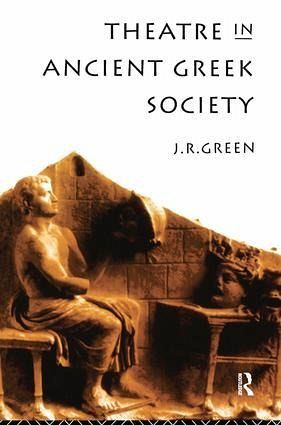
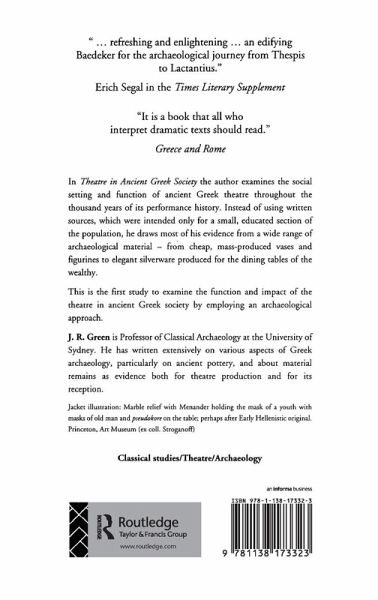
All theatrical performance exists within a context and through the role accorded it by its public. The theme of the book is the function and impact of the theatre in Greek society. It is not about the interpretation of Greek dramatic texts. Instead, Professor Green examines the depictions of actors found on pottery, terracottas, glass, paintings, mosaics, marble sculpture.... He offers interpretations of these images not simply as depictions of stage performance but in terms of their broader function. This evidence is compared and contrasted with that of the written sources which are limited in terms of the cross-section of the population they reflect and give a narrower view of social attitudes. Theatre in Ancient Greek Society is the first study of Greek drama to use this approach and is the product of the twenty years Professor Green has spent studying the archaeological evidence.
'This is throughout a learned and well-documented discussion.' - Keith Sidwell, Classics Ireland
'Another important book on ancient drama in performance is J R Green's Theatre in Ancient Greek Society ... It is a book that all who interpret dramatic text should read ...' - Greece & Rome
'Green's book deserves a wide audience, and anyone with an interest in theatre as cultural and social history would do well to consult this exemplary study.' - Theatre Research International
'Another important book on ancient drama in performance is J R Green's Theatre in Ancient Greek Society ... It is a book that all who interpret dramatic text should read ...' - Greece & Rome
'Green's book deserves a wide audience, and anyone with an interest in theatre as cultural and social history would do well to consult this exemplary study.' - Theatre Research International