
Andere Kunden interessierten sich auch für
 Diet, Nutrition, and Foodways on the North Coast of Peru38,99 €
 Being Scioto Hopewell: Ritual Drama and Personhood in Cross-Cultural Perspective176,99 €
 Theorizing Digital Rhetoric175,99 €
 Archaeology of Iran in the Historical Period68,99 €
 Postcolonialism, Heritage, and the Built Environment49,99 €
 Health Care in Eleventh-Century China98,99 €
 Quantifying Stone Age Mobility106,99 €

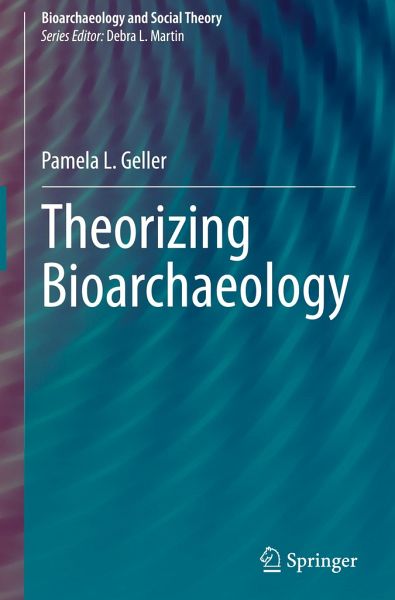
Bioarchaeology has relied on Darwinian perspectives and biocultural models to communicate information about the lives of past peoples. This book demonstrates how further theoretical expansion-a thoughtful engagement with critical social theorizing-can contribute insightful and more ethical outcomes. To do so, it focuses on social theoretical concepts of pertinence to bioarchaeological studies: habitus, the normal, intersectionality, necropolitics, and bioethos. These concepts can deepen study of plasticity, disease, gender, violence, and race and ethnicity, as well as advance the field's decolonization efforts.
This book also works to overcome the challenges presented by dense social theorizing, which has paid little attention to real bodies. It historicizes, explains, and adapts concepts, as well as discusses archaeological, historic, and contemporary case studies from around the world.
Theorizing Bioarchaeology is intended for individuals who may have initially dismissed social theorizing as postmodern but now acknowledge this characterization as oversimplified. It is for readers who foster curiosity about bioarchaeology's contradictions and common sense. The ideas contained in these pages may also be of use to students who know that it is naive at best and myopic at worst to presume data derived from bodies speak for themselves.
This book also works to overcome the challenges presented by dense social theorizing, which has paid little attention to real bodies. It historicizes, explains, and adapts concepts, as well as discusses archaeological, historic, and contemporary case studies from around the world.
Theorizing Bioarchaeology is intended for individuals who may have initially dismissed social theorizing as postmodern but now acknowledge this characterization as oversimplified. It is for readers who foster curiosity about bioarchaeology's contradictions and common sense. The ideas contained in these pages may also be of use to students who know that it is naive at best and myopic at worst to presume data derived from bodies speak for themselves.