Concept-based therapeutic communities emerged out of the informal group meetings of Charles Dederich and a number of former Alcoholics Anonymous members in California in the late 1950s. The model was exported worldwide and has not only become the most widely used approach to residential treatment but has proved enormously influential in the development of many other treatment approaches; both residential and ambulatory. Concept-based therapeutic communities are hierarchical, and the staff and residents form a chain of command. Staff are often qualified for their work by virtue of having been…mehr
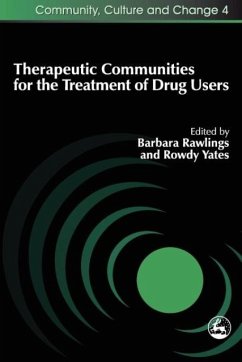
Concept-based therapeutic communities emerged out of the informal group meetings of Charles Dederich and a number of former Alcoholics Anonymous members in California in the late 1950s. The model was exported worldwide and has not only become the most widely used approach to residential treatment but has proved enormously influential in the development of many other treatment approaches; both residential and ambulatory. Concept-based therapeutic communities are hierarchical, and the staff and residents form a chain of command. Staff are often qualified for their work by virtue of having been residents in such a community themselves. Like other types of therapeutic community, a central tenet of the approach is the emphasis on self help and the belief in the influence of the group dynamic in facilitating therapeutic interventions. Written by academics and practitioners from around the world, this is a comprehensive overview of the development of therapeutic communities and their benefits in the treatment of drug users. Contributors describe how the model operates in the community, and how it has been modified over time to fit different settings, different types of client and different referral requirements. Illustrated by descriptions of staff and client experiences, this book also provides an inside view of how this sort of therapeutic community actually operates. This authoritative study concludes by examining the research evidence for treatment effectiveness. It will be of interest to policy makers, managers and researchers in the field of drug abuse treatment.
Barbara Rawlings has worked in a hierarchical therapeutic community for drug users and a democratic therapeutic community for adolescents with behavioural difficulties, as well as conducting reviews on TCs for the Prison Service of England and Wales and the High Security Psychiatric Services Commissioning Board. She is an Honorary Fellow in the Department of Sociology at the University of Manchester, and is currently conducting qualitative research in therapeutic communities. Rowdy Yates is director of the Scottish Drugs Training Project at the University of Stirling. He was previously the Director of a non-residential treatment service for drug users for more than two decades. He is the Executive President of the European Working Group on Drugs Oriented Research (EWODOR) and an associate member of the European Federation of Therapeutic Communities.
Inhaltsangabe
Introduction Barbara Rawlings and Rowdy Yates. Part One: Background. 1. Therapeutic Communities for drug users: description and overview Eric Broekhaert University of Ghent Belgium. 2. Democratic and concept-based Therapeutic Communities and the development of community therapy Salvatore Raimo CEIS Verona Italy. Part Two: Situation Worldwide. 3. The history of Therapeutic Communities: a view from Europe Martien Kooyman Emiliehoeve Therapeutic Community and Erasmus University the Netherlands. 4. Therapeutic Communities for substance abuse: developments in North America George De Leon Center for Therapeutic Community Research National Development and Research Institutes Inc New York. 5. Therapeutic Communities for the treatment of addictions in Australia Clive F. Lloyd and Frances V. O'Callaghan Griffith University Gold Coast Australia. Part Three: Life in the Therapeutic Community. 6. The staff member in the Therapeutic Community Alan Woodhams New Directions Therapeutic Community HMP Channings Wood England. 7. Self-help or sink-or-swim? The experience of residents in a UK concept-based Therapeutic Community Keith Burnett CAN Northampton England. 8. The ex-resident experience of working as a staff member in a Therapeutic Community Staff from the Ley Community Oxford England. Part Four: Modifications to the Therapeutic Community Model. 9. Therapeutic Communities for drug-misusing offenders in prison Peter Mason Diana Mason and Nadia Brooks PDM Consulting London. 10. The modern Therapeutic Community: dual diagnosis and the process of change Rowdy Yates and Jane Wilson University of Stirling Scotland. 11. The significance of resettlement support on completion of a drug rehabilitation Therapeutic Community program Paul Goodman and Karen Nolan the Ley Community Oxford EnglandPart Five: Research and Evaluation. 12. Evaluative research in Therapeutic Communities Barbara Rawlings. 13. An outcome study of a Therapeutic Community based in the community: a five-year prospective study of drug users in Norway Edle Ravndal National Institute for Alcohol and Drug Research Norway. 14. Therapeutic Communities in prisons and work release: effective modalities for drug-involved offenders James A. Inciardi Steven S. Martin and Hilary L. Surratt Center for Drug and Alcohol Studies University of Delaware USA.References. Index.
Introduction Barbara Rawlings and Rowdy Yates. Part One: Background. 1. Therapeutic Communities for drug users: description and overview Eric Broekhaert University of Ghent Belgium. 2. Democratic and concept-based Therapeutic Communities and the development of community therapy Salvatore Raimo CEIS Verona Italy. Part Two: Situation Worldwide. 3. The history of Therapeutic Communities: a view from Europe Martien Kooyman Emiliehoeve Therapeutic Community and Erasmus University the Netherlands. 4. Therapeutic Communities for substance abuse: developments in North America George De Leon Center for Therapeutic Community Research National Development and Research Institutes Inc New York. 5. Therapeutic Communities for the treatment of addictions in Australia Clive F. Lloyd and Frances V. O'Callaghan Griffith University Gold Coast Australia. Part Three: Life in the Therapeutic Community. 6. The staff member in the Therapeutic Community Alan Woodhams New Directions Therapeutic Community HMP Channings Wood England. 7. Self-help or sink-or-swim? The experience of residents in a UK concept-based Therapeutic Community Keith Burnett CAN Northampton England. 8. The ex-resident experience of working as a staff member in a Therapeutic Community Staff from the Ley Community Oxford England. Part Four: Modifications to the Therapeutic Community Model. 9. Therapeutic Communities for drug-misusing offenders in prison Peter Mason Diana Mason and Nadia Brooks PDM Consulting London. 10. The modern Therapeutic Community: dual diagnosis and the process of change Rowdy Yates and Jane Wilson University of Stirling Scotland. 11. The significance of resettlement support on completion of a drug rehabilitation Therapeutic Community program Paul Goodman and Karen Nolan the Ley Community Oxford EnglandPart Five: Research and Evaluation. 12. Evaluative research in Therapeutic Communities Barbara Rawlings. 13. An outcome study of a Therapeutic Community based in the community: a five-year prospective study of drug users in Norway Edle Ravndal National Institute for Alcohol and Drug Research Norway. 14. Therapeutic Communities in prisons and work release: effective modalities for drug-involved offenders James A. Inciardi Steven S. Martin and Hilary L. Surratt Center for Drug and Alcohol Studies University of Delaware USA.References. Index.
Es gelten unsere Allgemeinen Geschäftsbedingungen: www.buecher.de/agb
Impressum
www.buecher.de ist ein Internetauftritt der buecher.de internetstores GmbH
Geschäftsführung: Monica Sawhney | Roland Kölbl | Günter Hilger
Sitz der Gesellschaft: Batheyer Straße 115 - 117, 58099 Hagen
Postanschrift: Bürgermeister-Wegele-Str. 12, 86167 Augsburg
Amtsgericht Hagen HRB 13257
Steuernummer: 321/5800/1497
USt-IdNr: DE450055826