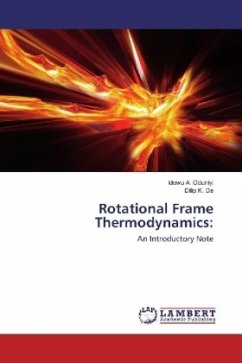
This book presents a novel treatment of thermodynamics that is more rigorous, more complete, and easier to understand than the conventional treatments presented in the vast majority of existing textbooks.
This book presents a novel treatment of thermodynamics that is more rigorous, more complete, and easier to understand than the conventional treatments presented in the vast majority of existing textbooks.
Hal Tasaki received his Ph.D. from the University of Tokyo in 1986. After spending two years as a postdoc with Professor Elliott Lieb at Princeton University, he settled at Gakushuin University, where he has been a professor since 1999. He received the Kubo Memorial Prize in 1997 and the Nishina Memorial Prize in 2025 for his contributions to the mathematical-physical studies of quantum many-body systems. He has been an Editor-in-chief of the Journal of Statistical Physics (JSP) since 2018, an editor of two series on mathematical physics from Springer, and an executive committee member of the International Association of Mathematical Physics (IAMP) since 2024. Glenn Paquette received his Ph.D. in theoretical physics from the University of Illinois at Urbana-Champaign in 1992. Since then, he has held various research and faculty positions at Kyoto University in the Department of Physics, where he was Associate Professor, the Yukawa Institute for Theoretical Physics, and the Faculty of Engineering. He is presently a freelance physicist and continues to hold visiting faculty positions at Kyoto University on a regular basis.
Inhaltsangabe
1: What Is Thermodynamics? 2: Thermodynamic Systems, Operations and Equilibrium States 3: Isothermal Operations and the Helmholtz Free Energy 4: Adiabatic Operations and Energy 5: Heat and Carnot's Theorem 6: Entropy 7: Helmholtz Free Energy and Variational Principles 8: Gibbs Free Energy 9: The Thermodynamics of Multi-Component Systems 10: The Thermodynamics of Ferromagnetic Materials Appendix A: Supplement to Chapter 2 Appendix B: Uniqueness of the Entropy Appendix C: Upper Limit on the Efficiency of a Heat Engine Appendix D: The Thermodynamics of the Triple Point Appendix E: On the Treatment of Mechanical Potential Energy Appendix F: Summary of Complete Thermodynamic Functions Appendix G: Convex Functions Appendix H: Legendre Transformation
1: What Is Thermodynamics? 2: Thermodynamic Systems, Operations and Equilibrium States 3: Isothermal Operations and the Helmholtz Free Energy 4: Adiabatic Operations and Energy 5: Heat and Carnot's Theorem 6: Entropy 7: Helmholtz Free Energy and Variational Principles 8: Gibbs Free Energy 9: The Thermodynamics of Multi-Component Systems 10: The Thermodynamics of Ferromagnetic Materials Appendix A: Supplement to Chapter 2 Appendix B: Uniqueness of the Entropy Appendix C: Upper Limit on the Efficiency of a Heat Engine Appendix D: The Thermodynamics of the Triple Point Appendix E: On the Treatment of Mechanical Potential Energy Appendix F: Summary of Complete Thermodynamic Functions Appendix G: Convex Functions Appendix H: Legendre Transformation
Es gelten unsere Allgemeinen Geschäftsbedingungen: www.buecher.de/agb
Impressum
www.buecher.de ist ein Internetauftritt der buecher.de internetstores GmbH
Geschäftsführung: Monica Sawhney | Roland Kölbl | Günter Hilger
Sitz der Gesellschaft: Batheyer Straße 115 - 117, 58099 Hagen
Postanschrift: Bürgermeister-Wegele-Str. 12, 86167 Augsburg
Amtsgericht Hagen HRB 13257
Steuernummer: 321/5800/1497
USt-IdNr: DE450055826