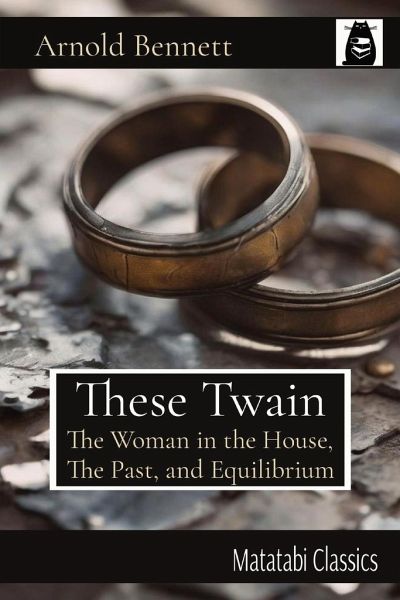
Journey into early 20th-century England with Arnold Bennett's captivating novel, These Twain, part three of The Clayhanger Family trilogy. First published in 1915, this compelling story delves into the intertwined lives of Edwin and Hilda Clayhanger as they navigate personal differences amid changing societal norms on marriage and divorce. Hilda Lessways, a strong-willed character with a challenging past, challenges social expectations, shedding light on the era's views on women and family obligations. Through their tumultuous relationship, Bennett critiques prevailing norms, revealing the…mehr
Journey into early 20th-century England with Arnold Bennett's captivating novel, These Twain, part three of The Clayhanger Family trilogy. First published in 1915, this compelling story delves into the intertwined lives of Edwin and Hilda Clayhanger as they navigate personal differences amid changing societal norms on marriage and divorce. Hilda Lessways, a strong-willed character with a challenging past, challenges social expectations, shedding light on the era's views on women and family obligations. Through their tumultuous relationship, Bennett critiques prevailing norms, revealing the pressures they exert on personal identities and relationships, while exploring the quest for love and understanding within societal confines. These Twain remains a timeless exploration of individual desires against societal conventions. Arnold Bennett's insightful writing invites reflection on human relationships and societal change, establishing him as a visionary writer and keen social commentator. Explore this profound novel that resonates with contemporary discussions on marriage and societal expectations.
Arnold Bennett was born on May 27, 1867, in Hanley, Staffordshire, which is now part of Stoke-on-Trent but was previously a separate municipality. He was the eldest of three boys and three daughters born to Enoch Bennett (1843-1902) and Sarah Ann, nee Longson (1840-1914). Enoch Bennett's early career was marked by ups and downs: following an unsuccessful attempt to start a pottery manufacturing and sales firm, he established himself as a draper and pawnbroker in 1866. Four years later, Enoch's father died, leaving him some money with which he apprenticed at a local legal business; in 1876, he became a solicitor. The Bennetts were strong Wesleyans who enjoyed music, culture, and socializing. Bennett attended the Wedgwood Institute in Burslem from 1877 to 1882, and then attended a grammar school in Newcastle-under-Lyme for one year. He was good at Latin and better at French; he had an inspirational headmaster who instilled in him a lifelong love of French literature and the French language. He excelled intellectually and passed Cambridge University exams, which may have led to an Oxbridge degree, but his father had other ideas. Bennett left school in 1883 at the age of 16 and began unpaid work at his father's business. He split his time between unpleasant occupations, such as rent collection, during the day and preparing for exams in the evening.
Es gelten unsere Allgemeinen Geschäftsbedingungen: www.buecher.de/agb
Impressum
www.buecher.de ist ein Internetauftritt der buecher.de internetstores GmbH
Geschäftsführung: Monica Sawhney | Roland Kölbl | Günter Hilger
Sitz der Gesellschaft: Batheyer Straße 115 - 117, 58099 Hagen
Postanschrift: Bürgermeister-Wegele-Str. 12, 86167 Augsburg
Amtsgericht Hagen HRB 13257
Steuernummer: 321/5800/1497
USt-IdNr: DE450055826