
Andere Kunden interessierten sich auch für
") If I Were A Girl Again (1904)17,99 €
If I Were A Girl Again (1904)17,99 € They Call Me Trusty16,99 €
 My Unusual Adventure of 21 Years18,99 €
 A Drumstick for Thanksgiving12,99 €
 A LIFE LONG JOURNEY TO WAR AND HOME12,99 €
 The Forks In The Soup12,99 €
 From the Sea to the C-Suite19,99 €


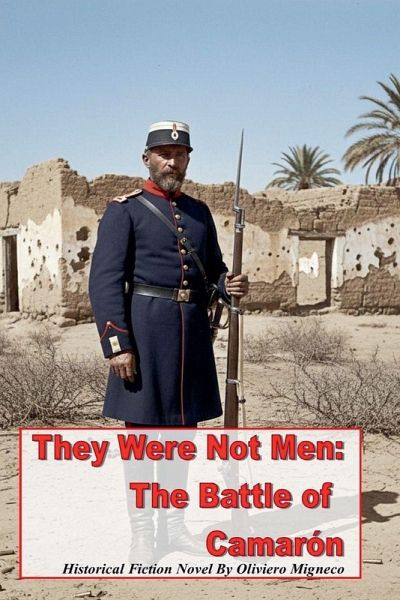
Why Should You Read This Book? They Were Not Men: The Battle of Camarón is not merely a retelling of the battle; it is an immersion into the terrifying calculus of survival. While history books reduce the legendary stand of April 30, 1863, to a single line of heroic statistics-sixty-two men holding off two thousand-this novel drags you into the dust to stand shoulder-to-shoulder with men bleeding for a cause they didn't believe in. It strips away the gold braid to reveal the raw reality of 19th-century warfare, where the enemy is not just the Mexican cavalry, but the sun, the thirst, and the crushing weight of inevitability. Two Broken Men. One Impossible Stand. At its heart, this is a story of two broken men finding a reason to stand. Elias Vogel, a cynical Prussian gambler running from a debt he cannot pay, and Luc Rousseau, a naive Parisian orphan searching for a family he never had, are not the marble statues of military legend. They are flawed, frightened, and deeply human. Their relationship-the reluctant wolf guarding the fragile sparrow-forms the emotional spine of the narrative. You will read not to see how they fight, but to see how they change each other, proving that trauma bonds men tighter than any oath of allegiance. The War Doesn't End with the Last Shot. Unlike traditional war epics, this novel dares to ask: what happens after the glory? It explores the brutal odyssey of captivity that followed the battle, spanning from the fever-ridden swamps of Veracruz to the freezing prisoner-of-war camps of the Franco-Prussian War. It examines the "Survivor's Guilt" of the lucky few who walked away and the burden of carrying the memory of the dead. It is a gripping survival drama proving the hardest part of war isn't dying for your country-it's living with the silence that follows. History vs. The Truth. Through the subplot of the "Wooden Hand"-the sacred relic of the Foreign Legion-the narrative exposes the tension between the sanitized lies told by Generals and the gritty truths known only to soldiers. It captures the unique "Tower of Babel" dynamic of the corps, where Germans, Poles, and Spaniards merged into a single lethal force, and explores the tragic irony of German legionnaires forced to fight their own countrymen in 1870-a conflict of blood and duty that threatens to tear Elias Vogel apart. A Definition of Courage. Ultimately, this is a story that posits bravery is not the absence of fear, nor the desire for a medal. True courage is shown in the quiet moments: carrying a sick friend over a mountain pass, sharing the last drop of water, or guarding a secret for a lifetime to protect the dignity of the dead. They Were Not Men bridges the gap between the sweeping tides of history and the beating heart of the individual soldier. When you turn the final page, you will not just know what happened at the Hacienda Camarón; you will feel the weight of the Wooden Hand in your own pocket, and you will understand the price paid to bring it home.