
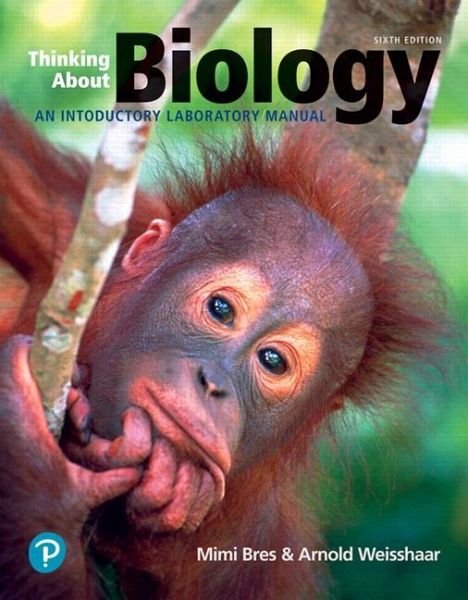
- Broschiertes Buch
- Merkliste
- Auf die Merkliste
- Bewerten Bewerten
- Teilen
- Produkt teilen
- Produkterinnerung
- Produkterinnerung
For one-semester, non-majors introductory biology laboratory courses
Thinking About Biology: An Introductory Lab Manual offers an extensively class-tested approach to the introductory biology laboratory course. The manual enables students to see how scientists work to solve problems through scientific investigation by asking questions and answering them through observations and conducting experiments. This lab manual helps students gain practical experience to better understand lecture concepts, acquire the basic knowledge needed to make informed decisions about biological questions in…mehr
Andere Kunden interessierten sich auch für
 Claudia Lorena Torres OrjuelaDidactic proposal based on socio-ecological thinking40,99 €
 Colleen BelkBiology209,99 €
 Brain and Behavior in Child Psychiatry38,99 €
 The Symbolic Species Evolved151,99 €
 The Study of Trace Fossils78,99 €
 Michele Battle-FisherApplication of Systems Thinking to Health Policy & Public Health Ethics38,99 €
 Peyronie's Disease: Pathophysiology and Treatment110,99 €
-
-
-
For one-semester, non-majors introductory biology laboratory courses
Thinking About Biology: An Introductory Lab Manual offers an extensively class-tested approach to the introductory biology laboratory course. The manual enables students to see how scientists work to solve problems through scientific investigation by asking questions and answering them through observations and conducting experiments. This lab manual helps students gain practical experience to better understand lecture concepts, acquire the basic knowledge needed to make informed decisions about biological questions in everyday life, develop the problem-solving skills that will lead to success in school and a competitive job market, and learn to work effectively and productively as a member of a team.
The 6th Edition features new and revised activities based on feedback from students and faculty.
Hinweis: Dieser Artikel kann nur an eine deutsche Lieferadresse ausgeliefert werden.
Thinking About Biology: An Introductory Lab Manual offers an extensively class-tested approach to the introductory biology laboratory course. The manual enables students to see how scientists work to solve problems through scientific investigation by asking questions and answering them through observations and conducting experiments. This lab manual helps students gain practical experience to better understand lecture concepts, acquire the basic knowledge needed to make informed decisions about biological questions in everyday life, develop the problem-solving skills that will lead to success in school and a competitive job market, and learn to work effectively and productively as a member of a team.
The 6th Edition features new and revised activities based on feedback from students and faculty.
Hinweis: Dieser Artikel kann nur an eine deutsche Lieferadresse ausgeliefert werden.
Produktdetails
- Produktdetails
- Verlag: Pearson
- 6. Aufl.
- Seitenzahl: 472
- Erscheinungstermin: 5. Januar 2018
- Englisch
- Abmessung: 274mm x 216mm x 18mm
- Gewicht: 830g
- ISBN-13: 9780134765624
- ISBN-10: 0134765621
- Artikelnr.: 49133579
- Herstellerkennzeichnung
- Libri GmbH
- Europaallee 1
- 36244 Bad Hersfeld
- 06621 890
- Verlag: Pearson
- 6. Aufl.
- Seitenzahl: 472
- Erscheinungstermin: 5. Januar 2018
- Englisch
- Abmessung: 274mm x 216mm x 18mm
- Gewicht: 830g
- ISBN-13: 9780134765624
- ISBN-10: 0134765621
- Artikelnr.: 49133579
- Herstellerkennzeichnung
- Libri GmbH
- Europaallee 1
- 36244 Bad Hersfeld
- 06621 890
About our authors Mimi Bres, Ph.D, tenured Professor, Prince George's Community College, Largo, Marylan Dr. Bres has over 20 years experience with the development of curriculum materials designed to stimulate interest in science and to improve critical thinking skills. Of particular note is her recent work developing an interactive web and video-based curriculum, including a virtual field component, to teach environmental concepts without the need for student travel. Dr. Bres has also worked as a consultant to corporations and government agencies. She served as team leader and developer for the Environmental Protection Agency's Environmental Education Library, a series of video curriculum modules for college and high school classes which highlight hazardous chemical response and remediation projects carried out under the SuperFund Program. Dr. Bres has also served as a consultant to the Prince George's County School District in an initiative to improve the delivery of high school science courses. As a result of her expertise, Dr. Bres has been an invited speaker at a number of national meetings and seminars. Her work on the use of cooperative learning techniques has improved both student performance and interest in science. Dr. Bres' excellence in science education has been recognized by her selection for the National Award for Innovative Excellence in Teaching, Learning, and Technology by the Center for the Advancement of Teaching and Learning, the Teaching Recognition Award by the University of Maryland University College, and Outstanding Faculty Mentor of the Year by the science division students of Prince George's Community College. Recent books include: Thinking About Biology, 4th edition (a laboratory manual for general biology), Hands-On Biology: Laboratories for Distance Learning (a laboratory manual for online general biology courses), Human Biology: Condensed, 7th edition (a simplified lecture study guide that incorporates problem solving activities into the curriculum), and Cooperative Learning: Making Connections in General Biology (a collection of cooperative activities). Arnold Weisshaar, Professor Emeritus, Prince George's Community College, Largo, Maryland Professor Weisshaar has had a distinguished 36 year career in higher education. During his career, he has been the spearhead of several initiatives to improve science education and expand the College's program offerings. In the classroom, Professor Weisshaar has worked extensively with underprepared students of diverse social and ethnic backgrounds. In an attempt to improve instructional delivery, he has co-authored a variety of support materials for students. Recent publications include laboratory manuals for general biology, including: Thinking About Biology, 4th edition and Hands-On Biology: Laboratories for Distance Learning and a simplified lecture study guide that incorporates problem solving activities into the curriculum (Human Biology: Condensed, 7th edition).
Table of Contents
1. Exercise 1 Introduction to the Scientific Method
* Activity 1 Forming Hypotheses to Solve Problems
* Activity 2 Testing Hypotheses
* Activity 3 Interpreting Data
* Activity 4 Performing an Experiment and Collecting Data
* Activity 5 Graphing Your Results
* Activity 6 Interpreting Data Using Simple Statistics
2. Exercise 2 Windows to a Microscopic World
* Activity 1 Learning to Use the Dissecting Microscope
* Activity 2 Making Observations with the Dissecting Microscope
* Activity 3 Getting Familiar with the Compound Microscope
* Activity 4 Parts of the Compound Microscope
* Activity 5 Learning to Use the Compound Microscope
* Activity 6 Preparing Temporary Slides - Wet Mounts
* Activity 7 Using the Microscope to Answer a Question: What Do
Aquarium Snails Eat?
3. Exercise 3 Functions and Properties of Cells
* Activity 1 Cellular Organelles
* Activity 2 Observing Living Cells
* Activity 3 Amyloplasts in Potato Tubers
* Activity 4 Stem Cells
4. Exercise 4 Movement of Molecules Across Cell Membranes
* Activity 1 Water Molecules in Motion
* Activity 2 Diffusion and Osmosis
* Activity 3 Controls for the Diffusion and Osmosis Experiment
* Activity 4 Completing the Diffusion and Osmosis Experiment
* Activity 5 Osmosis in Elodea Cells
5. Exercise 5 Investigating Cellular Respiration
* Activity 1 Do Microorganisms Perform Cellular Respiration?
* Activity 2 Comparison of Classroom Air with Exhaled Air
* Activity 3 Effect of Exercise on Carbon Dioxide Production
* Activity 4 Alternatives to Aerobic Respiration
* Activity 5 Anaerobic Respiration
6. Exercise 6 Photosynthesis
* Activity 1 Absorption of Carbon Dioxide During Photosynthesis
* Activity 2 Testing Leaves for Starch
* Activity 3 Cells of the Leaf Epidermis
7. Exercise 7 Organic Molecules and Nutrition
* Activity 1 Positive and Negative Indicator Tests
* Activity 2 Testing Food Samples
* Activity 3 An Embryo in a Peanut Seed
* Activity 4 Dietary Intake and Good Health
8. Exercise 8 Factors that Affect Enzyme Activity
* Activity 1 Demonstration of Enzyme Activity
* Activity 2 Enzyme Activity in Food Vacuoles
* Activity 3 Effect of Environmental Conditions on Protein Structure
9. Exercise 9 Introduction to Molecular Genetics
* Activity 1 Removing DNA From Cells
* Activity 2 The Basics of DNA Structure
* Activity 3 Building a Model of DNA
* Activity 4 Steps of Protein Synthesis
* Activity 5 Building a Real Protein
10. Exercise 10 Mitosis and Asexual Reproduction
* Activity 1 How Mitosis Works
* Activity 2 Recognizing the Stages of Mitosis
* Activity 3 Mitosis - The Real Thing!
* Activity 4 Estimating the Duration of the Cell Cycle
* Activity 5 Regeneration
* Activity 6 Asexual Reproduction: Growing a Plant From a Cutting
11. Exercise 11 Connecting Meiosis and Genetics
* Activity 1 Getting Started: Build a Pair of Chromosomes
* Activity 2 Homologous Chromosomes Separate in Meiosis to Form Gametes
* Activity 3 Fertilization: Nature's Equivalent to Rolling the Dice
* Activity 4 What's Your Baby's Genotype?
* Activity 5 Genotype Determines Phenotype
* Activity 6 Passing On Traits
* Activity 7 Practicing Genetics Problems
12. Exercise 12 Human Genetics
* Activity 1 PTC Tasting
* Activity 2 X-Linked Traits
* Activity 3 Codominance and Sickle Cell Disease
* Activity 4 A Family History of Sickle Cell Disease
* Activity 5 Codominance and Multiple Alleles
13. Exercise 13 Evolution
* Activity 1 Determining the Age of Rock Layers and Fossils
* Activity 2 Reconstructing Fossil Evidence
* Activity 3 Natural Selection
14. Exercise 14 Functions of Tissues and Organs
* Activity 1 Skin: The Outer Protective Layer
* Activity 2 The Epidermis
* Activity 3 The Dermis
* Activity 4 Hair Today, Gone Tomorrow
* Activity 5 Below the Skin (the Hypodermis)
* Activity 6 Touch Sensitivity
15. Exercise 15 The Cardiovascular System
* Activity 1 Circulation of Blood Around the Body
* Activity 2 A Closer Look at the Heart
* Activity 3 Understanding Blood Pressure and Pulse Rate
* Activity 4 Cardiovascular Disease
16. Exercise 16 Introduction to Anatomy: Dissecting the Fetal Pig
* Activity 1 Getting Started
* Activity 2 Following Anatomical Directions
* Activity 3 External Anatomy of the Fetal Pig
* Activity 4 Dissection of the Mouth
* Activity 5 Dissection of the Neck
* Activity 6 Dissection of the Thoracic Cavity
* Activity 7 Measuring Lung Capacity
17. Exercise 17 Organs of the Abdominal Cavity
* Activity 1 Dissection of the Abdominal Cavity
* Activity 2 The Urinary System
* Activity 3 Internal Structure of the Stomach
* Activity 4 Examining the Small Intestine
* Activity 5 The Importance of Surface Area
* Activity 6 Earthworm Locomotion
18. Exercise 18 Introduction to Forensic Biology
* Activity 1 Getting Started
* Activity 2 Classifying Fingerprint Patterns
* Activity 3 Analyzing Fingerprint Evidence
* Activity 4 Blood Typing
19. Exercise 19 Biotechnology: DNA Analysis
* Activity 1 Sources of DNA Evidence
* Activity 2 Solving a Crime Using RFLP Fingerprints
* Activity 3 The Use of PCR For STR Analysis
* Activity 4 Solving a Criminal Case Using STR Evidence
* Activity 5 Deciding a Paternity Suit Involving STR Analysis
* Activity 6 DNA Barcodes
20. Exercise 20 Using Biotechnology to Assess Ecosystem Damage
* Activity 1 Exploring Bioluminescence
* Activity 2 Getting Started
* Activity 3 Making Accurate Serial Dilutions
* Activity 4 Preparing Bacterial Samples
* Activity 5 Testing the Toxicity of Your Chemical
21. Exercise 21 Ecosystems
* Activity 1 Food Chains
* Activity 2 Loss of Energy in Food Chains
* Activity 3 Food Chains Interact to Form Food Webs
* Activity 4 Bioaccumulation
22. Exercise 22 Biodiversity and Conservation
* Activity 1 Value of Biodiversity
* Activity 2 Commercial Fishing as an Example of Tragedy of the Commons
* Activity 3 Ecosystem Jenga®
23. Exercise 23 Population Ecology
* Activity 1 Introduction to Sampling - An Ecological Tool
* Activity 2 Sampling Quadrats to Estimate Population
* Activity 3 The Mark and Recapture Technique for Estimating Population
Size
Appendix 1 Game Cards for Exercise 22 Appendix 2 Self Test Answers
1. Exercise 1 Introduction to the Scientific Method
* Activity 1 Forming Hypotheses to Solve Problems
* Activity 2 Testing Hypotheses
* Activity 3 Interpreting Data
* Activity 4 Performing an Experiment and Collecting Data
* Activity 5 Graphing Your Results
* Activity 6 Interpreting Data Using Simple Statistics
2. Exercise 2 Windows to a Microscopic World
* Activity 1 Learning to Use the Dissecting Microscope
* Activity 2 Making Observations with the Dissecting Microscope
* Activity 3 Getting Familiar with the Compound Microscope
* Activity 4 Parts of the Compound Microscope
* Activity 5 Learning to Use the Compound Microscope
* Activity 6 Preparing Temporary Slides - Wet Mounts
* Activity 7 Using the Microscope to Answer a Question: What Do
Aquarium Snails Eat?
3. Exercise 3 Functions and Properties of Cells
* Activity 1 Cellular Organelles
* Activity 2 Observing Living Cells
* Activity 3 Amyloplasts in Potato Tubers
* Activity 4 Stem Cells
4. Exercise 4 Movement of Molecules Across Cell Membranes
* Activity 1 Water Molecules in Motion
* Activity 2 Diffusion and Osmosis
* Activity 3 Controls for the Diffusion and Osmosis Experiment
* Activity 4 Completing the Diffusion and Osmosis Experiment
* Activity 5 Osmosis in Elodea Cells
5. Exercise 5 Investigating Cellular Respiration
* Activity 1 Do Microorganisms Perform Cellular Respiration?
* Activity 2 Comparison of Classroom Air with Exhaled Air
* Activity 3 Effect of Exercise on Carbon Dioxide Production
* Activity 4 Alternatives to Aerobic Respiration
* Activity 5 Anaerobic Respiration
6. Exercise 6 Photosynthesis
* Activity 1 Absorption of Carbon Dioxide During Photosynthesis
* Activity 2 Testing Leaves for Starch
* Activity 3 Cells of the Leaf Epidermis
7. Exercise 7 Organic Molecules and Nutrition
* Activity 1 Positive and Negative Indicator Tests
* Activity 2 Testing Food Samples
* Activity 3 An Embryo in a Peanut Seed
* Activity 4 Dietary Intake and Good Health
8. Exercise 8 Factors that Affect Enzyme Activity
* Activity 1 Demonstration of Enzyme Activity
* Activity 2 Enzyme Activity in Food Vacuoles
* Activity 3 Effect of Environmental Conditions on Protein Structure
9. Exercise 9 Introduction to Molecular Genetics
* Activity 1 Removing DNA From Cells
* Activity 2 The Basics of DNA Structure
* Activity 3 Building a Model of DNA
* Activity 4 Steps of Protein Synthesis
* Activity 5 Building a Real Protein
10. Exercise 10 Mitosis and Asexual Reproduction
* Activity 1 How Mitosis Works
* Activity 2 Recognizing the Stages of Mitosis
* Activity 3 Mitosis - The Real Thing!
* Activity 4 Estimating the Duration of the Cell Cycle
* Activity 5 Regeneration
* Activity 6 Asexual Reproduction: Growing a Plant From a Cutting
11. Exercise 11 Connecting Meiosis and Genetics
* Activity 1 Getting Started: Build a Pair of Chromosomes
* Activity 2 Homologous Chromosomes Separate in Meiosis to Form Gametes
* Activity 3 Fertilization: Nature's Equivalent to Rolling the Dice
* Activity 4 What's Your Baby's Genotype?
* Activity 5 Genotype Determines Phenotype
* Activity 6 Passing On Traits
* Activity 7 Practicing Genetics Problems
12. Exercise 12 Human Genetics
* Activity 1 PTC Tasting
* Activity 2 X-Linked Traits
* Activity 3 Codominance and Sickle Cell Disease
* Activity 4 A Family History of Sickle Cell Disease
* Activity 5 Codominance and Multiple Alleles
13. Exercise 13 Evolution
* Activity 1 Determining the Age of Rock Layers and Fossils
* Activity 2 Reconstructing Fossil Evidence
* Activity 3 Natural Selection
14. Exercise 14 Functions of Tissues and Organs
* Activity 1 Skin: The Outer Protective Layer
* Activity 2 The Epidermis
* Activity 3 The Dermis
* Activity 4 Hair Today, Gone Tomorrow
* Activity 5 Below the Skin (the Hypodermis)
* Activity 6 Touch Sensitivity
15. Exercise 15 The Cardiovascular System
* Activity 1 Circulation of Blood Around the Body
* Activity 2 A Closer Look at the Heart
* Activity 3 Understanding Blood Pressure and Pulse Rate
* Activity 4 Cardiovascular Disease
16. Exercise 16 Introduction to Anatomy: Dissecting the Fetal Pig
* Activity 1 Getting Started
* Activity 2 Following Anatomical Directions
* Activity 3 External Anatomy of the Fetal Pig
* Activity 4 Dissection of the Mouth
* Activity 5 Dissection of the Neck
* Activity 6 Dissection of the Thoracic Cavity
* Activity 7 Measuring Lung Capacity
17. Exercise 17 Organs of the Abdominal Cavity
* Activity 1 Dissection of the Abdominal Cavity
* Activity 2 The Urinary System
* Activity 3 Internal Structure of the Stomach
* Activity 4 Examining the Small Intestine
* Activity 5 The Importance of Surface Area
* Activity 6 Earthworm Locomotion
18. Exercise 18 Introduction to Forensic Biology
* Activity 1 Getting Started
* Activity 2 Classifying Fingerprint Patterns
* Activity 3 Analyzing Fingerprint Evidence
* Activity 4 Blood Typing
19. Exercise 19 Biotechnology: DNA Analysis
* Activity 1 Sources of DNA Evidence
* Activity 2 Solving a Crime Using RFLP Fingerprints
* Activity 3 The Use of PCR For STR Analysis
* Activity 4 Solving a Criminal Case Using STR Evidence
* Activity 5 Deciding a Paternity Suit Involving STR Analysis
* Activity 6 DNA Barcodes
20. Exercise 20 Using Biotechnology to Assess Ecosystem Damage
* Activity 1 Exploring Bioluminescence
* Activity 2 Getting Started
* Activity 3 Making Accurate Serial Dilutions
* Activity 4 Preparing Bacterial Samples
* Activity 5 Testing the Toxicity of Your Chemical
21. Exercise 21 Ecosystems
* Activity 1 Food Chains
* Activity 2 Loss of Energy in Food Chains
* Activity 3 Food Chains Interact to Form Food Webs
* Activity 4 Bioaccumulation
22. Exercise 22 Biodiversity and Conservation
* Activity 1 Value of Biodiversity
* Activity 2 Commercial Fishing as an Example of Tragedy of the Commons
* Activity 3 Ecosystem Jenga®
23. Exercise 23 Population Ecology
* Activity 1 Introduction to Sampling - An Ecological Tool
* Activity 2 Sampling Quadrats to Estimate Population
* Activity 3 The Mark and Recapture Technique for Estimating Population
Size
Appendix 1 Game Cards for Exercise 22 Appendix 2 Self Test Answers
Table of Contents
1. Exercise 1 Introduction to the Scientific Method
* Activity 1 Forming Hypotheses to Solve Problems
* Activity 2 Testing Hypotheses
* Activity 3 Interpreting Data
* Activity 4 Performing an Experiment and Collecting Data
* Activity 5 Graphing Your Results
* Activity 6 Interpreting Data Using Simple Statistics
2. Exercise 2 Windows to a Microscopic World
* Activity 1 Learning to Use the Dissecting Microscope
* Activity 2 Making Observations with the Dissecting Microscope
* Activity 3 Getting Familiar with the Compound Microscope
* Activity 4 Parts of the Compound Microscope
* Activity 5 Learning to Use the Compound Microscope
* Activity 6 Preparing Temporary Slides - Wet Mounts
* Activity 7 Using the Microscope to Answer a Question: What Do
Aquarium Snails Eat?
3. Exercise 3 Functions and Properties of Cells
* Activity 1 Cellular Organelles
* Activity 2 Observing Living Cells
* Activity 3 Amyloplasts in Potato Tubers
* Activity 4 Stem Cells
4. Exercise 4 Movement of Molecules Across Cell Membranes
* Activity 1 Water Molecules in Motion
* Activity 2 Diffusion and Osmosis
* Activity 3 Controls for the Diffusion and Osmosis Experiment
* Activity 4 Completing the Diffusion and Osmosis Experiment
* Activity 5 Osmosis in Elodea Cells
5. Exercise 5 Investigating Cellular Respiration
* Activity 1 Do Microorganisms Perform Cellular Respiration?
* Activity 2 Comparison of Classroom Air with Exhaled Air
* Activity 3 Effect of Exercise on Carbon Dioxide Production
* Activity 4 Alternatives to Aerobic Respiration
* Activity 5 Anaerobic Respiration
6. Exercise 6 Photosynthesis
* Activity 1 Absorption of Carbon Dioxide During Photosynthesis
* Activity 2 Testing Leaves for Starch
* Activity 3 Cells of the Leaf Epidermis
7. Exercise 7 Organic Molecules and Nutrition
* Activity 1 Positive and Negative Indicator Tests
* Activity 2 Testing Food Samples
* Activity 3 An Embryo in a Peanut Seed
* Activity 4 Dietary Intake and Good Health
8. Exercise 8 Factors that Affect Enzyme Activity
* Activity 1 Demonstration of Enzyme Activity
* Activity 2 Enzyme Activity in Food Vacuoles
* Activity 3 Effect of Environmental Conditions on Protein Structure
9. Exercise 9 Introduction to Molecular Genetics
* Activity 1 Removing DNA From Cells
* Activity 2 The Basics of DNA Structure
* Activity 3 Building a Model of DNA
* Activity 4 Steps of Protein Synthesis
* Activity 5 Building a Real Protein
10. Exercise 10 Mitosis and Asexual Reproduction
* Activity 1 How Mitosis Works
* Activity 2 Recognizing the Stages of Mitosis
* Activity 3 Mitosis - The Real Thing!
* Activity 4 Estimating the Duration of the Cell Cycle
* Activity 5 Regeneration
* Activity 6 Asexual Reproduction: Growing a Plant From a Cutting
11. Exercise 11 Connecting Meiosis and Genetics
* Activity 1 Getting Started: Build a Pair of Chromosomes
* Activity 2 Homologous Chromosomes Separate in Meiosis to Form Gametes
* Activity 3 Fertilization: Nature's Equivalent to Rolling the Dice
* Activity 4 What's Your Baby's Genotype?
* Activity 5 Genotype Determines Phenotype
* Activity 6 Passing On Traits
* Activity 7 Practicing Genetics Problems
12. Exercise 12 Human Genetics
* Activity 1 PTC Tasting
* Activity 2 X-Linked Traits
* Activity 3 Codominance and Sickle Cell Disease
* Activity 4 A Family History of Sickle Cell Disease
* Activity 5 Codominance and Multiple Alleles
13. Exercise 13 Evolution
* Activity 1 Determining the Age of Rock Layers and Fossils
* Activity 2 Reconstructing Fossil Evidence
* Activity 3 Natural Selection
14. Exercise 14 Functions of Tissues and Organs
* Activity 1 Skin: The Outer Protective Layer
* Activity 2 The Epidermis
* Activity 3 The Dermis
* Activity 4 Hair Today, Gone Tomorrow
* Activity 5 Below the Skin (the Hypodermis)
* Activity 6 Touch Sensitivity
15. Exercise 15 The Cardiovascular System
* Activity 1 Circulation of Blood Around the Body
* Activity 2 A Closer Look at the Heart
* Activity 3 Understanding Blood Pressure and Pulse Rate
* Activity 4 Cardiovascular Disease
16. Exercise 16 Introduction to Anatomy: Dissecting the Fetal Pig
* Activity 1 Getting Started
* Activity 2 Following Anatomical Directions
* Activity 3 External Anatomy of the Fetal Pig
* Activity 4 Dissection of the Mouth
* Activity 5 Dissection of the Neck
* Activity 6 Dissection of the Thoracic Cavity
* Activity 7 Measuring Lung Capacity
17. Exercise 17 Organs of the Abdominal Cavity
* Activity 1 Dissection of the Abdominal Cavity
* Activity 2 The Urinary System
* Activity 3 Internal Structure of the Stomach
* Activity 4 Examining the Small Intestine
* Activity 5 The Importance of Surface Area
* Activity 6 Earthworm Locomotion
18. Exercise 18 Introduction to Forensic Biology
* Activity 1 Getting Started
* Activity 2 Classifying Fingerprint Patterns
* Activity 3 Analyzing Fingerprint Evidence
* Activity 4 Blood Typing
19. Exercise 19 Biotechnology: DNA Analysis
* Activity 1 Sources of DNA Evidence
* Activity 2 Solving a Crime Using RFLP Fingerprints
* Activity 3 The Use of PCR For STR Analysis
* Activity 4 Solving a Criminal Case Using STR Evidence
* Activity 5 Deciding a Paternity Suit Involving STR Analysis
* Activity 6 DNA Barcodes
20. Exercise 20 Using Biotechnology to Assess Ecosystem Damage
* Activity 1 Exploring Bioluminescence
* Activity 2 Getting Started
* Activity 3 Making Accurate Serial Dilutions
* Activity 4 Preparing Bacterial Samples
* Activity 5 Testing the Toxicity of Your Chemical
21. Exercise 21 Ecosystems
* Activity 1 Food Chains
* Activity 2 Loss of Energy in Food Chains
* Activity 3 Food Chains Interact to Form Food Webs
* Activity 4 Bioaccumulation
22. Exercise 22 Biodiversity and Conservation
* Activity 1 Value of Biodiversity
* Activity 2 Commercial Fishing as an Example of Tragedy of the Commons
* Activity 3 Ecosystem Jenga®
23. Exercise 23 Population Ecology
* Activity 1 Introduction to Sampling - An Ecological Tool
* Activity 2 Sampling Quadrats to Estimate Population
* Activity 3 The Mark and Recapture Technique for Estimating Population
Size
Appendix 1 Game Cards for Exercise 22 Appendix 2 Self Test Answers
1. Exercise 1 Introduction to the Scientific Method
* Activity 1 Forming Hypotheses to Solve Problems
* Activity 2 Testing Hypotheses
* Activity 3 Interpreting Data
* Activity 4 Performing an Experiment and Collecting Data
* Activity 5 Graphing Your Results
* Activity 6 Interpreting Data Using Simple Statistics
2. Exercise 2 Windows to a Microscopic World
* Activity 1 Learning to Use the Dissecting Microscope
* Activity 2 Making Observations with the Dissecting Microscope
* Activity 3 Getting Familiar with the Compound Microscope
* Activity 4 Parts of the Compound Microscope
* Activity 5 Learning to Use the Compound Microscope
* Activity 6 Preparing Temporary Slides - Wet Mounts
* Activity 7 Using the Microscope to Answer a Question: What Do
Aquarium Snails Eat?
3. Exercise 3 Functions and Properties of Cells
* Activity 1 Cellular Organelles
* Activity 2 Observing Living Cells
* Activity 3 Amyloplasts in Potato Tubers
* Activity 4 Stem Cells
4. Exercise 4 Movement of Molecules Across Cell Membranes
* Activity 1 Water Molecules in Motion
* Activity 2 Diffusion and Osmosis
* Activity 3 Controls for the Diffusion and Osmosis Experiment
* Activity 4 Completing the Diffusion and Osmosis Experiment
* Activity 5 Osmosis in Elodea Cells
5. Exercise 5 Investigating Cellular Respiration
* Activity 1 Do Microorganisms Perform Cellular Respiration?
* Activity 2 Comparison of Classroom Air with Exhaled Air
* Activity 3 Effect of Exercise on Carbon Dioxide Production
* Activity 4 Alternatives to Aerobic Respiration
* Activity 5 Anaerobic Respiration
6. Exercise 6 Photosynthesis
* Activity 1 Absorption of Carbon Dioxide During Photosynthesis
* Activity 2 Testing Leaves for Starch
* Activity 3 Cells of the Leaf Epidermis
7. Exercise 7 Organic Molecules and Nutrition
* Activity 1 Positive and Negative Indicator Tests
* Activity 2 Testing Food Samples
* Activity 3 An Embryo in a Peanut Seed
* Activity 4 Dietary Intake and Good Health
8. Exercise 8 Factors that Affect Enzyme Activity
* Activity 1 Demonstration of Enzyme Activity
* Activity 2 Enzyme Activity in Food Vacuoles
* Activity 3 Effect of Environmental Conditions on Protein Structure
9. Exercise 9 Introduction to Molecular Genetics
* Activity 1 Removing DNA From Cells
* Activity 2 The Basics of DNA Structure
* Activity 3 Building a Model of DNA
* Activity 4 Steps of Protein Synthesis
* Activity 5 Building a Real Protein
10. Exercise 10 Mitosis and Asexual Reproduction
* Activity 1 How Mitosis Works
* Activity 2 Recognizing the Stages of Mitosis
* Activity 3 Mitosis - The Real Thing!
* Activity 4 Estimating the Duration of the Cell Cycle
* Activity 5 Regeneration
* Activity 6 Asexual Reproduction: Growing a Plant From a Cutting
11. Exercise 11 Connecting Meiosis and Genetics
* Activity 1 Getting Started: Build a Pair of Chromosomes
* Activity 2 Homologous Chromosomes Separate in Meiosis to Form Gametes
* Activity 3 Fertilization: Nature's Equivalent to Rolling the Dice
* Activity 4 What's Your Baby's Genotype?
* Activity 5 Genotype Determines Phenotype
* Activity 6 Passing On Traits
* Activity 7 Practicing Genetics Problems
12. Exercise 12 Human Genetics
* Activity 1 PTC Tasting
* Activity 2 X-Linked Traits
* Activity 3 Codominance and Sickle Cell Disease
* Activity 4 A Family History of Sickle Cell Disease
* Activity 5 Codominance and Multiple Alleles
13. Exercise 13 Evolution
* Activity 1 Determining the Age of Rock Layers and Fossils
* Activity 2 Reconstructing Fossil Evidence
* Activity 3 Natural Selection
14. Exercise 14 Functions of Tissues and Organs
* Activity 1 Skin: The Outer Protective Layer
* Activity 2 The Epidermis
* Activity 3 The Dermis
* Activity 4 Hair Today, Gone Tomorrow
* Activity 5 Below the Skin (the Hypodermis)
* Activity 6 Touch Sensitivity
15. Exercise 15 The Cardiovascular System
* Activity 1 Circulation of Blood Around the Body
* Activity 2 A Closer Look at the Heart
* Activity 3 Understanding Blood Pressure and Pulse Rate
* Activity 4 Cardiovascular Disease
16. Exercise 16 Introduction to Anatomy: Dissecting the Fetal Pig
* Activity 1 Getting Started
* Activity 2 Following Anatomical Directions
* Activity 3 External Anatomy of the Fetal Pig
* Activity 4 Dissection of the Mouth
* Activity 5 Dissection of the Neck
* Activity 6 Dissection of the Thoracic Cavity
* Activity 7 Measuring Lung Capacity
17. Exercise 17 Organs of the Abdominal Cavity
* Activity 1 Dissection of the Abdominal Cavity
* Activity 2 The Urinary System
* Activity 3 Internal Structure of the Stomach
* Activity 4 Examining the Small Intestine
* Activity 5 The Importance of Surface Area
* Activity 6 Earthworm Locomotion
18. Exercise 18 Introduction to Forensic Biology
* Activity 1 Getting Started
* Activity 2 Classifying Fingerprint Patterns
* Activity 3 Analyzing Fingerprint Evidence
* Activity 4 Blood Typing
19. Exercise 19 Biotechnology: DNA Analysis
* Activity 1 Sources of DNA Evidence
* Activity 2 Solving a Crime Using RFLP Fingerprints
* Activity 3 The Use of PCR For STR Analysis
* Activity 4 Solving a Criminal Case Using STR Evidence
* Activity 5 Deciding a Paternity Suit Involving STR Analysis
* Activity 6 DNA Barcodes
20. Exercise 20 Using Biotechnology to Assess Ecosystem Damage
* Activity 1 Exploring Bioluminescence
* Activity 2 Getting Started
* Activity 3 Making Accurate Serial Dilutions
* Activity 4 Preparing Bacterial Samples
* Activity 5 Testing the Toxicity of Your Chemical
21. Exercise 21 Ecosystems
* Activity 1 Food Chains
* Activity 2 Loss of Energy in Food Chains
* Activity 3 Food Chains Interact to Form Food Webs
* Activity 4 Bioaccumulation
22. Exercise 22 Biodiversity and Conservation
* Activity 1 Value of Biodiversity
* Activity 2 Commercial Fishing as an Example of Tragedy of the Commons
* Activity 3 Ecosystem Jenga®
23. Exercise 23 Population Ecology
* Activity 1 Introduction to Sampling - An Ecological Tool
* Activity 2 Sampling Quadrats to Estimate Population
* Activity 3 The Mark and Recapture Technique for Estimating Population
Size
Appendix 1 Game Cards for Exercise 22 Appendix 2 Self Test Answers