
Andere Kunden interessierten sich auch für
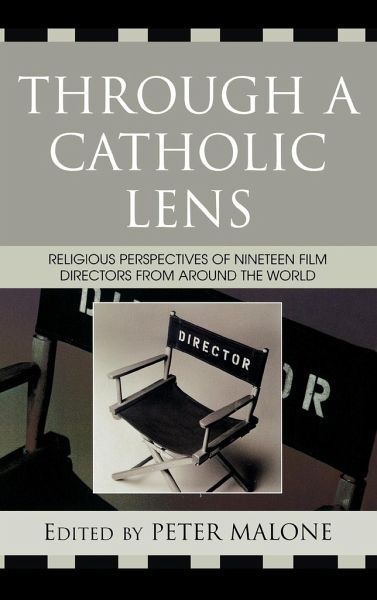
 Through a Catholic Lens52,99 €
 Christians in the Movies50,99 €
 The Book of Psalms Through the Lens of Intertextuality60,95 €
 Through a Lens Darkly30,99 €
 Through a Lens Darkly17,99 €
 Through Time's Lens20,99 €
 Bible through the Lens of Trauma46,99 €
Movie texts are often examined for subtexts and for the way that they dramatize social and psychological issues as well as current movements. Through a Catholic Lens looks at the Catholic subtext through a collection of studies of 19 film directors from around the world whose Catholic backgrounds can be found in their writing and directing.
[A] fascinating collection of essays which should be a first purchase for all academic Catholic libraries...Peter Malone, a respected authority in the field, is to be commended for this excellent contribution. Catholic Library World, December 2008 This superb collection explores the powerful ways that Catholic film-makers have reflected upon their religious upbringing and convictions - and their struggle with their own faith traditions - through their movies. In doing so, it also demonstrates the great diversity within Catholicism, by treating films that emerge not only from American Catholicism, but also from Great Britain, Canada, Latin America and Europe. Nor does it shy away from difficult issues, including crises of faith, the tensions among piety, atheism and agnosticism, and the fraught history of Catholic-Jewish relations. Discussion of the films is enriched by a focus on the directors, and analysis of the impact of their personal histories, including their Catholic identities and their political and cultural contexts, on their movies. A fascinating book that will interest movie-lovers of all religious persuasions. -- Adele Reinhartz, Associate Vice-President of Research, University of Ottawa