

Andere Kunden interessierten sich auch für
 Protest Politics and the Democratization of South Korea113,99 €
 Democratic Struggle, Institutional Reform, and State Resilience in the African Sahel110,99 €
 Tocqueville, Democracy, and Religion67,99 €
 The Real World of Democratic Theory41,99 €
 Alternatives to Democracy - Non-Democratic Regimes and the Limits to Democracy Diffusion in Eurasia86,99 €
 Democracy and Leadership123,99 €
 Africa's Social Cleavages and Democratization144,99 €


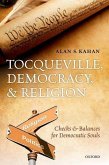




Tocqueville, Covenant, and the Democratic Revolution examines the intellectual and institutional context in which Alexis de Tocqueville developed his understanding of American political culture, with its profound influence on his democratic theory. This book also examines Tocqueville's claim that religious beliefs are among the most important determinants of a people's social structure and political institutions.
Full of fine moments. American Historical Review This book is a remarkably original effort to develop a fresh understanding and appreciation of Tocqueville's "new science of politics." Perspectives on Politics For those of us who have recognized the common intellectual framework in Adam Smith and The Federalist in their analysis of polycentric systems as applied to self-governance through federalism and in markets, Barbara Allen's analysis of Tocqueville makestwo very important contributions: First is how closely the self-government covenanting of New England Protestants parallels federalism in its analysis of governance systems and secondly how important religious culture was to reinforcing polycentric arrangements. This work is revealing for those who would like to extend self-government, federalism and markets into other cultures and especially for economists who need to understand the cultural context of institutional arrangements for both markets and governance.. -- Robert L. Bish, Professor Emeritus, Economics and Public Administration, University of Virginia For those of us who have recognized the common intellectual framework in Adam Smith and The Federalist in their analysis of polycentric systems as applied to self-governance through federalism and in markets, Barbara Allen's analysis of Tocqueville makes two very important contributions: First is how closely the self-government covenanting of New England Protestants parallels federalism in its analysis of governance systems and secondly how important religious culture was to reinforcing polycentric arrangements. This work is revealing for those who would like to extend self-government, federalism and markets into other cultures and especially for economists who need to understand the cultural context of institutional arrangements for both markets and governance. -- Robert L. Bish, Professor Emeritus, Economics and Public Administration, University of Virginia