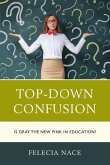
This book explores mixed messages in education that filters down from the government which leaves educators in a state of confusion. The culmination of over exposure of young children to LGBTQIA topics, the "banning" of religion in schools, and the runaway train of illegal immigration creates continual gray areas for school districts.
This book explores mixed messages in education that filters down from the government which leaves educators in a state of confusion. The culmination of over exposure of young children to LGBTQIA topics, the "banning" of religion in schools, and the runaway train of illegal immigration creates continual gray areas for school districts.
Felecia Nace is a former language arts teacher of the Montclair Public School District, NJ. She was also employed as an Education Specialist for 13 years at the New Jersey Department of Education, worked for five years as an adjunct professor at Mercer County Community College, English Department and is currently the Executive Director of Partners 4 Educational Change, an education consulting firm.
Inhaltsangabe
Foreword Pete Tamburro Acknowledgements Chapter 1: The Graying of Teaching and Learning Testing Parent Involvement Curriculum Chapter 2: Educational Change and Bullying: More Gray Areas in Education Educational Change Bullying Conclusion and Systemic Impact Chart (1A) Chapter 3: What's it Like for Children in the Gray Zone The Gray Zone Lessons in Diversity Learning Life Lessons Through Systems Thinking Systems Thinking, the Value of Life, and College and Career Readiness Just How Important is Everyone How to Study Systems? Conclusion: Being Connected Chapter 4 Religion: The Light of the World Is There a Place for Religion in Schools? Paranoia and Religion in Today's Schools The Fork in the Road Chapter 5: Do Schools Contradict the Principles of Critical Thinking? What Does Gray Represent? Natural Reactions to Gray Lesbian, Gay, Bisexual, Transgender, questioning, Intersex, Asexual (LGBTQIA) The Government's Role The Importance of Defining "Normal" Chapter 6: Kids Will Be Kids LGBTQIA-what's All the Fuss About? Confusion in the Learning Environment Caution in Premature Labeling of Kid Conclusion Chapter 7: Lessons in Systems Thinking Teaching Children about Systems Thinking Systems Thinking: Endless Lessons for Children Activities for introducing systems thinking to children (At home and at school) Using Systems Thinking to Problem Solve Summary:Benefits for Children Who Study Systems Chapter 8: Immigration: An Unspoken Gray Area in Education Immigration: How are we doing? Illegal Immigration and the Impact on Schools Illegal Immigration and Moral Questions Migration, Communities, and Schools Open Conversations about Culture and Diversity A Smart Approach to Closing Cultural Gaps in Schools Chapter 9: Taking Schools from Grey to Pink through Effective Communication The Journey Do teachers and parents speak the same language? Parent-teacher communication: Both Sides of the Coin Defining Parent-Teacher Communication The high school years: "The village" Community and Schools: Finding Innovative ways to stay connected Chapter 10: Exploring Weak Links in Education Is Having Teaching Experience Overrated? Who Schools Hire and What It Communicates to Parents Are Charter Schools a Weak Link in Education? Conclusion Chapter 11: Education Leaders as Chief Communicators What is a Quality Hire? Lowering Standards for Today's Education Leaders Who's on Top? Conclusion Closing Thoughts
Foreword Pete Tamburro Acknowledgements Chapter 1: The Graying of Teaching and Learning Testing Parent Involvement Curriculum Chapter 2: Educational Change and Bullying: More Gray Areas in Education Educational Change Bullying Conclusion and Systemic Impact Chart (1A) Chapter 3: What's it Like for Children in the Gray Zone The Gray Zone Lessons in Diversity Learning Life Lessons Through Systems Thinking Systems Thinking, the Value of Life, and College and Career Readiness Just How Important is Everyone How to Study Systems? Conclusion: Being Connected Chapter 4 Religion: The Light of the World Is There a Place for Religion in Schools? Paranoia and Religion in Today's Schools The Fork in the Road Chapter 5: Do Schools Contradict the Principles of Critical Thinking? What Does Gray Represent? Natural Reactions to Gray Lesbian, Gay, Bisexual, Transgender, questioning, Intersex, Asexual (LGBTQIA) The Government's Role The Importance of Defining "Normal" Chapter 6: Kids Will Be Kids LGBTQIA-what's All the Fuss About? Confusion in the Learning Environment Caution in Premature Labeling of Kid Conclusion Chapter 7: Lessons in Systems Thinking Teaching Children about Systems Thinking Systems Thinking: Endless Lessons for Children Activities for introducing systems thinking to children (At home and at school) Using Systems Thinking to Problem Solve Summary:Benefits for Children Who Study Systems Chapter 8: Immigration: An Unspoken Gray Area in Education Immigration: How are we doing? Illegal Immigration and the Impact on Schools Illegal Immigration and Moral Questions Migration, Communities, and Schools Open Conversations about Culture and Diversity A Smart Approach to Closing Cultural Gaps in Schools Chapter 9: Taking Schools from Grey to Pink through Effective Communication The Journey Do teachers and parents speak the same language? Parent-teacher communication: Both Sides of the Coin Defining Parent-Teacher Communication The high school years: "The village" Community and Schools: Finding Innovative ways to stay connected Chapter 10: Exploring Weak Links in Education Is Having Teaching Experience Overrated? Who Schools Hire and What It Communicates to Parents Are Charter Schools a Weak Link in Education? Conclusion Chapter 11: Education Leaders as Chief Communicators What is a Quality Hire? Lowering Standards for Today's Education Leaders Who's on Top? Conclusion Closing Thoughts
Es gelten unsere Allgemeinen Geschäftsbedingungen: www.buecher.de/agb
Impressum
www.buecher.de ist ein Internetauftritt der buecher.de internetstores GmbH
Geschäftsführung: Monica Sawhney | Roland Kölbl | Günter Hilger
Sitz der Gesellschaft: Batheyer Straße 115 - 117, 58099 Hagen
Postanschrift: Bürgermeister-Wegele-Str. 12, 86167 Augsburg
Amtsgericht Hagen HRB 13257
Steuernummer: 321/5800/1497
USt-IdNr: DE450055826