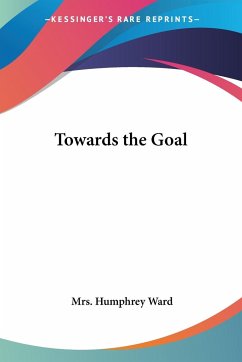
Towards the Goal presents a reflective and impassioned chronicle of a nation transformed by war, focusing on the collective determination that defined Britain's role in World War I. The book examines how military strategy, naval expansion, and industrial coordination converged to support a cause that reshaped both public life and private resolve. Through firsthand observations and detailed accounts, it highlights how individual labor and sacrifice became expressions of national identity. The narrative bridges two continents, aiming to foster understanding and solidarity between British and…mehr
Towards the Goal presents a reflective and impassioned chronicle of a nation transformed by war, focusing on the collective determination that defined Britain's role in World War I. The book examines how military strategy, naval expansion, and industrial coordination converged to support a cause that reshaped both public life and private resolve. Through firsthand observations and detailed accounts, it highlights how individual labor and sacrifice became expressions of national identity. The narrative bridges two continents, aiming to foster understanding and solidarity between British and American audiences by portraying the scale and sincerity of Britain's wartime efforts. It observes how ordinary citizens responded to extraordinary circumstances, offering insight into both the visible machinery of war and the quieter emotional undercurrents of endurance and duty. By documenting transformations across factories, ports, and training grounds, the account elevates logistical preparation into a reflection of unity and shared purpose. It stands as a testimony to resilience under pressure, portraying a society galvanized by conviction and bound by international responsibility.
Humphry Ward was a well-known English novelist and social reformer of the late 19th and early 20th centuries. She was born Mary Augusta Ward on June 11, 1851. Her father was the well-known biologist Thomas Arnold, and her aunt was the well-known novelist Charlotte Mary Yonge. She was raised in an educated and literary household. Early books by Ward, such "Robert Elsmere" (1888), were very popular because of their examination of social and religious themes. In particular, "Robert Elsmere" sparked debate with his analysis of the conflict between science and religion and theological skepticism. Ward's writing frequently demonstrated her interest in current discussions surrounding issues such as social reform, women's rights, and education. In addition to her literary endeavors, Ward was deeply engaged in the anti-suffrage movement and participated in a number of charitable endeavors. She assisted Belgian refugees who had been displaced during World War I. Her involvement with the Charity Organization Society was also active.
Es gelten unsere Allgemeinen Geschäftsbedingungen: www.buecher.de/agb
Impressum
www.buecher.de ist ein Internetauftritt der buecher.de internetstores GmbH
Geschäftsführung: Monica Sawhney | Roland Kölbl | Günter Hilger
Sitz der Gesellschaft: Batheyer Straße 115 - 117, 58099 Hagen
Postanschrift: Bürgermeister-Wegele-Str. 12, 86167 Augsburg
Amtsgericht Hagen HRB 13257
Steuernummer: 321/5800/1497
USt-IdNr: DE450055826