
Andere Kunden interessierten sich auch für
 Pisma Pomniejsze37,99 €
 Zherela Do Istoriï Ukraïny-rusy, Volume 3, Issue 1...37,99 €
 Rosya-polska, 1815-1830...30,99 €
 Zherela Do Istoriï Ukraïny-Rusy37,99 €
 Panowanie Stanisawa Augusta28,99 €
 Higher Education in Russian, Austrian, and Prussian Poland30,99 €
membrement De Cette RÃ(c)publique") Histoire De L'anarchie De Pologne, Et Du DÃ(c)membrement De Cette RÃ(c)publique37,99 €
Histoire De L'anarchie De Pologne, Et Du DÃ(c)membrement De Cette RÃ(c)publique37,99 €



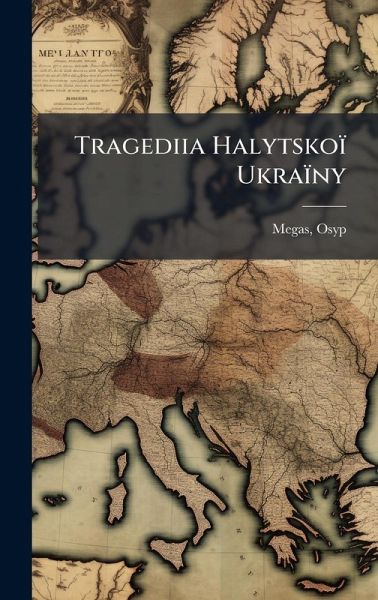
"Tragediia Halytskoï Ukraïny" by Osyp Megas presents a harrowing account of the Polish invasion, barbarity, and occupation of Eastern Galicia during the bloody years of 1918, 1919, and 1920. This historical document compiles materials related to the tragic events, offering a Ukrainian perspective on the conflict and its devastating impact on the region. It serves as a crucial record of the political and social upheavals that marked this period, highlighting the suffering and resilience of the Ukrainian people in the face of war and foreign occupation. This work has been selected by scholars as being culturally important, and is part of the knowledge base of civilization as we know it. This work was reproduced from the original artifact, and remains as true to the original work as possible. Therefore, you will see the original copyright references, library stamps (as most of these works have been housed in our most important libraries around the world), and other notations in the work. This work is in the public domain in the United States of America, and possibly other nations. Within the United States, you may freely copy and distribute this work, as no entity (individual or corporate) has a copyright on the body of the work. As a reproduction of a historical artifact, this work may contain missing or blurred pages, poor pictures, errant marks, etc. Scholars believe, and we concur, that this work is important enough to be preserved, reproduced, and made generally available to the public. We appreciate your support of the preservation process, and thank you for being an important part of keeping this knowledge alive and relevant.