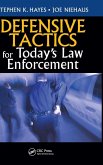
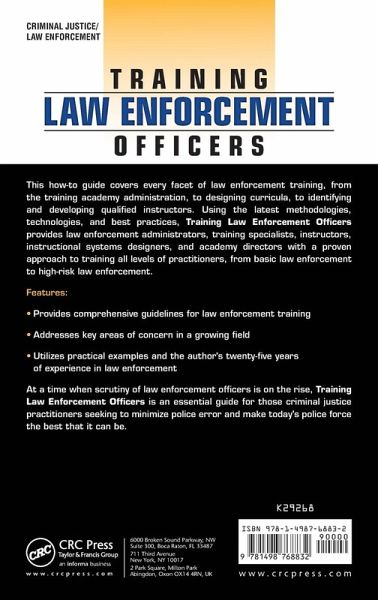
This how-to guide covers every aspect of law enforcement training, from training academy administration, to designing curricula, to identifying and utilizing qualified instructors. Using the latest methodologies, technologies, and best practices, Training Law Enforcement Officers gives law enforcement administrators, training specialists, instructors, instructional systems designers, and academy directors a proven way to conduct training for all levels of practitioners, from basic law enforcement to high-risk law enforcement.
Introduction. Conditions for the Transfer of Training. The Realities of Training. 70:20:10 Training. Human Performance Technology and Law. Enforcement Training. Learning vs. Performance. Conditions of Training. Determining If There Is a Need. Learner Analysis. The Power of Checklists. Conclusion. Cognitive Load Theory. The Brain under Stress and/or Pressure. Training for Pressure Situations. The Law Enforcement Mindset. Section One. Life at the Academy. SWOT. Law Enforcement Ethics Training. Section Two. Developing the Training Staff. Section Three. Curriculum Development. Cognitive Test Development. Focus on Officers' Performance. Field Training and Training Transfer. Distance Training. High RIsk Training. Learning Management System.
Es gelten unsere Allgemeinen Geschäftsbedingungen: www.buecher.de/agb
Impressum
www.buecher.de ist ein Internetauftritt der buecher.de internetstores GmbH
Geschäftsführung: Monica Sawhney | Roland Kölbl | Günter Hilger
Sitz der Gesellschaft: Batheyer Straße 115 - 117, 58099 Hagen
Postanschrift: Bürgermeister-Wegele-Str. 12, 86167 Augsburg
Amtsgericht Hagen HRB 13257
Steuernummer: 321/5800/1497
USt-IdNr: DE450055826