
Von-Bogdandy Et Al
TRANSFORM CONSTIT IN LATIN AMERICA C
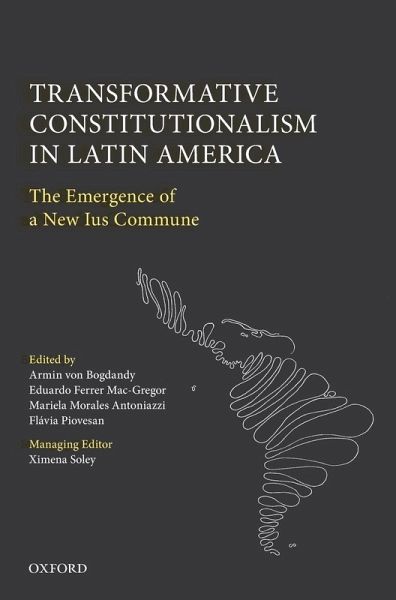
Von-Bogdandy Et Al
TRANSFORM CONSTIT IN LATIN AMERICA C
- Gebundenes Buch
Andere Kunden interessierten sich auch für
 Gunther TeubnerCONSTIT FRAGMENTS137,99 €
 AratoPOST SOVEREIGN CONSTIT MAKING OCON C120,99 €
 Edgar E. Ramírez de la CruzMetropolitan Governance and Social Inequality in Latin America98,99 €
") Gonzalo De QuesadaArbitration In Latin America (1907)23,99 €
Gonzalo De QuesadaArbitration In Latin America (1907)23,99 € Tanya Kateri HernandezRacial Subordination in Latin America42,99 €
 Environmental Justice in Latin America33,99 €
 Pandemocracy in Latin America104,99 €
-
-
-


Produktdetails
- Verlag: ACADEMIC
- Seitenzahl: 450
- Erscheinungstermin: 22. Juni 2017
- Englisch
- Abmessung: 250mm x 175mm x 29mm
- Gewicht: 950g
- ISBN-13: 9780198795919
- ISBN-10: 0198795912
- Artikelnr.: 48431353
- Herstellerkennzeichnung
- Libri GmbH
- Europaallee 1
- 36244 Bad Hersfeld
- gpsr@libri.de
Armin von Bogdandy is Director of the Max Planck Institute for Comparative Public Law and International Law in Heidelberg and Professor of Public Law at the University of Frankfurt/Main. He has been president of the OECD Nuclear Energy Tribunal as well as a member of the German Science Council and the Scientific Committee of the European Union Agency for Fundamental Rights; he has held visiting positions at the New York University School of Law, the European University Institute, the Xiamen Academy of International Law, and the National Autonomous University of Mexico, among others. Armin von Bogdandy is the recipient of the Leibniz Prize, the prize for outstanding scientific achievements in the field of legal and economic foundations by the Berlin-Brandenburg Academy of Sciences; the Premio Internacional "Hector Fix Zamudio,"; and the "Mazo" (gavel) of the Inter-American Court of Human Rights. His research centres on structural development in public law. Eduardo Ferrer Mac-Gregor is judge and vice-president of the Inter-American Court of Human Rights, as well as professor at the National Autonomous University of Mexico and researcher at the Legal Research Institute of that university. He studied law at the Autonomous University of Baja California obtained his PhD in law from the University of Navarra. He is director of the Iberoamerican Journal of Procedural Constitutional Law (Revista Iberoamericana de Derecho Procesal Constitucional). Mariela Morales Antoniazzi is a senior research fellow at the Max Planck Institute for Comparative Public Law and International Law in Heidelberg. She studies law at the Andrés Bello Catholic University, obtained her LLM at the University of Heidelberg and her PhD at the University of Frankfurt/Main. Mariela Morales Antoniazzi is visiting professor at various Latin American universities and vice-president of the German section of the Iberoamerican Institute of Constitutional Law. She coordinates the project Ius Constitutionale Commune en América Latina (ICCAL) at the Max Planck Institute for Comparative Public Law and International Law. Flávia Piovesan is professor of constitutional law and human rights at the Catholic University of São Paulo, where she holds a position in the human rights postgraduate programmes. She holds additional positions at the Catholic University of Paraná, and the human rights and development programme of Pablo de Olavide University, Spain. She was a human rights fellow at the Centre for Brazilian Studies, at the University of Oxford in 2005; and has been a visiting fellow at the Max Planck Institute for Comparative Public Law and International Law on numerous occasions. From 2009-2014 she was there as a Humboldt Foundation Georg Forster Research Fellow. Flávia Piovesan is a former member of the UN High Level Task Force on the implementation of the right to development and a member of the OAS Working Group working on the monitoring of the Protocol of San Salvador on social, economic and cultural rights. In 2016, she was appointed Special Secretary for Human Rights in Brazil.
* INTRODUCTION
* 1: Armin von Bogdandy, Eduardo Ferrer Mac-Gregor, Mariela Morales
Antoniazzi, Flávia Piovesan, and Ximena Soley: Ius Constitutionale
Commune in América Latina: A Regional Approach to Transformative
Constitutionalism
* PART I: FRAMEWORK
* 2: Armin von Bogdandy: Ius Constitutionale Commune in América Latina
: A Conceptual Clarification
* 3: Flávia Piovesan: Ius Constitutionale Commune in América Latina:
Context, Challenges, and Perspectives
* 4: Pedro Salazar Ugarte: The Struggle for Rights and the Ius
Constitutionale Commune
* 5: Martín Aldao, Laura Clérico, and Liliana Ronconi: A
Multidimensional Approach to Equality in the Inter-American Context:
Redistribution, Recognition, and Participatory Parity
* 6: James Fowkes: Transformative Constitutionalism and the Global
South: The View from South Africa
* 7: Pál Sonnevend: Preserving the Acquis of Transformative
Constitutionalism in Times of Constitutional Crisis: Lessons from the
Hungarian Case
* PART II: THE DOMESTIC ELEMENT
* 8: Rainer Grote: The Mexican Constitution of 1917: An Early Example
of Transformative Constitutionalism
* 9: Allan Brewer Carías: The Amparo as an Instrument of Ius
Constitutionale Commune
* 10: Diego Valadés: The Presidential System in Latin America: A
Hallmark and Challenge to a Latin American Ius Constitutionale
Commune
* 11: Roberto Gargarella: The "New Latin American Constitutionalism":
Old Wine in New Skins
* 12: Manuel Góngora-Mera: The Block of Constitutionality as the
Doctrinal Pivot of a Ius Commune
* 13: Mariela Morales Antoniazzi and Pablo Saavedra Alessandri:
Inter-Americanization: Its Legal Bases and Political Impact
* PART III: THE INTER-AMERICAN ELEMENT
* 14: Sabrina Ragone: The Inter-American System of Human Rights:
Essential Features
* 15: Sergio García Ramírez: The American Human Rights Navigation:
Toward a Ius Commune
* 16: Eduardo Ferrer Mac-Gregor: The Conventionality Control as a Core
Mechanism of the Ius Constitutionale Commune
* 17: Ximena Soley: The Transformative Dimension of Inter-American
Jurisprudence
* 18: Óscar Parra Vera: The Impact of Inter-American Judgments by
Institutional Empowerment
* 19: Laurence Burgorgue-Larsen: The Added Value of the Inter-American
Human Rights System: Comparative Thoughts
* 1: Armin von Bogdandy, Eduardo Ferrer Mac-Gregor, Mariela Morales
Antoniazzi, Flávia Piovesan, and Ximena Soley: Ius Constitutionale
Commune in América Latina: A Regional Approach to Transformative
Constitutionalism
* PART I: FRAMEWORK
* 2: Armin von Bogdandy: Ius Constitutionale Commune in América Latina
: A Conceptual Clarification
* 3: Flávia Piovesan: Ius Constitutionale Commune in América Latina:
Context, Challenges, and Perspectives
* 4: Pedro Salazar Ugarte: The Struggle for Rights and the Ius
Constitutionale Commune
* 5: Martín Aldao, Laura Clérico, and Liliana Ronconi: A
Multidimensional Approach to Equality in the Inter-American Context:
Redistribution, Recognition, and Participatory Parity
* 6: James Fowkes: Transformative Constitutionalism and the Global
South: The View from South Africa
* 7: Pál Sonnevend: Preserving the Acquis of Transformative
Constitutionalism in Times of Constitutional Crisis: Lessons from the
Hungarian Case
* PART II: THE DOMESTIC ELEMENT
* 8: Rainer Grote: The Mexican Constitution of 1917: An Early Example
of Transformative Constitutionalism
* 9: Allan Brewer Carías: The Amparo as an Instrument of Ius
Constitutionale Commune
* 10: Diego Valadés: The Presidential System in Latin America: A
Hallmark and Challenge to a Latin American Ius Constitutionale
Commune
* 11: Roberto Gargarella: The "New Latin American Constitutionalism":
Old Wine in New Skins
* 12: Manuel Góngora-Mera: The Block of Constitutionality as the
Doctrinal Pivot of a Ius Commune
* 13: Mariela Morales Antoniazzi and Pablo Saavedra Alessandri:
Inter-Americanization: Its Legal Bases and Political Impact
* PART III: THE INTER-AMERICAN ELEMENT
* 14: Sabrina Ragone: The Inter-American System of Human Rights:
Essential Features
* 15: Sergio García Ramírez: The American Human Rights Navigation:
Toward a Ius Commune
* 16: Eduardo Ferrer Mac-Gregor: The Conventionality Control as a Core
Mechanism of the Ius Constitutionale Commune
* 17: Ximena Soley: The Transformative Dimension of Inter-American
Jurisprudence
* 18: Óscar Parra Vera: The Impact of Inter-American Judgments by
Institutional Empowerment
* 19: Laurence Burgorgue-Larsen: The Added Value of the Inter-American
Human Rights System: Comparative Thoughts
* INTRODUCTION
* 1: Armin von Bogdandy, Eduardo Ferrer Mac-Gregor, Mariela Morales
Antoniazzi, Flávia Piovesan, and Ximena Soley: Ius Constitutionale
Commune in América Latina: A Regional Approach to Transformative
Constitutionalism
* PART I: FRAMEWORK
* 2: Armin von Bogdandy: Ius Constitutionale Commune in América Latina
: A Conceptual Clarification
* 3: Flávia Piovesan: Ius Constitutionale Commune in América Latina:
Context, Challenges, and Perspectives
* 4: Pedro Salazar Ugarte: The Struggle for Rights and the Ius
Constitutionale Commune
* 5: Martín Aldao, Laura Clérico, and Liliana Ronconi: A
Multidimensional Approach to Equality in the Inter-American Context:
Redistribution, Recognition, and Participatory Parity
* 6: James Fowkes: Transformative Constitutionalism and the Global
South: The View from South Africa
* 7: Pál Sonnevend: Preserving the Acquis of Transformative
Constitutionalism in Times of Constitutional Crisis: Lessons from the
Hungarian Case
* PART II: THE DOMESTIC ELEMENT
* 8: Rainer Grote: The Mexican Constitution of 1917: An Early Example
of Transformative Constitutionalism
* 9: Allan Brewer Carías: The Amparo as an Instrument of Ius
Constitutionale Commune
* 10: Diego Valadés: The Presidential System in Latin America: A
Hallmark and Challenge to a Latin American Ius Constitutionale
Commune
* 11: Roberto Gargarella: The "New Latin American Constitutionalism":
Old Wine in New Skins
* 12: Manuel Góngora-Mera: The Block of Constitutionality as the
Doctrinal Pivot of a Ius Commune
* 13: Mariela Morales Antoniazzi and Pablo Saavedra Alessandri:
Inter-Americanization: Its Legal Bases and Political Impact
* PART III: THE INTER-AMERICAN ELEMENT
* 14: Sabrina Ragone: The Inter-American System of Human Rights:
Essential Features
* 15: Sergio García Ramírez: The American Human Rights Navigation:
Toward a Ius Commune
* 16: Eduardo Ferrer Mac-Gregor: The Conventionality Control as a Core
Mechanism of the Ius Constitutionale Commune
* 17: Ximena Soley: The Transformative Dimension of Inter-American
Jurisprudence
* 18: Óscar Parra Vera: The Impact of Inter-American Judgments by
Institutional Empowerment
* 19: Laurence Burgorgue-Larsen: The Added Value of the Inter-American
Human Rights System: Comparative Thoughts
* 1: Armin von Bogdandy, Eduardo Ferrer Mac-Gregor, Mariela Morales
Antoniazzi, Flávia Piovesan, and Ximena Soley: Ius Constitutionale
Commune in América Latina: A Regional Approach to Transformative
Constitutionalism
* PART I: FRAMEWORK
* 2: Armin von Bogdandy: Ius Constitutionale Commune in América Latina
: A Conceptual Clarification
* 3: Flávia Piovesan: Ius Constitutionale Commune in América Latina:
Context, Challenges, and Perspectives
* 4: Pedro Salazar Ugarte: The Struggle for Rights and the Ius
Constitutionale Commune
* 5: Martín Aldao, Laura Clérico, and Liliana Ronconi: A
Multidimensional Approach to Equality in the Inter-American Context:
Redistribution, Recognition, and Participatory Parity
* 6: James Fowkes: Transformative Constitutionalism and the Global
South: The View from South Africa
* 7: Pál Sonnevend: Preserving the Acquis of Transformative
Constitutionalism in Times of Constitutional Crisis: Lessons from the
Hungarian Case
* PART II: THE DOMESTIC ELEMENT
* 8: Rainer Grote: The Mexican Constitution of 1917: An Early Example
of Transformative Constitutionalism
* 9: Allan Brewer Carías: The Amparo as an Instrument of Ius
Constitutionale Commune
* 10: Diego Valadés: The Presidential System in Latin America: A
Hallmark and Challenge to a Latin American Ius Constitutionale
Commune
* 11: Roberto Gargarella: The "New Latin American Constitutionalism":
Old Wine in New Skins
* 12: Manuel Góngora-Mera: The Block of Constitutionality as the
Doctrinal Pivot of a Ius Commune
* 13: Mariela Morales Antoniazzi and Pablo Saavedra Alessandri:
Inter-Americanization: Its Legal Bases and Political Impact
* PART III: THE INTER-AMERICAN ELEMENT
* 14: Sabrina Ragone: The Inter-American System of Human Rights:
Essential Features
* 15: Sergio García Ramírez: The American Human Rights Navigation:
Toward a Ius Commune
* 16: Eduardo Ferrer Mac-Gregor: The Conventionality Control as a Core
Mechanism of the Ius Constitutionale Commune
* 17: Ximena Soley: The Transformative Dimension of Inter-American
Jurisprudence
* 18: Óscar Parra Vera: The Impact of Inter-American Judgments by
Institutional Empowerment
* 19: Laurence Burgorgue-Larsen: The Added Value of the Inter-American
Human Rights System: Comparative Thoughts