
Andere Kunden interessierten sich auch für
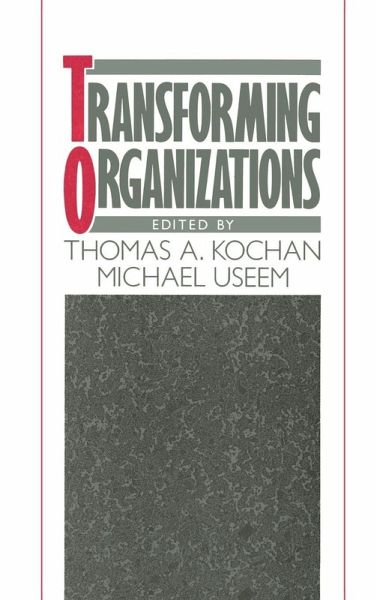
 Transforming Organizations25,99 €
 Leader Development for Transforming Organizations74,99 €
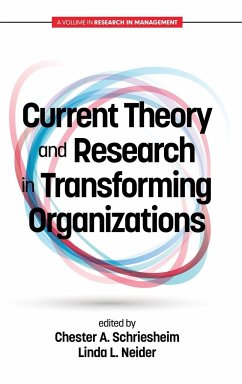
") Current Theory and Research in Transforming Organizations(HC)98,99 €
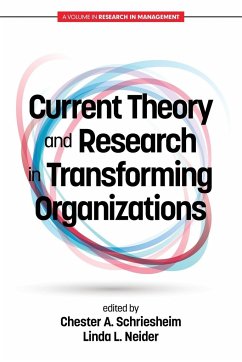
Current Theory and Research in Transforming Organizations(HC)98,99 € Current Theory and Research in Transforming Organizations55,99 €
 Leader Development for Transforming Organizations177,99 €
 Transforming Organizations for the Subscription Economy169,99 €
 Transforming Government Organizations69,99 €


This is a contributed book on how organizations can and should adapt to global markets in a world economy. Its central argument is that merely changing parts of an organization will not be successful and that systemic changes across whole organizations will be required.
Some organizations are slow to change, and limited in scope when change does occur. Yet, without continuous and systematic organizational change, the competitiveness--even survival--of many organizations may be at risk. This book examines how organizations can, and should, transform their structures and practices to compete in a world economy. Research results from a multi-disciplinary team of researchers at Massachusetts Institute of Technology, along with the experiences and insights of a select group of industry practitioners, are integrated into a model that stresses the need for systematic and transformative rather than piecemeal or incremental changes in organization practices and policy. A team of scholars with expertise in the areas of corporate strategy, organizational behavior, human resource management, and the management of technology draw on research data collected from companies in the United States, Asia, and Europe to analyze current practices as well as to propose alternatives. This integration of research and experience results in an argument for a new organizational learning model--one capable of gaining advantage from employee diversity, cooperation across organizational boundaries, strategic restructuring, and advanced technology. The book begins with a foreword by Lester C. Thurow.
Some organizations are slow to change, and limited in scope when change does occur. Yet, without continuous and systematic organizational change, the competitiveness--even survival--of many organizations may be at risk. This book examines how organizations can, and should, transform their structures and practices to compete in a world economy. Research results from a multi-disciplinary team of researchers at Massachusetts Institute of Technology, along with the experiences and insights of a select group of industry practitioners, are integrated into a model that stresses the need for systematic and transformative rather than piecemeal or incremental changes in organization practices and policy. A team of scholars with expertise in the areas of corporate strategy, organizational behavior, human resource management, and the management of technology draw on research data collected from companies in the United States, Asia, and Europe to analyze current practices as well as to propose alternatives. This integration of research and experience results in an argument for a new organizational learning model--one capable of gaining advantage from employee diversity, cooperation across organizational boundaries, strategic restructuring, and advanced technology. The book begins with a foreword by Lester C. Thurow.