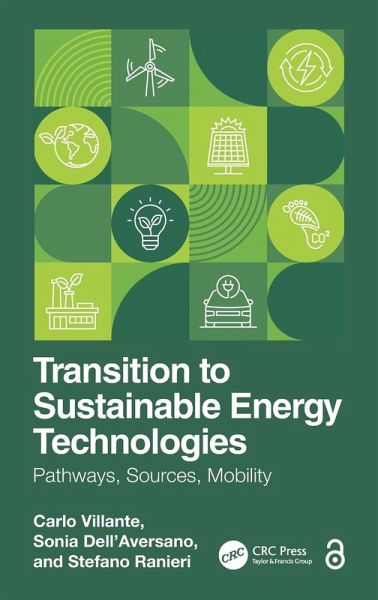
The book offers a comprehensive exploration of integrated socio-economic, environmental, and technological perspectives and provides actionable solutions and practical pathways for transitioning to sustainable energy systems. This holistic approach is a great way to learn how to navigate the complexities of global energy systems.
Part I: Energy Transition: History, Issues, Policies and Pathways, KETs. I.1. Sustainable Development. I.2. Energy Systems. I.3. Energy Dependency. I.4. Energy Sources' Exhaustibility. I.5. Greenhouse Effect and Global Warming. I.6. Global Warming Effects and Related Issues. I.7. Decarbonization Policies Design - The Kaya Identity. I.8. Decarbonization Pathways. I.9. Small Space-Time Scale Environmental Impacts. I.10. Energy Transition to Sustainable Energy Systems. I.11. Key Enabling Technologies for Energy Sources Conversion. I.12. Sustainable Choice of Energy Carriers. I.13. Key Enabling Technologies for Final Energy Uses. Part II: Sustainable Energy Sources: Characteristics, Key Conversion Technologies. II.1. Sustainable Energy Sources' Characteristics. II.2. Solar Energy. II.3. Wind Energy. II.4. Hydro Energy. II.5. Geothermal Energy. II.6. Biomass, Biofuels, and e-Fuels. Part III: Sustainable Mobility: Section Evolution, Propulsion Systems. III.1. Sustainable Mobility Issues. III.2. Vehicular Energy Power Requirements. III.3. ICEs and Their Local and Global Impact. III.4. Alternative Fuels for ICEs. III.5. Vehicle Electrification. III.6. Fuel Cell Electric Vehicles (FCEVs). III.7. Battery Electric Vehicles (BEVs). III.8. Hybrid Electric Vehicles (HEVs).
Es gelten unsere Allgemeinen Geschäftsbedingungen: www.buecher.de/agb
Impressum
www.buecher.de ist ein Internetauftritt der buecher.de internetstores GmbH
Geschäftsführung: Monica Sawhney | Roland Kölbl | Günter Hilger
Sitz der Gesellschaft: Batheyer Straße 115 - 117, 58099 Hagen
Postanschrift: Bürgermeister-Wegele-Str. 12, 86167 Augsburg
Amtsgericht Hagen HRB 13257
Steuernummer: 321/5800/1497
USt-IdNr: DE450055826