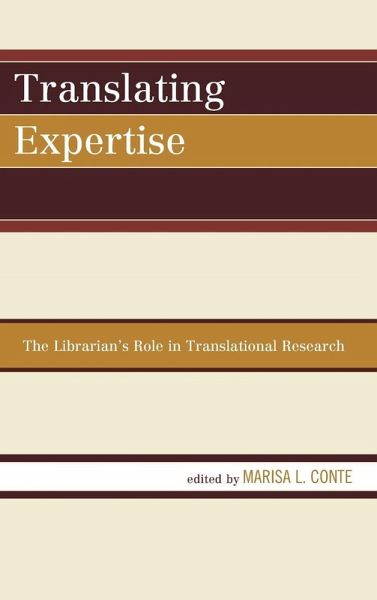
Translating Expertise: The Librarian’s Role in Translational Research provides background and context on the CTSA program. Case studies detail routes to librarian involvement in translational research, including collection development, relationships with researchers and administrators, instruction and training, data management, and team science.
Translating Expertise: The Librarian’s Role in Translational Research provides background and context on the CTSA program. Case studies detail routes to librarian involvement in translational research, including collection development, relationships with researchers and administrators, instruction and training, data management, and team science.
Marisa Conte is the Research and Data Informationist at the University of Michigan's Taubman Health Sciences Library. In this role she partners with researchers and administration to integrate library resources, services and expertise into the research enterprise. She's worked with UM's clinical and translational research community since 2007. Marisa is a graduate of Wayne State University and a proud alumna of the National Library of Medicine's Associate Fellowship Program. Her research interests include biomedical informatics, data management, team science, research ethics and research policy.
Inhaltsangabe
Preface by Marisa L. Conte, University of Michigan Introduction Chapter 1: Libraries supporting the translational science spectrum: An introduction. By Kristi L. Holmes, Northwestern University. Basic and clinical science Chapter 2: Bioinformatics projects with the Clinical and Translational Sciences Institute: Building success step by step. By Pamela L. Shaw, Northwestern University Chapter 3: Librarian involvement in tranSMART: a translational biomedical research platform. By Marci D. Brandenburg, University of Michigan. Chapter 4: Librarian integration in a working group of the REDCap International Consortium. By Jennifer A. Lyon, Stony Brook University; Fatima M. Mncube-Barnes, Meharry Medical College; Brenda L. Minor, Vanderbilt University Education and community engagement Chapter 5: Tailoring support for a community fellows research program. By William Olmstadt, Louisiana State University Health Shreveport; Mychal A. Vorhees; Robert J. Engeszer, Washington University School of Medicine. Chapter 6: Partners in Research: connecting with the community. By Kate Sayor; Molly White, University of Michigan; Celeste Choate, Ann Arbor District Library; Dorene Markel, University of Michigan Chapter 7: Developing an educational role in a clinical and translational science institute. By Diana Nelson Louden, University of Washington Networks and connection Chapter 8: Expanding research networks. By Judith E. Smith; Leena N. Lalwani, University of Michigan Chapter 9: Librarians' roles in translating research expertise through VIVO. By Valrie I. Minson; Michele R. Tennant; Hannah F. Norton, University of Florida Chapter 10: Connecting researchers: an intersection of game development and clinical research personnel. By Christina N. Kalinger; Jean P. Shipman; Roger A. Altizer, University of Utah Infrastructure Chapter 11: Librarians partner with translational scientists: Life after My Research Assistant (MyRA). By Jean P. Shipman, University of Utah Chapter 12: The role of the Library in Public Access Policy compliance. By Emily S. Mazure; Patricia L. Thibodeau, Duke University Chapter 13: Taking flight to disseminate translational research: a partnership between the UMass Center for Clinical and Translational Science and the Library's Institutional Repository. By Lisa A. Palmer, University of Massachusetts Medical School; Sally A. Gore, University of Massachusetts Evaluation Chapter 14: Capitalizing on serendipity: Parlaying a citation report into a publishing and evaluation support program. By Cathy C. Sarli, Washington University School of Medicine; Kristi L. Holmes, Northwestern University; Amy M. Suiter, Northwestern University Chapter 15: Research impact assessment. By Karen E. Gutzman, Northwestern University Chapter 16: Web design, evaluation and bibliometrics, oh my! From local CTSA work to national involvement. By Elizabeth C. Whipple, Indiana University Chapter 17: Assessing impact through publications: metrics that tell a story. By Alisa Surkis, New York University
Preface by Marisa L. Conte, University of Michigan Introduction Chapter 1: Libraries supporting the translational science spectrum: An introduction. By Kristi L. Holmes, Northwestern University. Basic and clinical science Chapter 2: Bioinformatics projects with the Clinical and Translational Sciences Institute: Building success step by step. By Pamela L. Shaw, Northwestern University Chapter 3: Librarian involvement in tranSMART: a translational biomedical research platform. By Marci D. Brandenburg, University of Michigan. Chapter 4: Librarian integration in a working group of the REDCap International Consortium. By Jennifer A. Lyon, Stony Brook University; Fatima M. Mncube-Barnes, Meharry Medical College; Brenda L. Minor, Vanderbilt University Education and community engagement Chapter 5: Tailoring support for a community fellows research program. By William Olmstadt, Louisiana State University Health Shreveport; Mychal A. Vorhees; Robert J. Engeszer, Washington University School of Medicine. Chapter 6: Partners in Research: connecting with the community. By Kate Sayor; Molly White, University of Michigan; Celeste Choate, Ann Arbor District Library; Dorene Markel, University of Michigan Chapter 7: Developing an educational role in a clinical and translational science institute. By Diana Nelson Louden, University of Washington Networks and connection Chapter 8: Expanding research networks. By Judith E. Smith; Leena N. Lalwani, University of Michigan Chapter 9: Librarians' roles in translating research expertise through VIVO. By Valrie I. Minson; Michele R. Tennant; Hannah F. Norton, University of Florida Chapter 10: Connecting researchers: an intersection of game development and clinical research personnel. By Christina N. Kalinger; Jean P. Shipman; Roger A. Altizer, University of Utah Infrastructure Chapter 11: Librarians partner with translational scientists: Life after My Research Assistant (MyRA). By Jean P. Shipman, University of Utah Chapter 12: The role of the Library in Public Access Policy compliance. By Emily S. Mazure; Patricia L. Thibodeau, Duke University Chapter 13: Taking flight to disseminate translational research: a partnership between the UMass Center for Clinical and Translational Science and the Library's Institutional Repository. By Lisa A. Palmer, University of Massachusetts Medical School; Sally A. Gore, University of Massachusetts Evaluation Chapter 14: Capitalizing on serendipity: Parlaying a citation report into a publishing and evaluation support program. By Cathy C. Sarli, Washington University School of Medicine; Kristi L. Holmes, Northwestern University; Amy M. Suiter, Northwestern University Chapter 15: Research impact assessment. By Karen E. Gutzman, Northwestern University Chapter 16: Web design, evaluation and bibliometrics, oh my! From local CTSA work to national involvement. By Elizabeth C. Whipple, Indiana University Chapter 17: Assessing impact through publications: metrics that tell a story. By Alisa Surkis, New York University
Es gelten unsere Allgemeinen Geschäftsbedingungen: www.buecher.de/agb
Impressum
www.buecher.de ist ein Internetauftritt der buecher.de internetstores GmbH
Geschäftsführung: Monica Sawhney | Roland Kölbl | Günter Hilger
Sitz der Gesellschaft: Batheyer Straße 115 - 117, 58099 Hagen
Postanschrift: Bürgermeister-Wegele-Str. 12, 86167 Augsburg
Amtsgericht Hagen HRB 13257
Steuernummer: 321/5800/1497
USt-IdNr: DE450055826