Developed by experts in trauma psychiatry and psychology and grounded in adolescent developmental theory, this is a modular, assessment-driven treatment that addresses the needs of adolescents facing trauma, bereavement, and accompanying developmental disruption. Created by the developers of the University of California, Los Angeles PTSD Reaction Index(c) and the Persistent Complex Bereavement Disorder Checklist, the book links clinicians with cutting-edge research in traumatic stress and bereavement, as well as ongoing training opportunities. This innovative guide offers teen-friendly coping…mehr
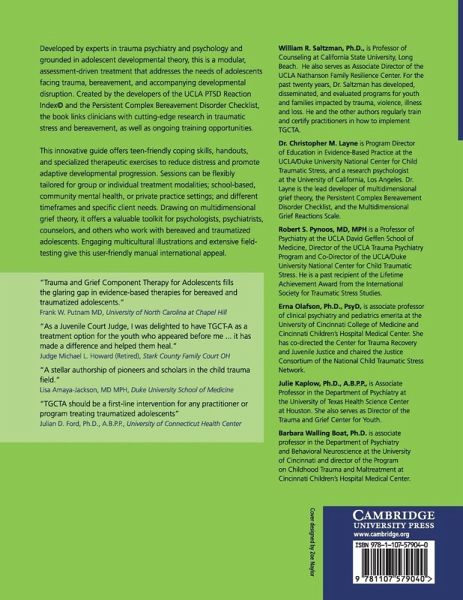
Developed by experts in trauma psychiatry and psychology and grounded in adolescent developmental theory, this is a modular, assessment-driven treatment that addresses the needs of adolescents facing trauma, bereavement, and accompanying developmental disruption. Created by the developers of the University of California, Los Angeles PTSD Reaction Index(c) and the Persistent Complex Bereavement Disorder Checklist, the book links clinicians with cutting-edge research in traumatic stress and bereavement, as well as ongoing training opportunities. This innovative guide offers teen-friendly coping skills, handouts, and specialized therapeutic exercises to reduce distress and promote adaptive developmental progression. Sessions can be flexibly tailored for group or individual treatment modalities; school-based, community mental health, or private practice settings; and different timeframes and specific client needs. Drawing on multidimensional grief theory, it offers a valuable toolkit for psychologists, psychiatrists, counsellors, and others who work with bereaved and traumatized adolescents. Engaging multicultural illustrations and extensive field-testing give this user-friendly manual international appeal.
William Saltzman, Ph.D., is a licensed clinical psychologist and holds a primary appointment as Professor of Counseling at California State University, Long Beach. Dr Saltzman also serves as Associate Director of the University of California, Los Angeles, Nathanson Family Resilience Center. For the past twenty years, Dr Saltzman has developed, disseminated, and evaluated programs for youth and families impacted by trauma, violence, illness and loss. He and the other authors regularly train and certify practitioners in how to implement TGCTA.
Inhaltsangabe
Introduction TGCTA pre-treatment assessment interview: introduction, assessment, and goal setting for individual or group participation Module 1. Foundational Knowledge and Skills: Introduction Session 1.1 Welcome and introduction Session 1.2 Posttraumatic and grief reactions and introduction to coping strategies Session 1.3 Emotions and feelings Session 1.4 Learning to cope with trauma and loss reminders Session 1.5 Learning coping skills Session 1.6 Sizing up a situation Session 1.7 Identifying and replacing hurtful thoughts Session 1.8 Recruiting effective support handouts 1.1-1.53 Module 2. Working Through Traumatic or Loss Experiences: Introduction Session 2.1 Preparing to share personal trauma or loss experiences (sharing our stories) Session 2.2 Group narrative sharing sessions Session 2.3 Review of group sharing and exploration of beliefs and expectations Session 2.4 Guide for conducting individual narrative and pullout sessions Handouts 2.1-2.15 Module 3. Working Through Grief Experiences: Introduction Session 3.1 Learning about grief Session 3.2 Understanding connections between loss reminders, grief reactions, and consequences Session 3.3 Dealing with distress over the circumstances of tragic deaths Session 3.4 Identifying positive and negative traits Session 3.5 Reminiscing together Session 3.6 Planning for difficult days (relapse prevention) Handouts 3.1-3.34 Module 4. Preparing for the Future: Introduction Session 4.1 Next steps - promoting developmental progress Session 4.2 Coping with difficult days Session 4.3 What is and what is not your job Session 4.4 Graduation and launching into the future Handouts 4.1-4.25 Appendices.
Es gelten unsere Allgemeinen Geschäftsbedingungen: www.buecher.de/agb
Impressum
www.buecher.de ist ein Internetauftritt der buecher.de internetstores GmbH
Geschäftsführung: Monica Sawhney | Roland Kölbl | Günter Hilger
Sitz der Gesellschaft: Batheyer Straße 115 - 117, 58099 Hagen
Postanschrift: Bürgermeister-Wegele-Str. 12, 86167 Augsburg
Amtsgericht Hagen HRB 13257
Steuernummer: 321/5800/1497
USt-IdNr: DE450055826