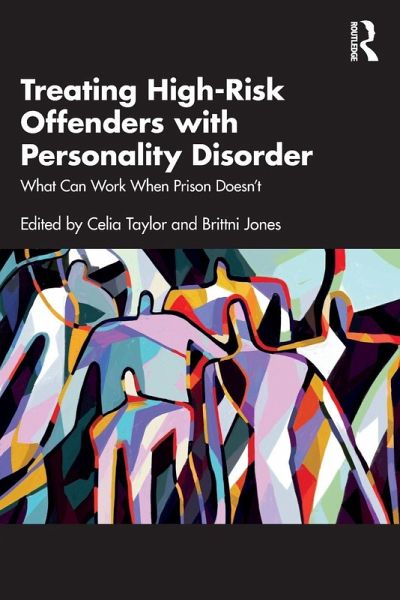
Drawing from the experiences of those working within the Millfields Unit specialist service for high-risk male offenders with personality disorder, this book provides readers with a primer on the theory underpinning a successful treatment model and demonstrates how to put it into practice.
Drawing from the experiences of those working within the Millfields Unit specialist service for high-risk male offenders with personality disorder, this book provides readers with a primer on the theory underpinning a successful treatment model and demonstrates how to put it into practice.
Celia Taylor is a Consultant Forensic Psychiatrist with West London NHS Mental Health Trust and a Fellow of the Royal College of Psychiatrists. She previously was Lead Clinician at Millfields Unit, a national medium secure service for high-risk male offenders with severe personality disorder. Brittni Jones is Director of BE Psychology Ltd; Chartered Clinical Psychologist and Psychodynamic Psychotherapist. She is currently also a Therapeutic Community Specialist, supporting the review of the accreditation of Therapeutic Communities. She was previously Lead Psychologist at Millfields Unit.
Inhaltsangabe
1. The origin and nature of the patient's difficulties 2. Personality disorder and serious offending 3. Rationale and theoretical underpinnings of the adapted Therapeutic Community approach 4. Community meetings 5. Small Groups 6. How do you spell forgiveness? Finding a shared language of expression through art psychotherapy 7. Offence-focussed work 8. Substance misuse 9. Individual work and how it is managed within a Therapeutic Community 10. Pavilion, unstructured spaces, and the role of nurses and Social Therapists 11. Occupational Therapy, Education, Work and Community Leave 12. Assessment and selection for treatment 13. Assessing personality and risk 14. Formulation 15. How to form a therapeutic alliance 16. The process of change 17. The importance of transitions and aftercare 18. Staff selection, supervision, training and reflective practice 19. The impact of the work on individuals, teams and organisations 20. Common but complex pitfalls
1. The origin and nature of the patient's difficulties 2. Personality disorder and serious offending 3. Rationale and theoretical underpinnings of the adapted Therapeutic Community approach 4. Community meetings 5. Small Groups 6. How do you spell forgiveness? Finding a shared language of expression through art psychotherapy 7. Offence-focussed work 8. Substance misuse 9. Individual work and how it is managed within a Therapeutic Community 10. Pavilion, unstructured spaces, and the role of nurses and Social Therapists 11. Occupational Therapy, Education, Work and Community Leave 12. Assessment and selection for treatment 13. Assessing personality and risk 14. Formulation 15. How to form a therapeutic alliance 16. The process of change 17. The importance of transitions and aftercare 18. Staff selection, supervision, training and reflective practice 19. The impact of the work on individuals, teams and organisations 20. Common but complex pitfalls
Es gelten unsere Allgemeinen Geschäftsbedingungen: www.buecher.de/agb
Impressum
www.buecher.de ist ein Internetauftritt der buecher.de internetstores GmbH
Geschäftsführung: Monica Sawhney | Roland Kölbl | Günter Hilger
Sitz der Gesellschaft: Batheyer Straße 115 - 117, 58099 Hagen
Postanschrift: Bürgermeister-Wegele-Str. 12, 86167 Augsburg
Amtsgericht Hagen HRB 13257
Steuernummer: 321/5800/1497
USt-IdNr: DE450055826