
Andere Kunden interessierten sich auch für
 Climate from Tree Rings45,99 €
 Dendroclimatology113,99 €
 Dendroclimatology113,99 €
 Isotopes in Palaeoenvironmental Research76,99 €
 The Tree of Life and The Origin of The Species60,99 €
 Mapping Tree Species Diversity122,99 €
 Climatic Change and Its Impacts76,99 €



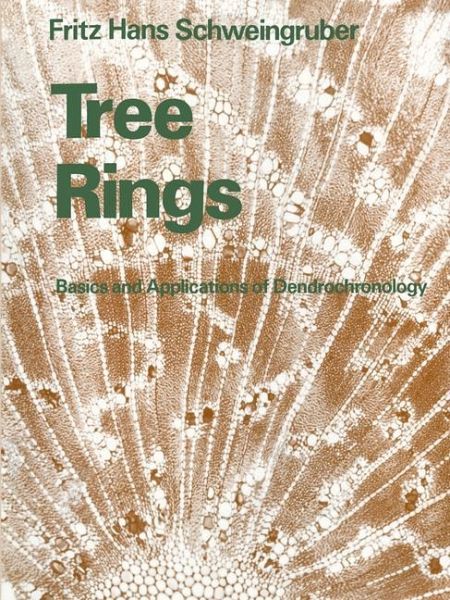
At a meeting of dendrochronologists an American colleague described the effects of volcanic eruptions on annual ring formation in bristlecone pines. I knew very little about either volcanoes or American pines! At the same meeting European scientists spoke on the dendrochronological dating of lakeshore settlements and the effects of larch bud moth attack on trees in the Alps. It is possible that American participants were not in a position to fully appreciate these papers either. In other words, dendrochronology is an extremely interdisciplinary science; its facets range from modern statistics on wood anatomy to the history of art. It is difficult even for dendrochronol ogists to keep in touch with the whole spectrum, and even more difficult for the layman to obtain an overall view of the many methods and fields of application. In recent times specialisation has begun to hinder communication be tween the various sectors. Archaeologists, for instance, set up their own dendrochronological laboratories and construct independent chronologies to serve their particular interests. The scientific institutions which previously carried out such work are now turning more and more to strongly statistically or biologically-oriented questions. The full wealth of information contained in tree rings, however, will be revealed only when dendrochronologists make a concerted effort to relate the findings of the different fields. In spite of inevitable specialisation, it is necessary that the expert concern himself with the work of his colleagues.
`Dr. Schweingruber's book is so full of wonderful, logical and typographically clear graphics, tables and illustrations that the relatively brief text is perceived as a mere commentary or perhaps an extended caption. The handsome halftone figures draw together a remarkable amount of information from scattered sources. This is less a book than a pictorial encyclopedia of what should be known about tree rings.'
European Cultural Heritage, 3:2
European Cultural Heritage, 3:2
`Dr. Schweingruber's book is so full of wonderful, logical and typographically clear graphics, tables and illustrations that the relatively brief text is perceived as a mere commentary or perhaps an extended caption. The handsome halftone figures draw together a remarkable amount of information from scattered sources. This is less a book than a pictorial encyclopedia of what should be known about tree rings.'
European Cultural Heritage, 3:2
European Cultural Heritage, 3:2