
Andere Kunden interessierten sich auch für
 Bäume der Nallamalais Eastern Ghats, Indien51,90 €
 Floristic Studies on Dicots of Karandamalai, Eastern Ghats, India69,99 €
 Endemic and Red-listed Medicinal Plants used by the Valaiyars of Karandamalai, Southern Eastern Ghats, Tamil Nadu, India17,95 €
 Foliicolous Lichens of Central Western Ghats, India46,99 €
 Medicinal Flora of Nallamalais, Eastern Ghats India41,99 €
 Diversity and Phytosociological analysis on medicinal plants24,99 €
 Shola Forests of Palni hills, Southern Western Ghats, India69,99 €
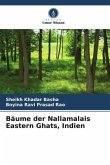
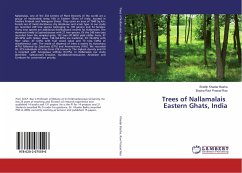
Nallamalais, one of the 234 Centers of Plant Diversity of the world are a group of moderately steep hills in Eastern Ghats of India, located in Andhra Pradesh and Telangana States. They cover an area of 7640 Sq.Km. Forests are of moist deciduous, dry deciduous and scrub type. In our study we recorded 249 tree species belonging to 139 genera and 54 families. Thirty nine species are additional distributional records for Nallamalais. The dominant family is Euphorbiaceae with 27 tree species. Of the 249 tree taxa recorded from the sampled grids, 102 taxa (47.66%) yield edible fruits, 97 (45.32%) with timber value, 138 (64.48%) are medicinal, 39 (18.26%) with fiber value, 47 (22%) with fuel wood value and 73 taxa (34%) of miscellaneous uses. The mode of dispersal of trees is mainly by Autochory (47%) followed by Zoochory (37%) and Anemochory (16%). We recorded 59, 319 individuals of trees from 276 transects. The highest density and IVI is recorded with Anogeissus latifolia (9.37%). InNallamalais our study identified Saleswaram, Srisailam, Gundlabrahmeswaram, Ahobilam and Cumbum for conservation priority.