
13,99 €
inkl. MwSt.
Versandkostenfrei*Erscheint vorauss. 30. Mai 2026
Melden Sie sich
hier
hier
für den Produktalarm an, um über die Verfügbarkeit des Produkts informiert zu werden.

7 °P sammeln
Andere Kunden interessierten sich auch für
 Cruel Intent15,99 €
 Dangerous Intent14,99 €
 Cold Intent12,99 €
 Malevolent Intent16,99 €
 Fatal Intent12,99 €
 Dark Intent13,99 €
 Deadly Intent17,99 €





Burgess's purpose was to write a novel which would investigate some of the moral grey areas of the Cold War. The book deals with the misappropriation of nuclear secrets by the Russians, following the decision of Edwin Roper, a leading atomic scientist, to leave England and form a new allegiance to the Soviet Union. The novel begins with a long letter written by Roper's old school friend, Denis Hillier, a professional assassin who has been sent to bring him home or kill him. Hillier encounters genuine evil in the form of Mr Theodorescu, an international man of mystery with a Romanian name and a perfect English public-school accent. Having administered a truth drug by nefarious means, Theodorescu attempts to extract secret information from Hillier, with the intention of selling it either to the Russians or the Americans. He does not care which side ends up with the intelligence: it is simply a question of who will pay the highest price. Given the historical reality of the Cold War, the novel suggests, it is imperative that everyone should choose something to believe in -- a political ideology or a nation state -- and remain constant in that belief. Theodorescu is a villain because he believes in nothing more substantial than personal wealth. His neutrality is presented as the ultimate evil. Among its other accomplishments, Tremor of Intent deserves to be regarded as Burgess's most detailed statement about the atomic age. By investigating the ethics of nuclear technology, he demonstrates that his novels are capable of articulating complex ethical problems and engaging with the global politics of the mid-twentieth-century. This is a much under-estimated work, which shines a light onto the shadowy history of the Cold War.
Anthony Burgess (d. 1993) was a novelist, poet, playwright, composer, linguist, translator and critic. He is best known for his novel A Clockwork Orange (1962). Throughout his career wrote thirty-three novels, twenty-five works of non-fiction, two volumes of autobiography, three symphonies, more than 250 other musical works, and thousands of essays, articles and reviews. Burgess was a lifelong scholar of Joyce and his book, Here Comes Everybody (1964), the first of his critical books about Joyce, was called by the Observer, "the best study of Joyce that I have ever read."
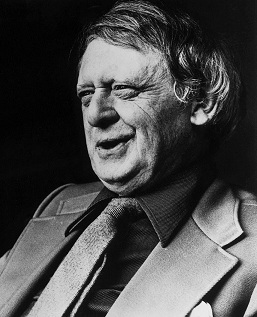
© privat