

Andere Kunden interessierten sich auch für
 The Paradox of Constitutionalism77,99 €
 Constitutionalism in Bangladesh85,99 €
 Constitutionalism and the Rule of Law155,99 €
") Constitutionalism Ancient and Modern (1940)30,99 €
Constitutionalism Ancient and Modern (1940)30,99 € Weak Constitutionalism176,99 €
 Foundations of American Constitutionalism160,99 €
 An Unamendable Constitution?68,99 €



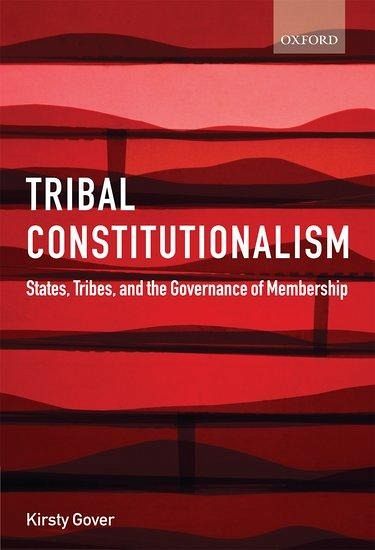
Recognized tribes are increasingly prominent players in settler state governance, but in the wide-ranging debates about tribal self-governance, little has been said about tribal self-constitution. Who are the members of tribes, and how are they chosen? Tribes in Canada, Australia, New Zealand and the United States are now obliged to adopt written constitutions as a condition of recognition, and to specify the criteria used to select members. Tribal Constitutionalism presents findings from a comparative study of nearly eight hundred current and historic tribal constitutions, most of which are not in the public domain. Kirsty Gover examines the strategies adopted by tribes and states to deal with the new legal distinction between indigenous people (defined by settler governments) and tribal members (defined by tribal governments). She highlights the important fact that the two categories are imperfectly aligned. Many indigenous persons are not tribal members, and some tribal members are not legally indigenous. Should legal indigenous status be limited to persons enrolled in recognized tribes? What is to be done about the large and growing proportion of indigenous peoples who are not enrolled in a tribe, and do not live near their tribal territories? This book approaches these complex questions head-on. Using tribal membership criteria as a starting point, this book provides a critical analysis of current political and sociolegal theories of tribalism and indigeneity, and draws on legal doctrine, policy, demographic data and tribal practice to provide a comparative evaluation of tribal membership governance in the western settler states.