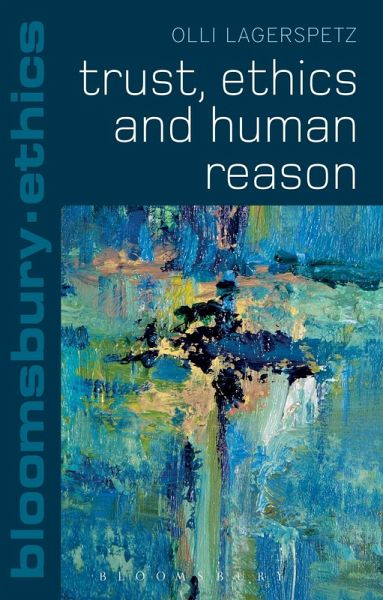
The variety of approaches to the concept of trust in philosophy reflects the fact that our worries are diverse, from the Hobbesian concern for the possibility of rational cooperation to Wittgenstein's treatment of the place of trust in knowledge. To speak of trust is not only to describe human action but also to take a perspective on it and to engage with it. Olli Lagerspetz breathes new life into the philosophical debate by showing how questions about trust are at the centre of any in-depth analyses of the nature of human agency and human rationality and that these issues, in turn, lie at the…mehr
The variety of approaches to the concept of trust in philosophy reflects the fact that our worries are diverse, from the Hobbesian concern for the possibility of rational cooperation to Wittgenstein's treatment of the place of trust in knowledge. To speak of trust is not only to describe human action but also to take a perspective on it and to engage with it. Olli Lagerspetz breathes new life into the philosophical debate by showing how questions about trust are at the centre of any in-depth analyses of the nature of human agency and human rationality and that these issues, in turn, lie at the heart of philosophical ethics. Ideal for those grappling with these issues for the first time, Trust, Ethics and Human Reason provides a thorough and impassioned assessment of the concept of trust in moral philosophy.
Acknowledgements 1 Trust and our worries with it Trust and reason: Friends or foes? On how to write about what trust 'is' The need for reflexivity Current issues Trust and reliance Normative and non-normative conceptions of trust What happens next? 2 Trust and Hobbesian reason The Hobbesian dilemma Trust as risk management A game-theoretic solution Critique of game theory: The need for a social framework Trustworthiness and encapsulated interests Is this trust? - A caveat Trust and strategic reason, and where to go from here The metaphysics of interests 3 Vulnerability and entrusting Baier's ambiguous critique of rationalism The theory of trust as entrusting Entrusting and simple trust Factual and ethical vulnerability The notion of possibility Vulnerability revisited A Novel from the 21st Century Trusting and being trusted 4 The time dimension Methodological timelessness Prisoners' Dilemma revisited Timelessness in non-formal treatments of trust Assessing probability Trust as an interpretative activity Normality in ongoing interaction Methodological timelessness and methodological individualism 5 'Trust' as an organizing tool Is trust a psychological state? The 'dys-appearance' of trust First- and third-person perspectives The need for challenge Conclusion 6 Communication, truthfulness, trust Communication as manipulation and mindreading The testimony debate The norm of truthfulness Løgstrup: Trust in conversation 'Image' vs real presence The place of 'trust' in different ideas of language 7 Basic trust Trust as a response to scepticism A self-deception theory of basic trust Paranoia and scepticism 'The substratum of all my enquiring and asserting' Meeting the other in trust: Weil and Løgstrup Ideas of basic trust in context 8 Conclusions Notes Bibliography Index
Acknowledgements 1 Trust and our worries with it Trust and reason: Friends or foes? On how to write about what trust 'is' The need for reflexivity Current issues Trust and reliance Normative and non-normative conceptions of trust What happens next? 2 Trust and Hobbesian reason The Hobbesian dilemma Trust as risk management A game-theoretic solution Critique of game theory: The need for a social framework Trustworthiness and encapsulated interests Is this trust? - A caveat Trust and strategic reason, and where to go from here The metaphysics of interests 3 Vulnerability and entrusting Baier's ambiguous critique of rationalism The theory of trust as entrusting Entrusting and simple trust Factual and ethical vulnerability The notion of possibility Vulnerability revisited A Novel from the 21st Century Trusting and being trusted 4 The time dimension Methodological timelessness Prisoners' Dilemma revisited Timelessness in non-formal treatments of trust Assessing probability Trust as an interpretative activity Normality in ongoing interaction Methodological timelessness and methodological individualism 5 'Trust' as an organizing tool Is trust a psychological state? The 'dys-appearance' of trust First- and third-person perspectives The need for challenge Conclusion 6 Communication, truthfulness, trust Communication as manipulation and mindreading The testimony debate The norm of truthfulness Løgstrup: Trust in conversation 'Image' vs real presence The place of 'trust' in different ideas of language 7 Basic trust Trust as a response to scepticism A self-deception theory of basic trust Paranoia and scepticism 'The substratum of all my enquiring and asserting' Meeting the other in trust: Weil and Løgstrup Ideas of basic trust in context 8 Conclusions Notes Bibliography Index
Es gelten unsere Allgemeinen Geschäftsbedingungen: www.buecher.de/agb
Impressum
www.buecher.de ist ein Internetauftritt der buecher.de internetstores GmbH
Geschäftsführung: Monica Sawhney | Roland Kölbl | Günter Hilger
Sitz der Gesellschaft: Batheyer Straße 115 - 117, 58099 Hagen
Postanschrift: Bürgermeister-Wegele-Str. 12, 86167 Augsburg
Amtsgericht Hagen HRB 13257
Steuernummer: 321/5800/1497
USt-IdNr: DE450055826