
Andere Kunden interessierten sich auch für
 Truth and Truthmakers27,99 €
 Truthmakers163,99 €
 Metaphysics and Truthmakers119,99 €
 The Primitivist Theory of Truth46,99 €
 The Primitivist Theory of Truth72,99 €
 Defending the Correspondence Theory of Truth111,99 €
 The Correspondence Theory of Truth103,99 €
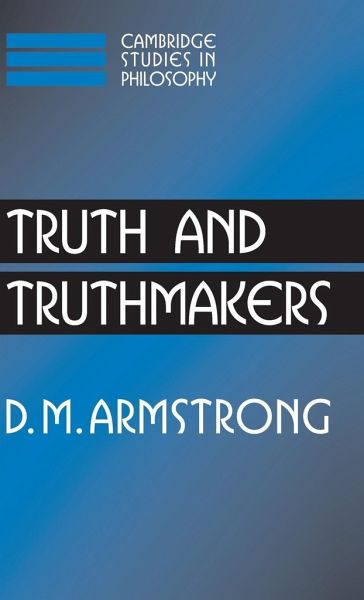
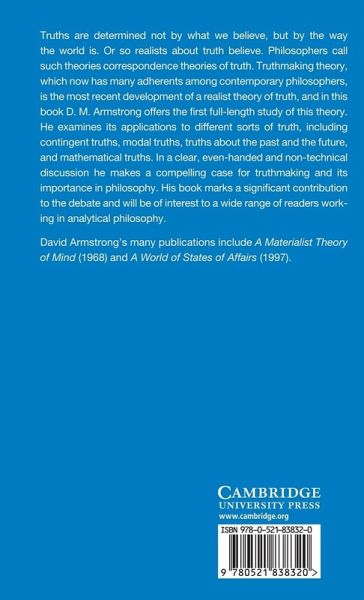
Truths are determined not by what we believe, but by the way the world is. Or so realists about truth believe. Philosophers call such theories correspondence theories of truth. Truthmaking theory, which now has many adherents among contemporary philosophers, is a recent development of a realist theory of truth, and in this book, first published in 2004, D. M. Armstrong offers the first full-length study of this theory. He examines its applications to different sorts of truth, including contingent truths, modal truths, truths about the past and the future, and mathematical truths. In a clear, even-handed and non-technical discussion he makes a compelling case for truthmaking and its importance in philosophy. His book marks a significant contribution to the debate and will be of interest to a wide range of readers working in analytical philosophy.