
Andere Kunden interessierten sich auch für
 Twenty-Four Unusual Stories For Boys And Girls19,00 €
 Two Little Waifs17,00 €
 The Frontier Boys in the Sierras: The Lost Mine14,00 €
 The Boys of Crawford's Basin14,00 €
 Peter Pan in Kensington Gardens9,00 €
 Rudy and Babette, or The Capture of the Eagle's Nest12,00 €
 Tom Sawyer Abroad12,00 €

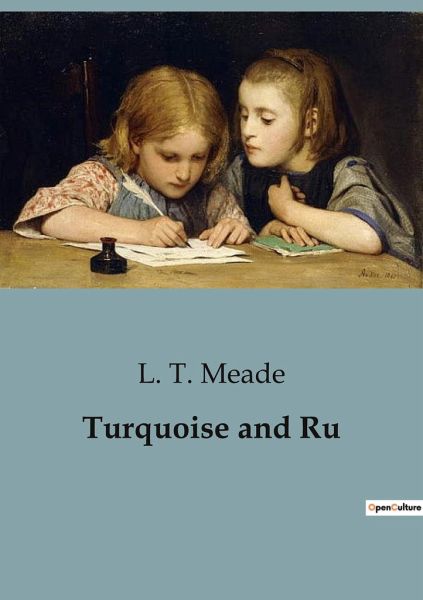
"Turquoise and Ruby" by L. T. Meade is set in the esteemed Hazlitt Chase, a school known for its holistic approach to education, focusing on the development of body, mind, and soul. The narrative begins with a conflict involving Honora Beverley, a beautiful and respected student, who refuses to play Helen of Troy in the school's upcoming tableaux of Tennyson's "A Dream of Fair Women." Her refusal is based on a moral objection to the character of Helen, whom she perceives as unworthy. This decision disrupts the school's plans, as Honora is the only student who fits the role's physical description. The headmistress, Mrs. Hazlitt, is disappointed but respects Honora's decision. The story then shifts to Penelope Carlton, a plain and impoverished student who is relatively new to the school. Despite her lack of beauty, Penelope is approached by her peers to take on the role of Helen. She agrees, but only on the condition that each of the four main participants in the tableaux pays her five pounds, which she intends to send to her sister Brenda, who is in need of financial assistance. This demand shocks her peers, but they eventually agree, driven by their desire to participate in the tableaux. The narrative explores themes of change, integrity, and the pressures of societal expectations. Penelope's pragmatic approach to her situation contrasts with Honora's principled stance, highlighting the different ways individuals navigate moral dilemmas. The story ultimately questions the value of appearances and the sacrifices one makes for personal gain or to uphold one's beliefs.