
Andere Kunden interessierten sich auch für
 Spatial Distribution of Gmelina Arborea in Bangladesh9,99 €
 Spatial Distribution and Fertility Status47,99 €
 Spatial distribution of micro nutrients36,99 €
 Spatial temporal dynamics of Human-Elephant Conflict in Nepal24,99 €
 Spatial Distribution of Forest Biomass in the Terai Region of Nepal53,99 €
 Spatial and Temporal Dynamics of Cropping Pattern in Kerala27,99 €
 Precision Agriculture: Modelling129,99 €

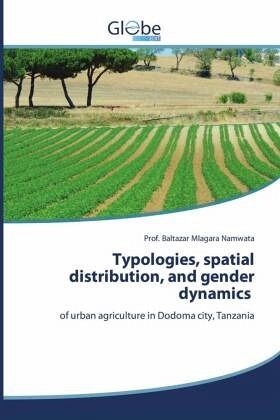
This paper examines the typologies, geographic spread, and gender dynamics of urban agriculture (UA) in Dodoma City, Tanzania, to identify how urban agriculture operates in a context of accelerated urbanization. Led by the Sustainable Livelihoods Framework, the study examines how urban households mobilize resources and implement coping strategies to address socio-economic and environmental limitations, including access to land, gender dynamics, policy restrictions, and on-farm modifications. A cross-sectional survey design involving multistage sampling targeted 15 mitaa (neighborhoods) in eight wards. The sample consisted of 300 urban farmers from both squatter and non-squatter settlements. Structured questionnaires, focus group discussions, key informant interviews, and field observations were utilized to gather data. Quantitative data were analyzed with descriptive and inferential statistics, while qualitative data were analyzed thematically. Evidence indicates that the widespread UA typologies are crop-only farming, mixed farming, and livestock-only farming, with the most prevalent being crop-only farming.