
Schade – dieser Artikel ist leider ausverkauft. Sobald wir wissen, ob und wann der Artikel wieder verfügbar ist, informieren wir Sie an dieser Stelle.
- Broschiertes Buch
- Merkliste
- Auf die Merkliste
- Bewerten Bewerten
- Teilen
- Produkt teilen
- Produkterinnerung
- Produkterinnerung
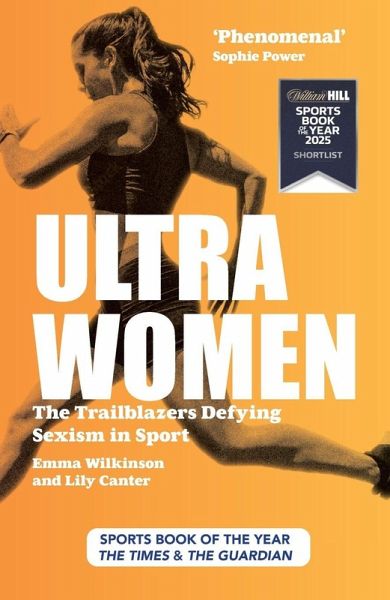
SHORTLISTED FOR WILLIAM HILL SPORTS BOOK OF THE YEAR 2025 GUARDIAN SPORTS BOOK OF THE YEAR 2025 THE TIMES SPORTS BOOK OF THE YEAR 2025 'A masterful work that will challenge your views on the physical capabilities of all women' - Sue Anstiss, author What happens when women run beyond the marathon-and refuse to stop? Ultra Women is a gripping, behind-the-scenes journey into the high-stakes world of female endurance, where athletes race across deserts, over mountains, and through the night for 50, 100, even 200 miles at a time. Blending intimate profiles with cutting-edge science, it reveals how…mehr
SHORTLISTED FOR WILLIAM HILL SPORTS BOOK OF THE YEAR 2025 GUARDIAN SPORTS BOOK OF THE YEAR 2025 THE TIMES SPORTS BOOK OF THE YEAR 2025 'A masterful work that will challenge your views on the physical capabilities of all women' - Sue Anstiss, author What happens when women run beyond the marathon-and refuse to stop? Ultra Women is a gripping, behind-the-scenes journey into the high-stakes world of female endurance, where athletes race across deserts, over mountains, and through the night for 50, 100, even 200 miles at a time. Blending intimate profiles with cutting-edge science, it reveals how women runners, swimmers and cyclists are smashing records, shattering stereotypes, and redefining what "strong" looks like at every age and stage of life. Meet the mothers balancing midnight feeds with dawn training runs, the champions who learned to turn pain into data, and the late starters who discovered their prime years-post-40, post-menopause-on the trail. Along the way, you'll learn how mindset, fueling, hormones, and smart recovery converge to create the conditions for extraordinary performance. Inside you'll discover:Trailblazing stories from iconic races and previously unsung heroines of the sport Science you can use on nutrition, pacing, heat/cold adaptation, and injury resilience The mental toolkit - from micro-goals to "embracing the suck" - that carries competitors past the breaking point Life-phase insights on training through periods, pregnancy, postpartum, peri- and post-menopause Practical checklists for first ultras, crew strategy, and race-day problem-solving Whether you're a curious newcomer, a seasoned marathoner eyeing your first 50K, or a reader who loves true stories of grit, Ultra Women will leave you inspired-and equipped-to go further than you ever thought possible. Take the long way. Find your edge. Join the Ultra Women.
Produktdetails
- Produktdetails
- Verlag: Canbury Press
- Seitenzahl: 256
- Erscheinungstermin: 24. April 2025
- Englisch
- Abmessung: 235mm x 153mm x 16mm
- Gewicht: 435g
- ISBN-13: 9781914487095
- ISBN-10: 1914487095
- Artikelnr.: 74019627
- Herstellerkennzeichnung
- Libri GmbH
- Europaallee 1
- 36244 Bad Hersfeld
- gpsr@libri.de
- Verlag: Canbury Press
- Seitenzahl: 256
- Erscheinungstermin: 24. April 2025
- Englisch
- Abmessung: 235mm x 153mm x 16mm
- Gewicht: 435g
- ISBN-13: 9781914487095
- ISBN-10: 1914487095
- Artikelnr.: 74019627
- Herstellerkennzeichnung
- Libri GmbH
- Europaallee 1
- 36244 Bad Hersfeld
- gpsr@libri.de
Lily Canter is a freelance running, fitness and adventure travel journalist in the UK writing for The Guardian, Runner'sWorld, and Women's Health. She is an England Athletics running coach and the founder of a women-only club, Great Bowden Runners. She competes in ultra-marathons.
Foreword — Frames Ultra Women within endurance science and social change
previewing themes of representation
physiology
psychology
and policy while honouring pioneers and outlining commitments to evidence
inclusive storytelling
and actionable practice. Definitions — Clarifies sex and gender distinctions
defines ultra sport as efforts exceeding six hours across disciplines
establishes consistent terminology
scope
and measurement choices guiding analyses of participation
performance
equity
and policy. 1. The Awakening — Opens with Jasmin Paris’s Spine Race victory
leveraging preparation
sleep deprivation
navigation to beat men
challenging assumptions on endurance
gender while introducing questions
evidence
and stories developed across Ultra Women. 2. History Makers — Reconstructs histories of women’s endurance—pedestrianism
alpinism
cycling
swimming—spotlighting Emma Sharp
Ada Anderson
Lizzie Le Blond
Gertrude Ederle
and others
exposing sabotage
disbelief
exclusion
and highlighting spectacle
resourcefulness
persistence
outright victories. 3. Marathon Effort — Traces women’s contested entry to marathoning
from Stamata Revithi and the 1928 backlash to Bobbi Gibb
Kathrine Switzer
and Olympic inclusion
revealing medicalised myths
administrative barriers
resistance
and progressive normalisation. 4. Going the Distance — Profiles ultra pioneers Eleanor Robinson
Wendy Dodds
Helene Whitaker
Ann Trason
and others
examining Spartathlon
Badwater
mountain rounds
and stage races to show preparation
navigation
pacing
and persistence redefining success. 5. Vicarious Absence — Analyses women’s underrepresentation in coverage
commentary
and sponsorship
centring Corrine Malcolm’s UTMB experience
documenting pay
visibility
and authorship gaps
and proposing accountability
funding
and storytelling interventions to normalise equitable broadcasting. 6. Invisible Starting Line — Examines schooling
gender norms
safety
cost
caregiving
and time scarcity shaping who reaches start lines
synthesising data and research to recommend design
outreach
and policy creating pathways visible and accessible. 7. Sex Matters — Uses Courtney Dauwalter’s unprecedented Western States–Hardrock–UTMB triple to interrogate sex differences in ultra performance
interpreting physiology
adaptation
and participation context while evaluating claims that performance gaps diminish over extreme distances. 8. Mind the Data Gap — Investigates evidence blind spots affecting women in endurance science and journalism
assessing sampling frames
instrumentation
reporting
and algorithms
and proposing registries
protocols
and community science infrastructures strengthening validity and accountability. 9. Evolutionary Advantage — Evaluates evolutionary hypotheses for female advantages
integrating physiology and life history theory
distinguishing speculation from testable predictions
and exploring implications for metabolism
thermoregulation
energetics
and training adaptations while avoiding determinism. 10. Fatigue Resistance — Synthesises mechanisms of central and peripheral fatigue over prolonged efforts
examining sex differences in neuromuscular function
substrate use
and thermoregulation
and translating findings into monitoring
training
and race management strategies. 11. Fat Gains — Explores fat metabolism
body composition
and performance
addressing substrate flexibility
gastrointestinal issues
hydration
and relative energy deficiency; recommends fuelling and messaging that prioritise health
diversity
long-term development
and longevity. 12. Tough Mothers — Examines pregnancy and postpartum in ultra sport
reviewing physiology
safety
policies
experiences; outlines training adjustments
return to run frameworks
breastfeeding logistics
event accommodations
and supportive cultures centring autonomy and consent. 13. Who Needs sleep? — Analyses sleep loss before and during competition
covering circadian biology
naps
caffeine
hallucinations
and judgment; proposes preparation
in-race risk management
and post-race recovery protocols tailored to environments and individual responsiveness. 14. The Pacing Game — Interrogates pacing across durations and terrains
comparing even and negative strategies; integrates decision science
navigation
nutrition
sleep
and crew dynamics to optimise outcomes
reduce attrition
and adapt to environmental contingencies. 15. Mental Myths — Debunks myths of grit
pain tolerance
and willpower by translating evidence on motivation
emotion regulation
identity
and social support into practical interventions
literacy
and stigma reduction for athletes and coaches. 16. Sticking It Out — Explores attrition and perseverance across training blocks and races
integrating behavioural economics
habit formation
self-regulation
and social networks to identify protective factors and structures sustaining engagement
resilience
and completion. 17. Older and Faster — Examines ageing trajectories among women ultrarunners
addressing recovery
strength
bone health
menopause
and injury risk; highlights coaching adaptations and categories valuing masters excellence
leadership
and longevity across highly competitive settings. 18. Barriers to Entry — Identifies structural obstacles limiting access to endurance—costs
safety
geography
transport
childcare
equipment
gatekeeping—and evaluates interventions across clubs
events
brands
and policy to reduce friction
redistribute resources
and build inclusive pipelines. 19. Train Like a Girl — Translates evidence into training architectures responsive to female physiology across life stages
detailing periodisation
intensity distribution
strength
plyometrics
recovery
monitoring
collaboration; emphasises autonomy
adaptation
and planning across seasons and races. 20. Unstoppable — Profiles exemplary athletes
teams
and programs achieving breakthrough performances across disciplines
extracting principles regarding environment
coaching
support systems
and athlete agency while honouring contextual nuance
success definitions
and ethical responsibility. Our manifesto for change — Sets out commitments and policy proposals advancing equity
safety
inclusion
research
representation
specifying targets
accountability mechanisms
and partnerships linking athletes
organisers
sponsors
educators
media to transform endurance cultures and systems. Notes — Documents sources
methods
and clarifications supporting arguments and case studies
detailing inclusion criteria
data handling
and limitations; directs readers to appendices
repositories
and readings enabling transparency
verification
and responsible reuse. Keywords — methods
sources
inclusion criteria
data handling
limitations
appendices
repositories
citations
transparency
verification
reuse
documentation Acknowledgements — Expresses gratitude to athletes
collaborators
reviewers
mentors
families
and funders; acknowledges institutional support and land stewardship
honouring communities whose expertise
labour
and generosity shaped research access
stories
and book completion.
previewing themes of representation
physiology
psychology
and policy while honouring pioneers and outlining commitments to evidence
inclusive storytelling
and actionable practice. Definitions — Clarifies sex and gender distinctions
defines ultra sport as efforts exceeding six hours across disciplines
establishes consistent terminology
scope
and measurement choices guiding analyses of participation
performance
equity
and policy. 1. The Awakening — Opens with Jasmin Paris’s Spine Race victory
leveraging preparation
sleep deprivation
navigation to beat men
challenging assumptions on endurance
gender while introducing questions
evidence
and stories developed across Ultra Women. 2. History Makers — Reconstructs histories of women’s endurance—pedestrianism
alpinism
cycling
swimming—spotlighting Emma Sharp
Ada Anderson
Lizzie Le Blond
Gertrude Ederle
and others
exposing sabotage
disbelief
exclusion
and highlighting spectacle
resourcefulness
persistence
outright victories. 3. Marathon Effort — Traces women’s contested entry to marathoning
from Stamata Revithi and the 1928 backlash to Bobbi Gibb
Kathrine Switzer
and Olympic inclusion
revealing medicalised myths
administrative barriers
resistance
and progressive normalisation. 4. Going the Distance — Profiles ultra pioneers Eleanor Robinson
Wendy Dodds
Helene Whitaker
Ann Trason
and others
examining Spartathlon
Badwater
mountain rounds
and stage races to show preparation
navigation
pacing
and persistence redefining success. 5. Vicarious Absence — Analyses women’s underrepresentation in coverage
commentary
and sponsorship
centring Corrine Malcolm’s UTMB experience
documenting pay
visibility
and authorship gaps
and proposing accountability
funding
and storytelling interventions to normalise equitable broadcasting. 6. Invisible Starting Line — Examines schooling
gender norms
safety
cost
caregiving
and time scarcity shaping who reaches start lines
synthesising data and research to recommend design
outreach
and policy creating pathways visible and accessible. 7. Sex Matters — Uses Courtney Dauwalter’s unprecedented Western States–Hardrock–UTMB triple to interrogate sex differences in ultra performance
interpreting physiology
adaptation
and participation context while evaluating claims that performance gaps diminish over extreme distances. 8. Mind the Data Gap — Investigates evidence blind spots affecting women in endurance science and journalism
assessing sampling frames
instrumentation
reporting
and algorithms
and proposing registries
protocols
and community science infrastructures strengthening validity and accountability. 9. Evolutionary Advantage — Evaluates evolutionary hypotheses for female advantages
integrating physiology and life history theory
distinguishing speculation from testable predictions
and exploring implications for metabolism
thermoregulation
energetics
and training adaptations while avoiding determinism. 10. Fatigue Resistance — Synthesises mechanisms of central and peripheral fatigue over prolonged efforts
examining sex differences in neuromuscular function
substrate use
and thermoregulation
and translating findings into monitoring
training
and race management strategies. 11. Fat Gains — Explores fat metabolism
body composition
and performance
addressing substrate flexibility
gastrointestinal issues
hydration
and relative energy deficiency; recommends fuelling and messaging that prioritise health
diversity
long-term development
and longevity. 12. Tough Mothers — Examines pregnancy and postpartum in ultra sport
reviewing physiology
safety
policies
experiences; outlines training adjustments
return to run frameworks
breastfeeding logistics
event accommodations
and supportive cultures centring autonomy and consent. 13. Who Needs sleep? — Analyses sleep loss before and during competition
covering circadian biology
naps
caffeine
hallucinations
and judgment; proposes preparation
in-race risk management
and post-race recovery protocols tailored to environments and individual responsiveness. 14. The Pacing Game — Interrogates pacing across durations and terrains
comparing even and negative strategies; integrates decision science
navigation
nutrition
sleep
and crew dynamics to optimise outcomes
reduce attrition
and adapt to environmental contingencies. 15. Mental Myths — Debunks myths of grit
pain tolerance
and willpower by translating evidence on motivation
emotion regulation
identity
and social support into practical interventions
literacy
and stigma reduction for athletes and coaches. 16. Sticking It Out — Explores attrition and perseverance across training blocks and races
integrating behavioural economics
habit formation
self-regulation
and social networks to identify protective factors and structures sustaining engagement
resilience
and completion. 17. Older and Faster — Examines ageing trajectories among women ultrarunners
addressing recovery
strength
bone health
menopause
and injury risk; highlights coaching adaptations and categories valuing masters excellence
leadership
and longevity across highly competitive settings. 18. Barriers to Entry — Identifies structural obstacles limiting access to endurance—costs
safety
geography
transport
childcare
equipment
gatekeeping—and evaluates interventions across clubs
events
brands
and policy to reduce friction
redistribute resources
and build inclusive pipelines. 19. Train Like a Girl — Translates evidence into training architectures responsive to female physiology across life stages
detailing periodisation
intensity distribution
strength
plyometrics
recovery
monitoring
collaboration; emphasises autonomy
adaptation
and planning across seasons and races. 20. Unstoppable — Profiles exemplary athletes
teams
and programs achieving breakthrough performances across disciplines
extracting principles regarding environment
coaching
support systems
and athlete agency while honouring contextual nuance
success definitions
and ethical responsibility. Our manifesto for change — Sets out commitments and policy proposals advancing equity
safety
inclusion
research
representation
specifying targets
accountability mechanisms
and partnerships linking athletes
organisers
sponsors
educators
media to transform endurance cultures and systems. Notes — Documents sources
methods
and clarifications supporting arguments and case studies
detailing inclusion criteria
data handling
and limitations; directs readers to appendices
repositories
and readings enabling transparency
verification
and responsible reuse. Keywords — methods
sources
inclusion criteria
data handling
limitations
appendices
repositories
citations
transparency
verification
reuse
documentation Acknowledgements — Expresses gratitude to athletes
collaborators
reviewers
mentors
families
and funders; acknowledges institutional support and land stewardship
honouring communities whose expertise
labour
and generosity shaped research access
stories
and book completion.
Foreword — Frames Ultra Women within endurance science and social change
previewing themes of representation
physiology
psychology
and policy while honouring pioneers and outlining commitments to evidence
inclusive storytelling
and actionable practice. Definitions — Clarifies sex and gender distinctions
defines ultra sport as efforts exceeding six hours across disciplines
establishes consistent terminology
scope
and measurement choices guiding analyses of participation
performance
equity
and policy. 1. The Awakening — Opens with Jasmin Paris’s Spine Race victory
leveraging preparation
sleep deprivation
navigation to beat men
challenging assumptions on endurance
gender while introducing questions
evidence
and stories developed across Ultra Women. 2. History Makers — Reconstructs histories of women’s endurance—pedestrianism
alpinism
cycling
swimming—spotlighting Emma Sharp
Ada Anderson
Lizzie Le Blond
Gertrude Ederle
and others
exposing sabotage
disbelief
exclusion
and highlighting spectacle
resourcefulness
persistence
outright victories. 3. Marathon Effort — Traces women’s contested entry to marathoning
from Stamata Revithi and the 1928 backlash to Bobbi Gibb
Kathrine Switzer
and Olympic inclusion
revealing medicalised myths
administrative barriers
resistance
and progressive normalisation. 4. Going the Distance — Profiles ultra pioneers Eleanor Robinson
Wendy Dodds
Helene Whitaker
Ann Trason
and others
examining Spartathlon
Badwater
mountain rounds
and stage races to show preparation
navigation
pacing
and persistence redefining success. 5. Vicarious Absence — Analyses women’s underrepresentation in coverage
commentary
and sponsorship
centring Corrine Malcolm’s UTMB experience
documenting pay
visibility
and authorship gaps
and proposing accountability
funding
and storytelling interventions to normalise equitable broadcasting. 6. Invisible Starting Line — Examines schooling
gender norms
safety
cost
caregiving
and time scarcity shaping who reaches start lines
synthesising data and research to recommend design
outreach
and policy creating pathways visible and accessible. 7. Sex Matters — Uses Courtney Dauwalter’s unprecedented Western States–Hardrock–UTMB triple to interrogate sex differences in ultra performance
interpreting physiology
adaptation
and participation context while evaluating claims that performance gaps diminish over extreme distances. 8. Mind the Data Gap — Investigates evidence blind spots affecting women in endurance science and journalism
assessing sampling frames
instrumentation
reporting
and algorithms
and proposing registries
protocols
and community science infrastructures strengthening validity and accountability. 9. Evolutionary Advantage — Evaluates evolutionary hypotheses for female advantages
integrating physiology and life history theory
distinguishing speculation from testable predictions
and exploring implications for metabolism
thermoregulation
energetics
and training adaptations while avoiding determinism. 10. Fatigue Resistance — Synthesises mechanisms of central and peripheral fatigue over prolonged efforts
examining sex differences in neuromuscular function
substrate use
and thermoregulation
and translating findings into monitoring
training
and race management strategies. 11. Fat Gains — Explores fat metabolism
body composition
and performance
addressing substrate flexibility
gastrointestinal issues
hydration
and relative energy deficiency; recommends fuelling and messaging that prioritise health
diversity
long-term development
and longevity. 12. Tough Mothers — Examines pregnancy and postpartum in ultra sport
reviewing physiology
safety
policies
experiences; outlines training adjustments
return to run frameworks
breastfeeding logistics
event accommodations
and supportive cultures centring autonomy and consent. 13. Who Needs sleep? — Analyses sleep loss before and during competition
covering circadian biology
naps
caffeine
hallucinations
and judgment; proposes preparation
in-race risk management
and post-race recovery protocols tailored to environments and individual responsiveness. 14. The Pacing Game — Interrogates pacing across durations and terrains
comparing even and negative strategies; integrates decision science
navigation
nutrition
sleep
and crew dynamics to optimise outcomes
reduce attrition
and adapt to environmental contingencies. 15. Mental Myths — Debunks myths of grit
pain tolerance
and willpower by translating evidence on motivation
emotion regulation
identity
and social support into practical interventions
literacy
and stigma reduction for athletes and coaches. 16. Sticking It Out — Explores attrition and perseverance across training blocks and races
integrating behavioural economics
habit formation
self-regulation
and social networks to identify protective factors and structures sustaining engagement
resilience
and completion. 17. Older and Faster — Examines ageing trajectories among women ultrarunners
addressing recovery
strength
bone health
menopause
and injury risk; highlights coaching adaptations and categories valuing masters excellence
leadership
and longevity across highly competitive settings. 18. Barriers to Entry — Identifies structural obstacles limiting access to endurance—costs
safety
geography
transport
childcare
equipment
gatekeeping—and evaluates interventions across clubs
events
brands
and policy to reduce friction
redistribute resources
and build inclusive pipelines. 19. Train Like a Girl — Translates evidence into training architectures responsive to female physiology across life stages
detailing periodisation
intensity distribution
strength
plyometrics
recovery
monitoring
collaboration; emphasises autonomy
adaptation
and planning across seasons and races. 20. Unstoppable — Profiles exemplary athletes
teams
and programs achieving breakthrough performances across disciplines
extracting principles regarding environment
coaching
support systems
and athlete agency while honouring contextual nuance
success definitions
and ethical responsibility. Our manifesto for change — Sets out commitments and policy proposals advancing equity
safety
inclusion
research
representation
specifying targets
accountability mechanisms
and partnerships linking athletes
organisers
sponsors
educators
media to transform endurance cultures and systems. Notes — Documents sources
methods
and clarifications supporting arguments and case studies
detailing inclusion criteria
data handling
and limitations; directs readers to appendices
repositories
and readings enabling transparency
verification
and responsible reuse. Keywords — methods
sources
inclusion criteria
data handling
limitations
appendices
repositories
citations
transparency
verification
reuse
documentation Acknowledgements — Expresses gratitude to athletes
collaborators
reviewers
mentors
families
and funders; acknowledges institutional support and land stewardship
honouring communities whose expertise
labour
and generosity shaped research access
stories
and book completion.
previewing themes of representation
physiology
psychology
and policy while honouring pioneers and outlining commitments to evidence
inclusive storytelling
and actionable practice. Definitions — Clarifies sex and gender distinctions
defines ultra sport as efforts exceeding six hours across disciplines
establishes consistent terminology
scope
and measurement choices guiding analyses of participation
performance
equity
and policy. 1. The Awakening — Opens with Jasmin Paris’s Spine Race victory
leveraging preparation
sleep deprivation
navigation to beat men
challenging assumptions on endurance
gender while introducing questions
evidence
and stories developed across Ultra Women. 2. History Makers — Reconstructs histories of women’s endurance—pedestrianism
alpinism
cycling
swimming—spotlighting Emma Sharp
Ada Anderson
Lizzie Le Blond
Gertrude Ederle
and others
exposing sabotage
disbelief
exclusion
and highlighting spectacle
resourcefulness
persistence
outright victories. 3. Marathon Effort — Traces women’s contested entry to marathoning
from Stamata Revithi and the 1928 backlash to Bobbi Gibb
Kathrine Switzer
and Olympic inclusion
revealing medicalised myths
administrative barriers
resistance
and progressive normalisation. 4. Going the Distance — Profiles ultra pioneers Eleanor Robinson
Wendy Dodds
Helene Whitaker
Ann Trason
and others
examining Spartathlon
Badwater
mountain rounds
and stage races to show preparation
navigation
pacing
and persistence redefining success. 5. Vicarious Absence — Analyses women’s underrepresentation in coverage
commentary
and sponsorship
centring Corrine Malcolm’s UTMB experience
documenting pay
visibility
and authorship gaps
and proposing accountability
funding
and storytelling interventions to normalise equitable broadcasting. 6. Invisible Starting Line — Examines schooling
gender norms
safety
cost
caregiving
and time scarcity shaping who reaches start lines
synthesising data and research to recommend design
outreach
and policy creating pathways visible and accessible. 7. Sex Matters — Uses Courtney Dauwalter’s unprecedented Western States–Hardrock–UTMB triple to interrogate sex differences in ultra performance
interpreting physiology
adaptation
and participation context while evaluating claims that performance gaps diminish over extreme distances. 8. Mind the Data Gap — Investigates evidence blind spots affecting women in endurance science and journalism
assessing sampling frames
instrumentation
reporting
and algorithms
and proposing registries
protocols
and community science infrastructures strengthening validity and accountability. 9. Evolutionary Advantage — Evaluates evolutionary hypotheses for female advantages
integrating physiology and life history theory
distinguishing speculation from testable predictions
and exploring implications for metabolism
thermoregulation
energetics
and training adaptations while avoiding determinism. 10. Fatigue Resistance — Synthesises mechanisms of central and peripheral fatigue over prolonged efforts
examining sex differences in neuromuscular function
substrate use
and thermoregulation
and translating findings into monitoring
training
and race management strategies. 11. Fat Gains — Explores fat metabolism
body composition
and performance
addressing substrate flexibility
gastrointestinal issues
hydration
and relative energy deficiency; recommends fuelling and messaging that prioritise health
diversity
long-term development
and longevity. 12. Tough Mothers — Examines pregnancy and postpartum in ultra sport
reviewing physiology
safety
policies
experiences; outlines training adjustments
return to run frameworks
breastfeeding logistics
event accommodations
and supportive cultures centring autonomy and consent. 13. Who Needs sleep? — Analyses sleep loss before and during competition
covering circadian biology
naps
caffeine
hallucinations
and judgment; proposes preparation
in-race risk management
and post-race recovery protocols tailored to environments and individual responsiveness. 14. The Pacing Game — Interrogates pacing across durations and terrains
comparing even and negative strategies; integrates decision science
navigation
nutrition
sleep
and crew dynamics to optimise outcomes
reduce attrition
and adapt to environmental contingencies. 15. Mental Myths — Debunks myths of grit
pain tolerance
and willpower by translating evidence on motivation
emotion regulation
identity
and social support into practical interventions
literacy
and stigma reduction for athletes and coaches. 16. Sticking It Out — Explores attrition and perseverance across training blocks and races
integrating behavioural economics
habit formation
self-regulation
and social networks to identify protective factors and structures sustaining engagement
resilience
and completion. 17. Older and Faster — Examines ageing trajectories among women ultrarunners
addressing recovery
strength
bone health
menopause
and injury risk; highlights coaching adaptations and categories valuing masters excellence
leadership
and longevity across highly competitive settings. 18. Barriers to Entry — Identifies structural obstacles limiting access to endurance—costs
safety
geography
transport
childcare
equipment
gatekeeping—and evaluates interventions across clubs
events
brands
and policy to reduce friction
redistribute resources
and build inclusive pipelines. 19. Train Like a Girl — Translates evidence into training architectures responsive to female physiology across life stages
detailing periodisation
intensity distribution
strength
plyometrics
recovery
monitoring
collaboration; emphasises autonomy
adaptation
and planning across seasons and races. 20. Unstoppable — Profiles exemplary athletes
teams
and programs achieving breakthrough performances across disciplines
extracting principles regarding environment
coaching
support systems
and athlete agency while honouring contextual nuance
success definitions
and ethical responsibility. Our manifesto for change — Sets out commitments and policy proposals advancing equity
safety
inclusion
research
representation
specifying targets
accountability mechanisms
and partnerships linking athletes
organisers
sponsors
educators
media to transform endurance cultures and systems. Notes — Documents sources
methods
and clarifications supporting arguments and case studies
detailing inclusion criteria
data handling
and limitations; directs readers to appendices
repositories
and readings enabling transparency
verification
and responsible reuse. Keywords — methods
sources
inclusion criteria
data handling
limitations
appendices
repositories
citations
transparency
verification
reuse
documentation Acknowledgements — Expresses gratitude to athletes
collaborators
reviewers
mentors
families
and funders; acknowledges institutional support and land stewardship
honouring communities whose expertise
labour
and generosity shaped research access
stories
and book completion.