
Andere Kunden interessierten sich auch für
 Jamaica's Difficult Subjects33,99 €
 Eschatological Subjects37,99 €
 The Postcolonial City and its Subjects70,99 €
 Captivating Subjects38,99 €
 The Christian Poet; Or, Selections in Verse On Sacred Subjects27,99 €
 Open Subjects29,99 €
 Essays On Various Subjects By George Walker V222,99 €



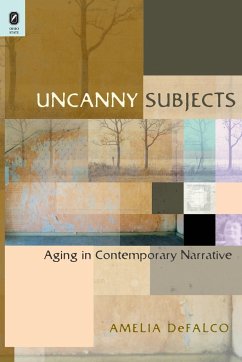
Applies a humanities lens to contemporary representations of aging, drawing together theories of the uncanny with research on aging and temporality. In the United States anti-aging is a multibillion-dollar industry, and efforts to combat signs of aging have never been stronger, or more lucrative. Although there are many sociological studies of aging and culture, there are few studies that examine the ways cultural texts construct multiple narratives of aging that intersect and sometimes conflict with existing social theories of aging. In Uncanny Subjects, Amelia DeFalco incorporates methodologies and theories derived from the humanities in her investigation into contemporary representations of aging. Both aging and narrative are a function of time, of change, of one event happening after another. Subjects understand their lives through narrative trajectories-not necessarily as they are living moment to moment, but in the sort of reflection that many argue becomes more prevalent with age. As a result, narrative fiction provides compelling representations of the strange-indeed uncanny-familiarity of the aging self. DeFalco examines a range of contemporary fiction and film by authors and directors such as John Banville, John Cassavetes, and Alice Munro. As these texts suggest, old age involves a growing awareness of the otherness within, an awareness that reveals identity as multiple, shifting, and contradictory-in short, uncanny. Drawing together theories of the uncanny with research on aging and temporality, DeFalco argues that aging is a category of difference integral to a contemporary understanding of identity and alterity.