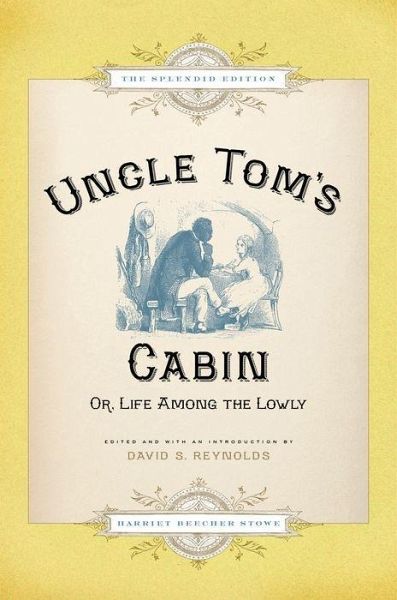
A faithful reproduction of the hard-to-find "Splendid Edition" of Harriet Beecher Stowe's classic American novel, this version features all of the 117 illustrations drawn by Hammatt Billings and a detailed introduction by prize-winning historian David S. Reynolds that sheds light on the novel's historical context. When Uncle Tom's Cabin was published in 1852 it caused a sensation. Its antislavery position proved to be one the most powerful cultural influences behind the Civil War. By emphasizing the moral failure inherent in slavery, it helped intensify the conflict between north and south.…mehr
A faithful reproduction of the hard-to-find "Splendid Edition" of Harriet Beecher Stowe's classic American novel, this version features all of the 117 illustrations drawn by Hammatt Billings and a detailed introduction by prize-winning historian David S. Reynolds that sheds light on the novel's historical context.When Uncle Tom's Cabin was published in 1852 it caused a sensation. Its antislavery position proved to be one the most powerful cultural influences behind the Civil War. By emphasizing the moral failure inherent in slavery, it helped intensify the conflict between north and south. By the end of the year it had sold over 300,000 copies in the U.S. and more than a million abroad. It went on to be the nineteenth century's worldwide bestseller. To capitalize on the book's success the publisher released a lavishly illustrated gift version for the Christmas season. Widely known as the "Splendid Edition," the deluxe offering included over one hundred detailed engravings by Hammatt Billings, who had done six pictures for the original printing. The artfully integrated illustrations amplify the book's abolitionist ideas and capture its historical moment, lending the narrative a moving immediacy. Reissued for the first time, this facsimile edition gives general readers the chance to experience Harriet Beecher Stowe's classic in this most revealing form. It includes a substantial introduction by Bancroft-winning historian David S. Reynolds that situates the novel within the world of ideas and images operative at the time.
Harriet Elisabeth Beecher Stowe (1811 - 1896) was an American abolitionist and author. She came from the Beecher family, a famous religious family and is best known for her novel Uncle Tom's Cabin (1852), which depicts the harsh conditions for enslaved African Americans. The book reached millions as a novel and play and became influential in the United States and Great Britain, energizing anti-slavery forces in the American North, while provoking widespread anger in the South. Stowe wrote 30 books, including novels, three travel memoirs and collections of articles and letters. She was influential for both her writings and her public stances on social issues of the day. In 1832, at the age of 21, Harriet Beecher moved to Cincinnati. There, she also joined the Semi-Colon Club, a literary salon and social club whose members included the Beecher sisters, Caroline Lee Hentz, Salmon P. Chase (future governor of the state and Secretary of Treasury under President Lincoln), Emily Blackwell and others. Cincinnati's trade and shipping business on the Ohio River was booming, drawing numerous migrants from different parts of the country, including many free blacks, as well as Irish immigrants who worked on the state's canals and railroads. Areas of the city had been wrecked in the Cincinnati riots of 1829, when ethnic Irish attacked blacks, trying to push competitors out of the city. Beecher met a number of African Americans who had suffered in those attacks and their experience contributed to her later writing about slavery. It was in the literary club that she met Calvin Ellis Stowe, a widower who was a professor at the seminary. The two married on January 6, 1836. He was an ardent critic of slavery and the Stowes supported the Underground Railroad, temporarily housing several fugitive slaves in their home. Most slaves continued north to secure freedom in Canada. The Stowes had seven children together, including twin daughters. n 1850, Congress passed the Fugitive Slave Law, prohibiting assistance to fugitives and strengthening sanctions even in free states. At the time, Stowe had moved with her family to Brunswick, Maine, where her husband was now teaching at Bowdoin College. Shortly after in June, 1851, when she was 40, the first installment of her Uncle Tom's Cabin was published in serial form in the newspaper The National Era. She originally used the subtitle "The Man That Was A Thing", but it was soon changed to "Life Among the Lowly". Installments were published weekly from June 5, 1851, to April 1, 1852. For the newspaper serialization of her novel, Stowe was paid $400. Uncle Tom's Cabin was published in book form on March 20, 1852, by John P. Jewett with an initial print run of 5,000 copies. In less than a year, the book sold an unprecedented 300,000 copies. By December, as sales began to wane, Jewett issued an inexpensive edition at 37¿ cents each to stimulate sales. According to Daniel R. Lincoln, the goal of the book was to educate northerners on the realistic horrors of the things that were happening in the south. The other purpose was to try to make people in the south feel more empathetic towards the people they were forcing into slavery.
Inhaltsangabe
* Introduction by David S. Reynolds * Uncle Tom's Cabin * Preface * Chapter 1 CHAPTER I In Which the Reader Is Introduced to a Man of Humanity * Chapter 2 CHAPTER II The Mother * Chapter 3 CHAPTER III The Husband and Father * Chapter 4 CHAPTER IV An Evening in Uncle Tom's Cabin * Chapter 5 CHAPTER V Showing the Feelings of Living Property on Changing Owners * Chapter 6 CHAPTER VI Discovery * Chapter 7 CHAPTER VII The Mother's Struggle * Chapter 8 CHAPTER VIII Eliza's Escape * Chapter 9 CHAPTER IX In Which It Appears That a Senator Is But a Man * Chapter 10 CHAPTER X The Property Is Carried Off * Chapter 11 CHAPTER XI In Which Property Gets into an Improper State of Mind * Chapter 12 CHAPTER XII Select Incident of Lawful Trade * Chapter 13 CHAPTER XIII The Quaker Settlement * Chapter 14 CHAPTER XIV Evangeline * Chapter 15 CHAPTER XV Of Tom's New Master, and Various Other Matters * Chapter 16 CHAPTER XVI Tom's Mistress and Her Opinions * Chapter 17 CHAPTER XVII The Freeman's Defence * Chapter 18 CHAPTER XVIII Miss Ophelia's Experiences and Opinions * Chapter 19 CHAPTER XIX Miss Ophelia's Experiences and Opinions Continued * Chapter 20 CHAPTER XX Topsy * Chapter 21 CHAPTER XXI Kentuck * Chapter 22 CHAPTER XXII "The Grass Withereth--the Flower Fadeth" * Chapter 23 CHAPTER XXIII Henrique * Chapter 24 CHAPTER XXIV Foreshadowings * Chapter 25 CHAPTER XXV The Little Evangelist * Chapter 26 CHAPTER XXVI Death * Chapter 27 CHAPTER XXVII "This Is the Last of Earth" 1 * Chapter 28 CHAPTER XXVIII Reunion * Chapter 29 CHAPTER XXIX The Unprotected * Chapter 30 CHAPTER XXX The Slave Warehouse * Chapter 31 CHAPTER XXXI The Middle Passage * Chapter 32 CHAPTER XXXII Dark Places * Chapter 33 CHAPTER XXXIII Cassy * Chapter 34 CHAPTER XXXIV The Quadroon's Story * Chapter 35 CHAPTER XXXV The Tokens * Chapter 36 CHAPTER XXXVI Emmeline and Cassy * Chapter 37 CHAPTER XXXVII Liberty * Chapter 38 CHAPTER XXXVIII The Victory * Chapter 39 CHAPTER XXXIX The Stratagem * Chapter 40 CHAPTER XL The Martyr * Chapter 41 CHAPTER XLI The Young Master * Chapter 42 CHAPTER XLII An Authentic Ghost Story * Chapter 43 CHAPTER XLIII Results * Chapter 44 CHAPTER XLIV The Liberator * Chapter 45 CHAPTER XLV Concluding Remarks
* Introduction by David S. Reynolds * Uncle Tom's Cabin * Preface * Chapter 1 CHAPTER I In Which the Reader Is Introduced to a Man of Humanity * Chapter 2 CHAPTER II The Mother * Chapter 3 CHAPTER III The Husband and Father * Chapter 4 CHAPTER IV An Evening in Uncle Tom's Cabin * Chapter 5 CHAPTER V Showing the Feelings of Living Property on Changing Owners * Chapter 6 CHAPTER VI Discovery * Chapter 7 CHAPTER VII The Mother's Struggle * Chapter 8 CHAPTER VIII Eliza's Escape * Chapter 9 CHAPTER IX In Which It Appears That a Senator Is But a Man * Chapter 10 CHAPTER X The Property Is Carried Off * Chapter 11 CHAPTER XI In Which Property Gets into an Improper State of Mind * Chapter 12 CHAPTER XII Select Incident of Lawful Trade * Chapter 13 CHAPTER XIII The Quaker Settlement * Chapter 14 CHAPTER XIV Evangeline * Chapter 15 CHAPTER XV Of Tom's New Master, and Various Other Matters * Chapter 16 CHAPTER XVI Tom's Mistress and Her Opinions * Chapter 17 CHAPTER XVII The Freeman's Defence * Chapter 18 CHAPTER XVIII Miss Ophelia's Experiences and Opinions * Chapter 19 CHAPTER XIX Miss Ophelia's Experiences and Opinions Continued * Chapter 20 CHAPTER XX Topsy * Chapter 21 CHAPTER XXI Kentuck * Chapter 22 CHAPTER XXII "The Grass Withereth--the Flower Fadeth" * Chapter 23 CHAPTER XXIII Henrique * Chapter 24 CHAPTER XXIV Foreshadowings * Chapter 25 CHAPTER XXV The Little Evangelist * Chapter 26 CHAPTER XXVI Death * Chapter 27 CHAPTER XXVII "This Is the Last of Earth" 1 * Chapter 28 CHAPTER XXVIII Reunion * Chapter 29 CHAPTER XXIX The Unprotected * Chapter 30 CHAPTER XXX The Slave Warehouse * Chapter 31 CHAPTER XXXI The Middle Passage * Chapter 32 CHAPTER XXXII Dark Places * Chapter 33 CHAPTER XXXIII Cassy * Chapter 34 CHAPTER XXXIV The Quadroon's Story * Chapter 35 CHAPTER XXXV The Tokens * Chapter 36 CHAPTER XXXVI Emmeline and Cassy * Chapter 37 CHAPTER XXXVII Liberty * Chapter 38 CHAPTER XXXVIII The Victory * Chapter 39 CHAPTER XXXIX The Stratagem * Chapter 40 CHAPTER XL The Martyr * Chapter 41 CHAPTER XLI The Young Master * Chapter 42 CHAPTER XLII An Authentic Ghost Story * Chapter 43 CHAPTER XLIII Results * Chapter 44 CHAPTER XLIV The Liberator * Chapter 45 CHAPTER XLV Concluding Remarks
Es gelten unsere Allgemeinen Geschäftsbedingungen: www.buecher.de/agb
Impressum
www.buecher.de ist ein Internetauftritt der buecher.de internetstores GmbH
Geschäftsführung: Monica Sawhney | Roland Kölbl | Günter Hilger
Sitz der Gesellschaft: Batheyer Straße 115 - 117, 58099 Hagen
Postanschrift: Bürgermeister-Wegele-Str. 12, 86167 Augsburg
Amtsgericht Hagen HRB 13257
Steuernummer: 321/5800/1497
USt-IdNr: DE450055826