24,99 €
inkl. MwSt.
Versandkostenfrei*
Versandfertig in 1-2 Wochen
payback
12 °P sammeln
  • Gebundenes Buch

"Uncle Tom's Cabin is the most powerful and enduring work of art ever written about American slavery"-Alfred Kazin "To expose oneself in maturity to Uncle Tom's cabin may...prove a startling experience"-Edmund Wilson In Uncle Tom's Cabin, Harriet Beecher Stowe created America's first black literary hero as well as the nation's antecedent protest novel. The novel's vast influence on attitudes towards African American slavery was considered an incitation towards the American Civil War; conjointly, its powerful anti-slavery message resonated with readers around the world at its time of…mehr

Produktbeschreibung
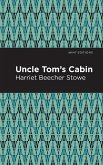
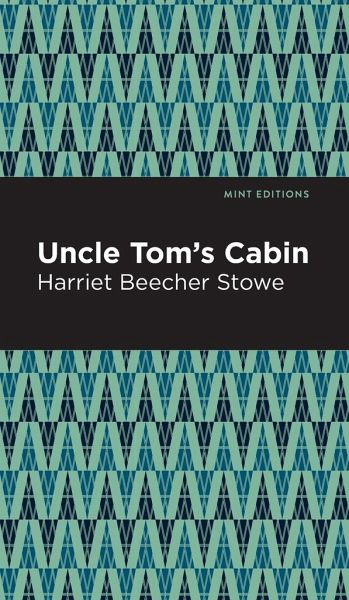
"Uncle Tom's Cabin is the most powerful and enduring work of art ever written about American slavery"-Alfred Kazin "To expose oneself in maturity to Uncle Tom's cabin may...prove a startling experience"-Edmund Wilson In Uncle Tom's Cabin, Harriet Beecher Stowe created America's first black literary hero as well as the nation's antecedent protest novel. The novel's vast influence on attitudes towards African American slavery was considered an incitation towards the American Civil War; conjointly, its powerful anti-slavery message resonated with readers around the world at its time of publication. With unashamed sentimentality and expressions of faith, Harriet Beecher Stowe, in Uncle Tom's Cabin tells the story of the lives of African American slaves from a Kentucky plantation; The master's maid, Eliza; her son, Henry; and, of course, Uncle Tom, the righteous and kind protagonist at the center of the book. When Arthur Selby, a Kentucky slave-owner decides to sell his slaves due to dire financial turns, Eliza runs away with her son, and Tom is sold to a slave trader named Haley. On a Mississippi river boat, Tom's fortunes are revered after he rescues Eva, a young white girl, from drowning. Eva's kind father is so moved by Tom's bravery that he buys him from Haley and brings him into his New Orleans home. In the series of calamitous events that follow, Tom ultimately finds himself in the bondage of the diabolical master Simon Legree. Still provoking controversies to this day, this is one of American literature's most important works of social justice. With an eye-catching new cover, and professionally typeset manuscript, this edition of Uncle Tom's Cabin is both modern and readable. Since our inception in 2020, Mint Editions has kept sustainability and innovation at the forefront of our mission. Each and every Mint Edition title gets a fresh, professionally typeset manuscript and a dazzling new cover, all while maintaining the integrity of the original book. With thousands of titles in our collection, we aim to spotlight diverse public domain works to help them find modern audiences. Mint Editions celebrates a breadth of literary works, curated from both canonical and overlooked classics from writers around the globe.
Autorenporträt
Harriet Elisabeth Beecher Stowe (1811 - 1896) was an American abolitionist and author. She came from the Beecher family, a famous religious family and is best known for her novel Uncle Tom's Cabin (1852), which depicts the harsh conditions for enslaved African Americans. The book reached millions as a novel and play and became influential in the United States and Great Britain, energizing anti-slavery forces in the American North, while provoking widespread anger in the South. Stowe wrote 30 books, including novels, three travel memoirs and collections of articles and letters. She was influential for both her writings and her public stances on social issues of the day. In 1832, at the age of 21, Harriet Beecher moved to Cincinnati. There, she also joined the Semi-Colon Club, a literary salon and social club whose members included the Beecher sisters, Caroline Lee Hentz, Salmon P. Chase (future governor of the state and Secretary of Treasury under President Lincoln), Emily Blackwell and others. Cincinnati's trade and shipping business on the Ohio River was booming, drawing numerous migrants from different parts of the country, including many free blacks, as well as Irish immigrants who worked on the state's canals and railroads. Areas of the city had been wrecked in the Cincinnati riots of 1829, when ethnic Irish attacked blacks, trying to push competitors out of the city. Beecher met a number of African Americans who had suffered in those attacks and their experience contributed to her later writing about slavery. It was in the literary club that she met Calvin Ellis Stowe, a widower who was a professor at the seminary. The two married on January 6, 1836. He was an ardent critic of slavery and the Stowes supported the Underground Railroad, temporarily housing several fugitive slaves in their home. Most slaves continued north to secure freedom in Canada. The Stowes had seven children together, including twin daughters. n 1850, Congress passed the Fugitive Slave Law, prohibiting assistance to fugitives and strengthening sanctions even in free states. At the time, Stowe had moved with her family to Brunswick, Maine, where her husband was now teaching at Bowdoin College. Shortly after in June, 1851, when she was 40, the first installment of her Uncle Tom's Cabin was published in serial form in the newspaper The National Era. She originally used the subtitle "The Man That Was A Thing", but it was soon changed to "Life Among the Lowly". Installments were published weekly from June 5, 1851, to April 1, 1852. For the newspaper serialization of her novel, Stowe was paid $400. Uncle Tom's Cabin was published in book form on March 20, 1852, by John P. Jewett with an initial print run of 5,000 copies. In less than a year, the book sold an unprecedented 300,000 copies. By December, as sales began to wane, Jewett issued an inexpensive edition at 37¿ cents each to stimulate sales. According to Daniel R. Lincoln, the goal of the book was to educate northerners on the realistic horrors of the things that were happening in the south. The other purpose was to try to make people in the south feel more empathetic towards the people they were forcing into slavery.