
Andere Kunden interessierten sich auch für
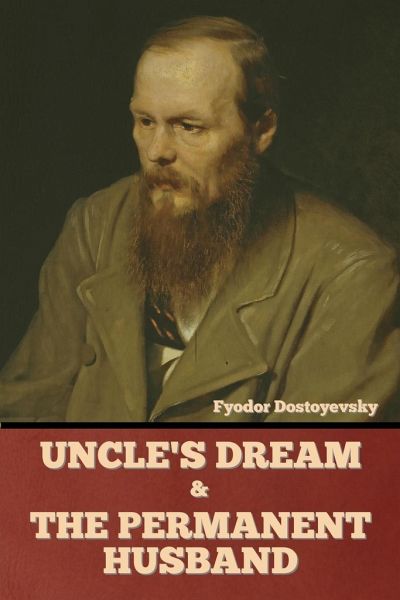
 Uncle's Dream and The Permanent Husband27,99 €
 Uncle's Dream and The Permanent Husband17,99 €
 Uncle's Dream; and The Permanent Husband30,99 €
 Uncle's Dream; and the Permanent Husband32,90 €
") The Permanent Husband (Esprios Classics)27,99 €
The Permanent Husband (Esprios Classics)27,99 € Experimental Researches Concerning the Philosophy of Permanent Colours31,90 €
 In the Permanent Way20,99 €




Fyodor Mikhailovich Dostoevsky (11 November 1821 - 9 February 1881), sometimes transliterated as Dostoyevsky, was a Russian novelist, philosopher, short story writer, essayist, and journalist. Dostoevsky's literary works explore human psychology in the troubled political, social, and spiritual atmospheres of 19th-century Russia, and engage with a variety of philosophical and religious themes. His most acclaimed works include Crime and Punishment (1866), The Idiot (1869), Demons (1872), and The Brothers Karamazov (1880). Dostoevsky's body of works consists of 12 novels, four novellas, 16 short stories, and numerous other works. Many literary critics rate him as one of the greatest psychological novelists in world literature. His 1864 novel Notes from Underground is considered to be one of the first works of existentialist literature. Dostoevsky was influenced by a wide variety of philosophers and authors including Pushkin, Gogol, Augustine, Shakespeare, Dickens, Balzac, Lermontov, Hugo, Poe, Plato, Cervantes, Herzen, Kant, Belinsky, Hegel, Schiller, Solovyov, Bakunin, Sand, Hoffmann, and Mickiewicz. His writings were widely read both within and beyond his native Russia and influenced an equally great number of later writers including Russians such as Aleksandr Solzhenitsyn and Anton Chekhov, philosophers Friedrich Nietzsche and Jean-Paul Sartre and the emergence of Existentialism and Freudianism. His books have been translated into more than 170 languages, and served as the basis for many films. (wikipedia.org)