
Andere Kunden interessierten sich auch für
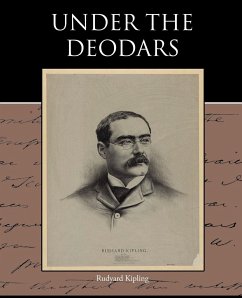
 Under The Deodars17,99 €
 Under The Deodars28,99 €
 The Works of Rudyard Kipling ...: Under the Deodars32,99 €
 Under the Deodars34,90 €
 Under the Deodars59,90 €
") Under the Deodars (World Classics, Unabridged)16,99 €
Under the Deodars (World Classics, Unabridged)16,99 € Under the Deodars34,99 €

Rudyard Kipling (1865-1936) was an English author and poet. In 1917 he was the first Englishman to receive the Nobel Prize for Literature. Kipling was born in Bombay, British India. Many of his works have an Indian flavor and setting. His best known works are The Jungle Book (1894), The Second Jungle Book (1895), and Just So Stories (1902). Stories in this collection include The education of Otis Yeere -- At the pit's mouth -- A wayside comedy -- The hill of illusion -- A second-rate woman -- Only a subalter -- In the matter of a private -- The enlightenments of Pagett, M.P.
Rudyard Kipling (1865 1936) was a British author and poet who was born in Bombay, British India. As seen by his evocative depictions of colonial life, Kipling's early years in India had a profound influence on his later works. A large portion of his early years were spent apart from his parents; this is portrayed in his narrative "The Jungle Book." With a wide variety of works, including novels, poetry, and short tales, Kipling's creative career took off. His most famous works are "Kim," a book set in British India, and "The Jungle Book," an anthology of tales that went on to become a classic in children's literature. Kipling was the youngest recipient of the Nobel Prize in Literature when it was granted in 1907. Themes of imperialism, patriotism, and the intricacies of cross-cultural relationships were frequently covered in his writings. Because of his imperialist beliefs, Kipling's legacy has come under fire even though he was quite popular during his lifetime. However, his place in literary history has been cemented by his ability to fascinate readers with his storytelling prowess and his effect on adventure literature.