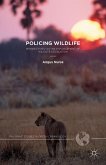
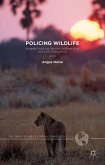
Conflicts about wildlife are usually portrayed as resulting from the negative impacts of wildlife on human livelihoods or property. However, deeper analysis reveals that these conflicts are often better understood as people-people conflicts. Understanding Conflicts About Wildlife unites academics and practitioners to consider the political and social dimensions of 'human-wildlife conflicts'.
Conflicts about wildlife are usually portrayed as resulting from the negative impacts of wildlife on human livelihoods or property. However, deeper analysis reveals that these conflicts are often better understood as people-people conflicts. Understanding Conflicts About Wildlife unites academics and practitioners to consider the political and social dimensions of 'human-wildlife conflicts'.
Amanda D. Webber is a Lecturer in Conservation Science at Bristol Zoological Society. She is also an Honorary Research Associate at Oxford Brookes University. Her research focuses on human-wildlife interactions and she is interested in people's perceptions of wildlife (particularly urban or 'pest' species) and the development of co-existence strategies.
Inhaltsangabe
List of Figures and Tables Acknowledgements Introduction: Complex Problems: Using a Biosocial Approach to Understanding Human-Wildlife Interactions Catherine M. Hill Chapter 1. People, Perceptions and 'Pests': Human-Wildlife Interactions and the Politics of Conflict Phyllis C. Lee Chapter 2. Block, Push or Pull? Three Responses to Monkey Crop-Raiding in Japan John Knight Chapter 3. Unintended Consequences in Conservation: How Conflict Mitigation May Raise the Conflict Level - The Case of Wolf Management in Norway Ketil Skogen Chapter 4. Badger-Human Conflict: An Overlooked Historical Context for Bovine TB Debates in the UK Angela Cassidy Chapter 5. Savage Values: Conservation and Personhood in Southern Suriname Marc Brightman Chapter 6 . Wildlife Value Orientations as an Approach to Understanding the Social Context of Human-Wildlife Conflict Alia M. Dietsch, Michael J. Manfredo and Tara L. Teel Chapter 7. A Long Term Comparison of Local Perceptions of Crop Loss to Wildlife at Kibale National Park, Uganda: Exploring Consistency Across Individuals and Sites Lisa Naughton-Treves, Jessica L'Roe, Andrew L'Roe and Adrian Treves Chapter 8. Conservation Conflict Transformation: Addressing the Missing Link in Wildlife Conservation Francine Madden and Brian McQuinn Chapter 9. Engaging Farmers and Understanding Their Behaviour to Develop Effective Deterrents to Crop Damage by Wildlife Graham E. Wallace and Catherine M. Hill Chapter 10. Using Geographic Information Systems (GIS) at Sites of Negative Human-Wildlife Interactions: Current Applications and Future Developments Amanda D. Webber, Stewart Thompson, Neil Bailey and Nancy E. C. Priston Index
List of Figures and Tables Acknowledgements Introduction: Complex Problems: Using a Biosocial Approach to Understanding Human-Wildlife Interactions Catherine M. Hill Chapter 1. People, Perceptions and 'Pests': Human-Wildlife Interactions and the Politics of Conflict Phyllis C. Lee Chapter 2. Block, Push or Pull? Three Responses to Monkey Crop-Raiding in Japan John Knight Chapter 3. Unintended Consequences in Conservation: How Conflict Mitigation May Raise the Conflict Level - The Case of Wolf Management in Norway Ketil Skogen Chapter 4. Badger-Human Conflict: An Overlooked Historical Context for Bovine TB Debates in the UK Angela Cassidy Chapter 5. Savage Values: Conservation and Personhood in Southern Suriname Marc Brightman Chapter 6 . Wildlife Value Orientations as an Approach to Understanding the Social Context of Human-Wildlife Conflict Alia M. Dietsch, Michael J. Manfredo and Tara L. Teel Chapter 7. A Long Term Comparison of Local Perceptions of Crop Loss to Wildlife at Kibale National Park, Uganda: Exploring Consistency Across Individuals and Sites Lisa Naughton-Treves, Jessica L'Roe, Andrew L'Roe and Adrian Treves Chapter 8. Conservation Conflict Transformation: Addressing the Missing Link in Wildlife Conservation Francine Madden and Brian McQuinn Chapter 9. Engaging Farmers and Understanding Their Behaviour to Develop Effective Deterrents to Crop Damage by Wildlife Graham E. Wallace and Catherine M. Hill Chapter 10. Using Geographic Information Systems (GIS) at Sites of Negative Human-Wildlife Interactions: Current Applications and Future Developments Amanda D. Webber, Stewart Thompson, Neil Bailey and Nancy E. C. Priston Index
Es gelten unsere Allgemeinen Geschäftsbedingungen: www.buecher.de/agb
Impressum
www.buecher.de ist ein Internetauftritt der buecher.de internetstores GmbH
Geschäftsführung: Monica Sawhney | Roland Kölbl | Günter Hilger
Sitz der Gesellschaft: Batheyer Straße 115 - 117, 58099 Hagen
Postanschrift: Bürgermeister-Wegele-Str. 12, 86167 Augsburg
Amtsgericht Hagen HRB 13257
Steuernummer: 321/5800/1497
USt-IdNr: DE450055826