
Ting-Toomey
Understanding Intercultural Communication
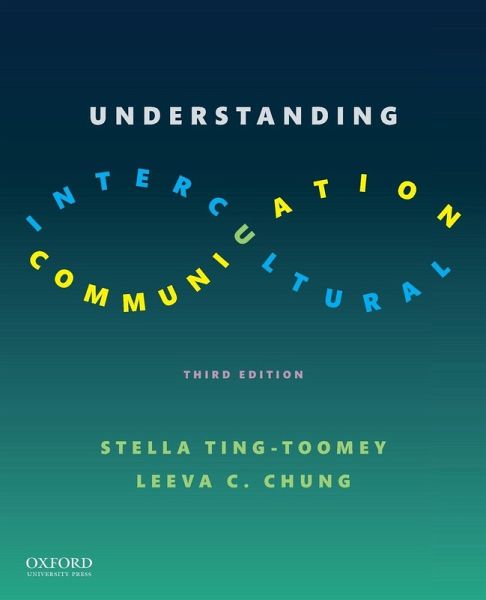
Ting-Toomey
Understanding Intercultural Communication
- Broschiertes Buch
- Merkliste
- Auf die Merkliste
- Bewerten Bewerten
- Teilen
- Produkt teilen
- Produkterinnerung
- Produkterinnerung
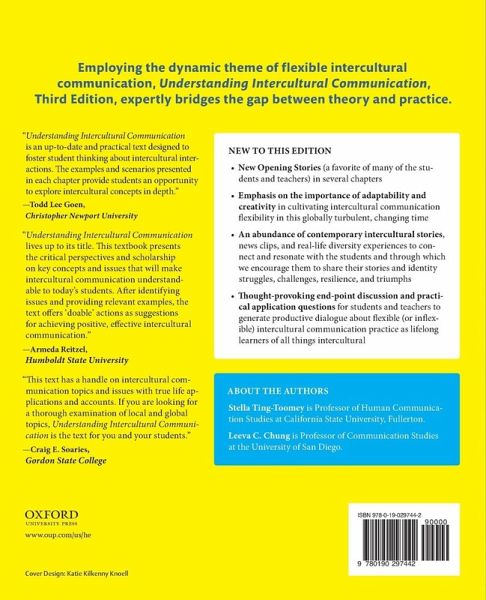
Employing the dynamic theme of flexible intercultural communication, Understanding Intercultural Communication, Third Edition, expertly bridges the gap between theory and practice.
Andere Kunden interessierten sich auch für
 William B. GudykunstCross-Cultural and Intercultural Communication177,99 €
 Global Perspectives on Intercultural Communication69,99 €
 Wenshan JiaIntercultural Communication133,99 €
 Lily A. ArasaratnamPerception and Communication in Intercultural Spaces47,99 €
 WisemanIntercultural Communication Theory95,99 €
 Richard L. Wiseman / Jolene Koester (eds.)Intercultural Communication Competence128,99 €
 Language and Intercultural Communication in the New Era69,99 €
-
-
-







Employing the dynamic theme of flexible intercultural communication, Understanding Intercultural Communication, Third Edition, expertly bridges the gap between theory and practice.
Produktdetails
- Produktdetails
- Verlag: ACADEMIC
- 3. Auflage
- Seitenzahl: 418
- Erscheinungstermin: 5. November 2021
- Englisch
- Abmessung: 235mm x 191mm x 27mm
- Gewicht: 1152g
- ISBN-13: 9780190297442
- ISBN-10: 0190297441
- Artikelnr.: 62110224
- Herstellerkennzeichnung
- Libri GmbH
- Europaallee 1
- 36244 Bad Hersfeld
- gpsr@libri.de
- Verlag: ACADEMIC
- 3. Auflage
- Seitenzahl: 418
- Erscheinungstermin: 5. November 2021
- Englisch
- Abmessung: 235mm x 191mm x 27mm
- Gewicht: 1152g
- ISBN-13: 9780190297442
- ISBN-10: 0190297441
- Artikelnr.: 62110224
- Herstellerkennzeichnung
- Libri GmbH
- Europaallee 1
- 36244 Bad Hersfeld
- gpsr@libri.de
Stella Ting-Toomey is Professor of Human Communication Studies at California State University, Fullerton. Leeva C. Chung is Professor at the University of San Diego.
* Contents
* Preface
* About the Authors
* Acknowledgments
* PART I FUNDAMENTAL CONCEPTS IN INTERCULTURAL COMMUNICATION
* Chapter 1 Why Study Intercultural Communication?
* Six Practical Reasons to Study Intercultural Communication
* The Impact of Technology on Everyday Intercultural Communication
* The Global and Domestic Diversity Workforce
* The "New Norm": Nontraditional Interpersonal Relationships
(Relationship Development, Families, and Identity Complexity)
* Global Health Care Concerns and Opportunities
* Personal Empowerment, Social Advocacy, and Social Justice
* Inclusivity Reason: Increasing Self-Awareness and Other-Sensitivity
* Culture: A Learned Meaning System
* Surface-Level Culture: Artifacts and Pop Culture
* Intermediate-Level Culture: Symbols, Meanings, and Norms
* Deep-Level Culture: Traditions, Beliefs, and Values
* Updating Your (Virtual) Intercultural Passport
* Discussion and Practical Application Questions
* Chapter 2 What Is Intercultural Communication Flexibility?
* Defining Intercultural Communication: A Process Model
* Intercultural Communication Process: Overall Characteristics
* Intercultural Communication: Meaning Construction Characteristics
* Cultivating Intercultural Communication Flexibility
* Three Content Components: Knowledge, Attitude, and Skills
* Three Criteria: Appropriateness, Effectiveness, and Adaptability
* Practicing Intercultural Communication Competence
* A Staircase Model
* An Essential Hook: A Mindful Perspective
* Deepening Intercultural Process Thinking and Outcome Goals
* Process Consciousness: Underlying Principles
* Movements Toward Outcome Goals
* Intercultural Reality Check: Doables
* Discussion and Practical Application Questions
* Chapter 3 What Are the Essential Cultural Value Patterns?
* Functions of Cultural Values
* Analyzing Cultural Values
* Identity Meaning Function
* Ingroup-Outgroup Evaluative Function
* Explanatory Function
* Motivational Function
* Analyzing Cultural Value Continuum Dimensions
* Discovering Cultural Continuum Values
* Identity: Individualism-Collectivism Value Dimension
* Power: Small-Large Power Distance Value Dimension
* Uncertainty: Weak-Strong Uncertainty Avoidance Value Dimension
* Sex Roles: Feminine-Masculine Value Dimension
* Understanding Personality Styles and Value Tendencies
* Independent Self-Construal Versus Interdependent Self-Construal
* Horizontal Versus Vertical Personality Style
* Uncertainty-Oriented Versus Certainty-Oriented Attributes
* Androgynous Versus Conventional Sex Role Dispositions
* Cultural Values Connecting With Personality Styles and Social
Situations
* Additional Classical Value Orientation Patterns
* Value Orientations: Background Information
* Meaning: Activity Value Orientation
* Destiny: People-Nature Value Orientation
* Time: Temporal Value Orientation
* Intercultural Reality Check: Doables
* Discussion and Practical Application Questions
* Chapter 4 What Are the Keys to Understanding Cultural and Ethnic
Identities?
* Family and Gender Socialization
* Families Come in Different Shapes
* Gender Socialization and Interaction Patterns
* Group Membership: Intercultural Boundary-Crossing Factors
* The Process of Acculturation and Enculturation
* Systems-Level Factors
* Individual-Level Factors
* Interpersonal Face-to-Face and Relational Network Factors
* Mass Media and Social Media Usage Factors
* Intergroup Adaptive Strategies
* Sociocultural Group Affiliation and Identity Formation
* Conceptualizing Cultural Identity
* Conceptualizing Ethnic Identity
* Ethnic-Racial Identity Change Process
* Cultural-Ethnic Identity Typological Model
* Racial-Ethnic Identity Development Model
* Identity Complexity
* Multiracial and Biracial Identity
* Intercultural Reality Check: Doables
* Discussion and Practical Application Questions
* Part II CROSSING CULTURAL AND COMMUNICATION BOUNDARIES ADAPTIVELY
* Chapter 5 What Is Culture Shock?
* Unpacking Culture Shock
* Characteristics of Culture Shock
* Pros and Cons of Culture Shock
* Culture Shock Encounters: A Variety of Culture Shockers
* International Students and Cultural Exchange Students
* Global Workplace Transferees and Global Mobility Families
* Third Culture Kids/Global Nomads (TCK/GN)
* International Tourists as Short-Term Sojourners
* Initial Tips to Manage Culture Shock
* Culture Shock Factors, Adjustment Approaches, and Strategies
* Motivational Orientations and Personal Expectations
* Cultural Distance Factors and Two Adjustment Approaches
* Initial Cultural Adjustment, New Media, and Social Support
* Cultural Adjustment Competence Strategies
* Personality Attributes
* Intercultural Adjustment: Developmental Patterns
* The U-Curve Adjustment Model
* The Revised W-Shaped Adjustment Model
* Culture Shock Adjustment Summary: Peaks and Valleys
* Reentry Culture Shock
* Reentry Culture Shock: Surprising Elements
* "Where Is Home?"
* Intercultural Reality Check: Doables
* Discussion and Practical Application Questions
* Chapter 6 What Is the Connection Between Verbal Communication and
Culture?
* Human Language: Distinctive Features and Rule Patterns
* Distinctive Language Features: Arbitrariness, Abstractness,
Meaning-Centeredness, and Creativity
* Multiple Rule Patterns: Phonological, Morphological, Syntactic,
Semantic, and Pragmatic Rules
* Appreciating Diverse Language Functions
* Cultural Group Membership Identity Function
* Everyday Social Reality Function
* Worldview Reasoning Function
* Perceptual Filtering Function
* Social Change Function
* Verbal Communication Styles: A General Framework
* Defining Low-Context and High-Context Interaction Patterns
* Direct and Indirect Verbal Variation Styles
* Compact and Verbose Interaction Styles
* Self-Enhancement and Self-Humbling Verbal Styles
* Status-Equality and Status-Sensitive Respectful Styles
* Intercultural Reality Check: Doables
* Discussion and Practical Application Questions
* Chapter 7 What Are the Different Ways to Communicate Nonverbally
Across Cultures?
* The Impact of Nonverbal Communication
* Comparisons of Verbal and Nonverbal Cues
* Cross-Cultural Nonverbal Display Rules
* Nonverbal Display Preferences Across the Digital Divide
* One Code, Countless Interpretations
* Functions and Forms of Nonverbal Communication
* Forming Initial Impressions and Attraction
* Expressing Emotions and Attitudes: Kinesics and Paralanguage
* Managing Conversation with Hand Gestures and More
* Reflecting Sociocultural Membership Identities
* Regulating Spatial and Temporal Boundaries
* Asserting and Defending Spatial Boundaries: Proxemics and Haptics
* Environmental Boundary Effects
* Cross-Cultural Psychological Boundaries
* Monitoring and Regulating Time: Chronemics
* Intercultural Reality Check: Doables
* Discussion and Practical Application Questions
* PART III MANAGING CHALLENGES IN INTERCULTURAL RELATIONSHIPS FLEXIBLY
* Chapter 8 What Causes Us to Hold Biases Against Outgroups?
* Human Perception Tendencies: Some General Principles
* Selective Attention
* Selective Organization and Labeling
* Selective Interpretation
* Biased Intergroup Filters: Ethnocentrism and Stereotypes
* Ethnocentrism and Communication
* Stereotypes and Communication
* Stereotypes: We Are What We Watch
* Marking Ingroup/Outgroup Membership Boundaries
* Us Versus Them
* Group Membership Struggles
* Intergroup Attribution Biases
* Shattered Lens: Prejudice, Discrimination, and Racism
* Prejudice: Multiple Explanations and Functions
* Different Types of Racism
* Power, Privilege, and Microaggression
* Reduction of Prejudice and Discrimination
* Intercultural Reality Check: Doables
* Discussion and Practical Application Questions
* Chapter 9 How Can We Manage Intercultural Conflict Flexibly?
* Intercultural Conflict: Cultural Background Factors
* Culture-Based Conflict Lenses
* Intercultural Workplace Conflict Grid
* Intercultural Conflict Perceptions
* Intercultural Conflict Goal Issues
* Perceived Scarce Resources
* Intercultural Conflict Process Factors
* Conflict Face-Negotiation Theory: A Brief Introduction
* Defining Conflict Styles: Different Viewpoints
* Cross-Cultural Conflict Communication Styles
* Cross-Ethnic Conflict Styles and Facework
* Developing Intercultural Conflict Competence and Skillsets
* Applying Intercultural Conflict Competence
* Facework Management Skills
* Mindful Listening Skills
* Mindful Reframing Skills
* Adaptive Code-Switching Conflict Skills
* Intercultural Reality Check: Doables
* Discussion and Practical Application Questions
* Chapter 10 What Are the Challenges in Developing an
Intercultural-Intimate Relationship?
* Developing Intercultural Relationships: Invisible Challenges
* Cultural-Ethnic Membership Values
* Anxiety/Uncertainty Interaction Management
* Love Attitudes and Expectations
* Voluntary Commitment and Structural Commitment
* Intercultural Relationship Attraction: Facilitating Factors
* Perceived Physical Attractiveness
* Perceived Attitudinal Similarity
* Cross-Cultural Self-Disclosure Comparisons
* Online Relationship Development, Attraction, and Disclosure
* Intercultural-Intimate Conflict: Stumbling Blocks
* Intercultural Romantic Relationship Development
* Encountering Prejudice and Racism
* Countering with Coping Strategies
* Relational Transgressions and Cross-Cultural Responses
* Raising Secure Bicultural Children
* Bicultural and Interfaith Identity Planning
* Developing a Secure Multifaceted Identity
* Intercultural Reality Check: Doables
* Discussion and Practical Application Questions
* Chapter 11 Why Does Global Identity Matter?
* Wired and Ready! The Allure of the Internet
* Wired-up and Swipe-Ready
* The Internet Is Our Central Station
* "Glocal" Living: Here to Stay
* Local and Global Identities
* The Entertainment Culture and Identity Sculpting
* Through the Lens of Television: Global Watching
* Through the Lens of Streaming
* Are You Playing Together?: Video Gaming
* Can You Feel the Beat?
* Fashion, Influencers, and Fandomania
* Living in the Intersection: E.net'ers
* Defining the Characteristics of an E.net'er
* An E.net'er Identity: Push-and-Pull Dialectics
* Spatial Zone Dialectics
* Temporal Zone Dialectics
* On the Edge: Dynamic Changes in Communication Patterns
* App Gadgets: Flipping Fast and Furious
* Virtual . . . But Present?
* The Ambiguous Selfie Face
* Communication Advocacy and Social Change
* Intercultural Reality Check: Doables
* Discussion and Practical Application Questions
* Chapter 12 How Can We Become Ethical Intercultural Communicators?
* Intercultural Communication Ethics: Cultural Clash Issues
* Global Collision and Local Justice Expectation
* Corporate Responsibility and Workplace Ethical Questions
* Value Clash and Universalistic-Particularistic Ethical Decisions
* Multiple Ethical Positions: Assessing Pros and Cons
* Ethical Absolutism Position
* Ethical Relativism Position
* Derived Ethical Universalism Position
* Meta-Ethics Contextualism Position
* Becoming Ethical Intercultural Communicators
* Cultivating an Ethical Mindset and Questions to Consider
* Promoting Global Social Justice and a Moral Inclusion Stance
* Nurturing Intercultural-Intergroup Peace-Building Practices
* Fostering Adaptive Flexibility: Final Passport Doables
* In Conclusion . . .
* Discussion and Practical Application Questions
* References
* Glossary
* Author Index
* Subject Index
* Preface
* About the Authors
* Acknowledgments
* PART I FUNDAMENTAL CONCEPTS IN INTERCULTURAL COMMUNICATION
* Chapter 1 Why Study Intercultural Communication?
* Six Practical Reasons to Study Intercultural Communication
* The Impact of Technology on Everyday Intercultural Communication
* The Global and Domestic Diversity Workforce
* The "New Norm": Nontraditional Interpersonal Relationships
(Relationship Development, Families, and Identity Complexity)
* Global Health Care Concerns and Opportunities
* Personal Empowerment, Social Advocacy, and Social Justice
* Inclusivity Reason: Increasing Self-Awareness and Other-Sensitivity
* Culture: A Learned Meaning System
* Surface-Level Culture: Artifacts and Pop Culture
* Intermediate-Level Culture: Symbols, Meanings, and Norms
* Deep-Level Culture: Traditions, Beliefs, and Values
* Updating Your (Virtual) Intercultural Passport
* Discussion and Practical Application Questions
* Chapter 2 What Is Intercultural Communication Flexibility?
* Defining Intercultural Communication: A Process Model
* Intercultural Communication Process: Overall Characteristics
* Intercultural Communication: Meaning Construction Characteristics
* Cultivating Intercultural Communication Flexibility
* Three Content Components: Knowledge, Attitude, and Skills
* Three Criteria: Appropriateness, Effectiveness, and Adaptability
* Practicing Intercultural Communication Competence
* A Staircase Model
* An Essential Hook: A Mindful Perspective
* Deepening Intercultural Process Thinking and Outcome Goals
* Process Consciousness: Underlying Principles
* Movements Toward Outcome Goals
* Intercultural Reality Check: Doables
* Discussion and Practical Application Questions
* Chapter 3 What Are the Essential Cultural Value Patterns?
* Functions of Cultural Values
* Analyzing Cultural Values
* Identity Meaning Function
* Ingroup-Outgroup Evaluative Function
* Explanatory Function
* Motivational Function
* Analyzing Cultural Value Continuum Dimensions
* Discovering Cultural Continuum Values
* Identity: Individualism-Collectivism Value Dimension
* Power: Small-Large Power Distance Value Dimension
* Uncertainty: Weak-Strong Uncertainty Avoidance Value Dimension
* Sex Roles: Feminine-Masculine Value Dimension
* Understanding Personality Styles and Value Tendencies
* Independent Self-Construal Versus Interdependent Self-Construal
* Horizontal Versus Vertical Personality Style
* Uncertainty-Oriented Versus Certainty-Oriented Attributes
* Androgynous Versus Conventional Sex Role Dispositions
* Cultural Values Connecting With Personality Styles and Social
Situations
* Additional Classical Value Orientation Patterns
* Value Orientations: Background Information
* Meaning: Activity Value Orientation
* Destiny: People-Nature Value Orientation
* Time: Temporal Value Orientation
* Intercultural Reality Check: Doables
* Discussion and Practical Application Questions
* Chapter 4 What Are the Keys to Understanding Cultural and Ethnic
Identities?
* Family and Gender Socialization
* Families Come in Different Shapes
* Gender Socialization and Interaction Patterns
* Group Membership: Intercultural Boundary-Crossing Factors
* The Process of Acculturation and Enculturation
* Systems-Level Factors
* Individual-Level Factors
* Interpersonal Face-to-Face and Relational Network Factors
* Mass Media and Social Media Usage Factors
* Intergroup Adaptive Strategies
* Sociocultural Group Affiliation and Identity Formation
* Conceptualizing Cultural Identity
* Conceptualizing Ethnic Identity
* Ethnic-Racial Identity Change Process
* Cultural-Ethnic Identity Typological Model
* Racial-Ethnic Identity Development Model
* Identity Complexity
* Multiracial and Biracial Identity
* Intercultural Reality Check: Doables
* Discussion and Practical Application Questions
* Part II CROSSING CULTURAL AND COMMUNICATION BOUNDARIES ADAPTIVELY
* Chapter 5 What Is Culture Shock?
* Unpacking Culture Shock
* Characteristics of Culture Shock
* Pros and Cons of Culture Shock
* Culture Shock Encounters: A Variety of Culture Shockers
* International Students and Cultural Exchange Students
* Global Workplace Transferees and Global Mobility Families
* Third Culture Kids/Global Nomads (TCK/GN)
* International Tourists as Short-Term Sojourners
* Initial Tips to Manage Culture Shock
* Culture Shock Factors, Adjustment Approaches, and Strategies
* Motivational Orientations and Personal Expectations
* Cultural Distance Factors and Two Adjustment Approaches
* Initial Cultural Adjustment, New Media, and Social Support
* Cultural Adjustment Competence Strategies
* Personality Attributes
* Intercultural Adjustment: Developmental Patterns
* The U-Curve Adjustment Model
* The Revised W-Shaped Adjustment Model
* Culture Shock Adjustment Summary: Peaks and Valleys
* Reentry Culture Shock
* Reentry Culture Shock: Surprising Elements
* "Where Is Home?"
* Intercultural Reality Check: Doables
* Discussion and Practical Application Questions
* Chapter 6 What Is the Connection Between Verbal Communication and
Culture?
* Human Language: Distinctive Features and Rule Patterns
* Distinctive Language Features: Arbitrariness, Abstractness,
Meaning-Centeredness, and Creativity
* Multiple Rule Patterns: Phonological, Morphological, Syntactic,
Semantic, and Pragmatic Rules
* Appreciating Diverse Language Functions
* Cultural Group Membership Identity Function
* Everyday Social Reality Function
* Worldview Reasoning Function
* Perceptual Filtering Function
* Social Change Function
* Verbal Communication Styles: A General Framework
* Defining Low-Context and High-Context Interaction Patterns
* Direct and Indirect Verbal Variation Styles
* Compact and Verbose Interaction Styles
* Self-Enhancement and Self-Humbling Verbal Styles
* Status-Equality and Status-Sensitive Respectful Styles
* Intercultural Reality Check: Doables
* Discussion and Practical Application Questions
* Chapter 7 What Are the Different Ways to Communicate Nonverbally
Across Cultures?
* The Impact of Nonverbal Communication
* Comparisons of Verbal and Nonverbal Cues
* Cross-Cultural Nonverbal Display Rules
* Nonverbal Display Preferences Across the Digital Divide
* One Code, Countless Interpretations
* Functions and Forms of Nonverbal Communication
* Forming Initial Impressions and Attraction
* Expressing Emotions and Attitudes: Kinesics and Paralanguage
* Managing Conversation with Hand Gestures and More
* Reflecting Sociocultural Membership Identities
* Regulating Spatial and Temporal Boundaries
* Asserting and Defending Spatial Boundaries: Proxemics and Haptics
* Environmental Boundary Effects
* Cross-Cultural Psychological Boundaries
* Monitoring and Regulating Time: Chronemics
* Intercultural Reality Check: Doables
* Discussion and Practical Application Questions
* PART III MANAGING CHALLENGES IN INTERCULTURAL RELATIONSHIPS FLEXIBLY
* Chapter 8 What Causes Us to Hold Biases Against Outgroups?
* Human Perception Tendencies: Some General Principles
* Selective Attention
* Selective Organization and Labeling
* Selective Interpretation
* Biased Intergroup Filters: Ethnocentrism and Stereotypes
* Ethnocentrism and Communication
* Stereotypes and Communication
* Stereotypes: We Are What We Watch
* Marking Ingroup/Outgroup Membership Boundaries
* Us Versus Them
* Group Membership Struggles
* Intergroup Attribution Biases
* Shattered Lens: Prejudice, Discrimination, and Racism
* Prejudice: Multiple Explanations and Functions
* Different Types of Racism
* Power, Privilege, and Microaggression
* Reduction of Prejudice and Discrimination
* Intercultural Reality Check: Doables
* Discussion and Practical Application Questions
* Chapter 9 How Can We Manage Intercultural Conflict Flexibly?
* Intercultural Conflict: Cultural Background Factors
* Culture-Based Conflict Lenses
* Intercultural Workplace Conflict Grid
* Intercultural Conflict Perceptions
* Intercultural Conflict Goal Issues
* Perceived Scarce Resources
* Intercultural Conflict Process Factors
* Conflict Face-Negotiation Theory: A Brief Introduction
* Defining Conflict Styles: Different Viewpoints
* Cross-Cultural Conflict Communication Styles
* Cross-Ethnic Conflict Styles and Facework
* Developing Intercultural Conflict Competence and Skillsets
* Applying Intercultural Conflict Competence
* Facework Management Skills
* Mindful Listening Skills
* Mindful Reframing Skills
* Adaptive Code-Switching Conflict Skills
* Intercultural Reality Check: Doables
* Discussion and Practical Application Questions
* Chapter 10 What Are the Challenges in Developing an
Intercultural-Intimate Relationship?
* Developing Intercultural Relationships: Invisible Challenges
* Cultural-Ethnic Membership Values
* Anxiety/Uncertainty Interaction Management
* Love Attitudes and Expectations
* Voluntary Commitment and Structural Commitment
* Intercultural Relationship Attraction: Facilitating Factors
* Perceived Physical Attractiveness
* Perceived Attitudinal Similarity
* Cross-Cultural Self-Disclosure Comparisons
* Online Relationship Development, Attraction, and Disclosure
* Intercultural-Intimate Conflict: Stumbling Blocks
* Intercultural Romantic Relationship Development
* Encountering Prejudice and Racism
* Countering with Coping Strategies
* Relational Transgressions and Cross-Cultural Responses
* Raising Secure Bicultural Children
* Bicultural and Interfaith Identity Planning
* Developing a Secure Multifaceted Identity
* Intercultural Reality Check: Doables
* Discussion and Practical Application Questions
* Chapter 11 Why Does Global Identity Matter?
* Wired and Ready! The Allure of the Internet
* Wired-up and Swipe-Ready
* The Internet Is Our Central Station
* "Glocal" Living: Here to Stay
* Local and Global Identities
* The Entertainment Culture and Identity Sculpting
* Through the Lens of Television: Global Watching
* Through the Lens of Streaming
* Are You Playing Together?: Video Gaming
* Can You Feel the Beat?
* Fashion, Influencers, and Fandomania
* Living in the Intersection: E.net'ers
* Defining the Characteristics of an E.net'er
* An E.net'er Identity: Push-and-Pull Dialectics
* Spatial Zone Dialectics
* Temporal Zone Dialectics
* On the Edge: Dynamic Changes in Communication Patterns
* App Gadgets: Flipping Fast and Furious
* Virtual . . . But Present?
* The Ambiguous Selfie Face
* Communication Advocacy and Social Change
* Intercultural Reality Check: Doables
* Discussion and Practical Application Questions
* Chapter 12 How Can We Become Ethical Intercultural Communicators?
* Intercultural Communication Ethics: Cultural Clash Issues
* Global Collision and Local Justice Expectation
* Corporate Responsibility and Workplace Ethical Questions
* Value Clash and Universalistic-Particularistic Ethical Decisions
* Multiple Ethical Positions: Assessing Pros and Cons
* Ethical Absolutism Position
* Ethical Relativism Position
* Derived Ethical Universalism Position
* Meta-Ethics Contextualism Position
* Becoming Ethical Intercultural Communicators
* Cultivating an Ethical Mindset and Questions to Consider
* Promoting Global Social Justice and a Moral Inclusion Stance
* Nurturing Intercultural-Intergroup Peace-Building Practices
* Fostering Adaptive Flexibility: Final Passport Doables
* In Conclusion . . .
* Discussion and Practical Application Questions
* References
* Glossary
* Author Index
* Subject Index
* Contents
* Preface
* About the Authors
* Acknowledgments
* PART I FUNDAMENTAL CONCEPTS IN INTERCULTURAL COMMUNICATION
* Chapter 1 Why Study Intercultural Communication?
* Six Practical Reasons to Study Intercultural Communication
* The Impact of Technology on Everyday Intercultural Communication
* The Global and Domestic Diversity Workforce
* The "New Norm": Nontraditional Interpersonal Relationships
(Relationship Development, Families, and Identity Complexity)
* Global Health Care Concerns and Opportunities
* Personal Empowerment, Social Advocacy, and Social Justice
* Inclusivity Reason: Increasing Self-Awareness and Other-Sensitivity
* Culture: A Learned Meaning System
* Surface-Level Culture: Artifacts and Pop Culture
* Intermediate-Level Culture: Symbols, Meanings, and Norms
* Deep-Level Culture: Traditions, Beliefs, and Values
* Updating Your (Virtual) Intercultural Passport
* Discussion and Practical Application Questions
* Chapter 2 What Is Intercultural Communication Flexibility?
* Defining Intercultural Communication: A Process Model
* Intercultural Communication Process: Overall Characteristics
* Intercultural Communication: Meaning Construction Characteristics
* Cultivating Intercultural Communication Flexibility
* Three Content Components: Knowledge, Attitude, and Skills
* Three Criteria: Appropriateness, Effectiveness, and Adaptability
* Practicing Intercultural Communication Competence
* A Staircase Model
* An Essential Hook: A Mindful Perspective
* Deepening Intercultural Process Thinking and Outcome Goals
* Process Consciousness: Underlying Principles
* Movements Toward Outcome Goals
* Intercultural Reality Check: Doables
* Discussion and Practical Application Questions
* Chapter 3 What Are the Essential Cultural Value Patterns?
* Functions of Cultural Values
* Analyzing Cultural Values
* Identity Meaning Function
* Ingroup-Outgroup Evaluative Function
* Explanatory Function
* Motivational Function
* Analyzing Cultural Value Continuum Dimensions
* Discovering Cultural Continuum Values
* Identity: Individualism-Collectivism Value Dimension
* Power: Small-Large Power Distance Value Dimension
* Uncertainty: Weak-Strong Uncertainty Avoidance Value Dimension
* Sex Roles: Feminine-Masculine Value Dimension
* Understanding Personality Styles and Value Tendencies
* Independent Self-Construal Versus Interdependent Self-Construal
* Horizontal Versus Vertical Personality Style
* Uncertainty-Oriented Versus Certainty-Oriented Attributes
* Androgynous Versus Conventional Sex Role Dispositions
* Cultural Values Connecting With Personality Styles and Social
Situations
* Additional Classical Value Orientation Patterns
* Value Orientations: Background Information
* Meaning: Activity Value Orientation
* Destiny: People-Nature Value Orientation
* Time: Temporal Value Orientation
* Intercultural Reality Check: Doables
* Discussion and Practical Application Questions
* Chapter 4 What Are the Keys to Understanding Cultural and Ethnic
Identities?
* Family and Gender Socialization
* Families Come in Different Shapes
* Gender Socialization and Interaction Patterns
* Group Membership: Intercultural Boundary-Crossing Factors
* The Process of Acculturation and Enculturation
* Systems-Level Factors
* Individual-Level Factors
* Interpersonal Face-to-Face and Relational Network Factors
* Mass Media and Social Media Usage Factors
* Intergroup Adaptive Strategies
* Sociocultural Group Affiliation and Identity Formation
* Conceptualizing Cultural Identity
* Conceptualizing Ethnic Identity
* Ethnic-Racial Identity Change Process
* Cultural-Ethnic Identity Typological Model
* Racial-Ethnic Identity Development Model
* Identity Complexity
* Multiracial and Biracial Identity
* Intercultural Reality Check: Doables
* Discussion and Practical Application Questions
* Part II CROSSING CULTURAL AND COMMUNICATION BOUNDARIES ADAPTIVELY
* Chapter 5 What Is Culture Shock?
* Unpacking Culture Shock
* Characteristics of Culture Shock
* Pros and Cons of Culture Shock
* Culture Shock Encounters: A Variety of Culture Shockers
* International Students and Cultural Exchange Students
* Global Workplace Transferees and Global Mobility Families
* Third Culture Kids/Global Nomads (TCK/GN)
* International Tourists as Short-Term Sojourners
* Initial Tips to Manage Culture Shock
* Culture Shock Factors, Adjustment Approaches, and Strategies
* Motivational Orientations and Personal Expectations
* Cultural Distance Factors and Two Adjustment Approaches
* Initial Cultural Adjustment, New Media, and Social Support
* Cultural Adjustment Competence Strategies
* Personality Attributes
* Intercultural Adjustment: Developmental Patterns
* The U-Curve Adjustment Model
* The Revised W-Shaped Adjustment Model
* Culture Shock Adjustment Summary: Peaks and Valleys
* Reentry Culture Shock
* Reentry Culture Shock: Surprising Elements
* "Where Is Home?"
* Intercultural Reality Check: Doables
* Discussion and Practical Application Questions
* Chapter 6 What Is the Connection Between Verbal Communication and
Culture?
* Human Language: Distinctive Features and Rule Patterns
* Distinctive Language Features: Arbitrariness, Abstractness,
Meaning-Centeredness, and Creativity
* Multiple Rule Patterns: Phonological, Morphological, Syntactic,
Semantic, and Pragmatic Rules
* Appreciating Diverse Language Functions
* Cultural Group Membership Identity Function
* Everyday Social Reality Function
* Worldview Reasoning Function
* Perceptual Filtering Function
* Social Change Function
* Verbal Communication Styles: A General Framework
* Defining Low-Context and High-Context Interaction Patterns
* Direct and Indirect Verbal Variation Styles
* Compact and Verbose Interaction Styles
* Self-Enhancement and Self-Humbling Verbal Styles
* Status-Equality and Status-Sensitive Respectful Styles
* Intercultural Reality Check: Doables
* Discussion and Practical Application Questions
* Chapter 7 What Are the Different Ways to Communicate Nonverbally
Across Cultures?
* The Impact of Nonverbal Communication
* Comparisons of Verbal and Nonverbal Cues
* Cross-Cultural Nonverbal Display Rules
* Nonverbal Display Preferences Across the Digital Divide
* One Code, Countless Interpretations
* Functions and Forms of Nonverbal Communication
* Forming Initial Impressions and Attraction
* Expressing Emotions and Attitudes: Kinesics and Paralanguage
* Managing Conversation with Hand Gestures and More
* Reflecting Sociocultural Membership Identities
* Regulating Spatial and Temporal Boundaries
* Asserting and Defending Spatial Boundaries: Proxemics and Haptics
* Environmental Boundary Effects
* Cross-Cultural Psychological Boundaries
* Monitoring and Regulating Time: Chronemics
* Intercultural Reality Check: Doables
* Discussion and Practical Application Questions
* PART III MANAGING CHALLENGES IN INTERCULTURAL RELATIONSHIPS FLEXIBLY
* Chapter 8 What Causes Us to Hold Biases Against Outgroups?
* Human Perception Tendencies: Some General Principles
* Selective Attention
* Selective Organization and Labeling
* Selective Interpretation
* Biased Intergroup Filters: Ethnocentrism and Stereotypes
* Ethnocentrism and Communication
* Stereotypes and Communication
* Stereotypes: We Are What We Watch
* Marking Ingroup/Outgroup Membership Boundaries
* Us Versus Them
* Group Membership Struggles
* Intergroup Attribution Biases
* Shattered Lens: Prejudice, Discrimination, and Racism
* Prejudice: Multiple Explanations and Functions
* Different Types of Racism
* Power, Privilege, and Microaggression
* Reduction of Prejudice and Discrimination
* Intercultural Reality Check: Doables
* Discussion and Practical Application Questions
* Chapter 9 How Can We Manage Intercultural Conflict Flexibly?
* Intercultural Conflict: Cultural Background Factors
* Culture-Based Conflict Lenses
* Intercultural Workplace Conflict Grid
* Intercultural Conflict Perceptions
* Intercultural Conflict Goal Issues
* Perceived Scarce Resources
* Intercultural Conflict Process Factors
* Conflict Face-Negotiation Theory: A Brief Introduction
* Defining Conflict Styles: Different Viewpoints
* Cross-Cultural Conflict Communication Styles
* Cross-Ethnic Conflict Styles and Facework
* Developing Intercultural Conflict Competence and Skillsets
* Applying Intercultural Conflict Competence
* Facework Management Skills
* Mindful Listening Skills
* Mindful Reframing Skills
* Adaptive Code-Switching Conflict Skills
* Intercultural Reality Check: Doables
* Discussion and Practical Application Questions
* Chapter 10 What Are the Challenges in Developing an
Intercultural-Intimate Relationship?
* Developing Intercultural Relationships: Invisible Challenges
* Cultural-Ethnic Membership Values
* Anxiety/Uncertainty Interaction Management
* Love Attitudes and Expectations
* Voluntary Commitment and Structural Commitment
* Intercultural Relationship Attraction: Facilitating Factors
* Perceived Physical Attractiveness
* Perceived Attitudinal Similarity
* Cross-Cultural Self-Disclosure Comparisons
* Online Relationship Development, Attraction, and Disclosure
* Intercultural-Intimate Conflict: Stumbling Blocks
* Intercultural Romantic Relationship Development
* Encountering Prejudice and Racism
* Countering with Coping Strategies
* Relational Transgressions and Cross-Cultural Responses
* Raising Secure Bicultural Children
* Bicultural and Interfaith Identity Planning
* Developing a Secure Multifaceted Identity
* Intercultural Reality Check: Doables
* Discussion and Practical Application Questions
* Chapter 11 Why Does Global Identity Matter?
* Wired and Ready! The Allure of the Internet
* Wired-up and Swipe-Ready
* The Internet Is Our Central Station
* "Glocal" Living: Here to Stay
* Local and Global Identities
* The Entertainment Culture and Identity Sculpting
* Through the Lens of Television: Global Watching
* Through the Lens of Streaming
* Are You Playing Together?: Video Gaming
* Can You Feel the Beat?
* Fashion, Influencers, and Fandomania
* Living in the Intersection: E.net'ers
* Defining the Characteristics of an E.net'er
* An E.net'er Identity: Push-and-Pull Dialectics
* Spatial Zone Dialectics
* Temporal Zone Dialectics
* On the Edge: Dynamic Changes in Communication Patterns
* App Gadgets: Flipping Fast and Furious
* Virtual . . . But Present?
* The Ambiguous Selfie Face
* Communication Advocacy and Social Change
* Intercultural Reality Check: Doables
* Discussion and Practical Application Questions
* Chapter 12 How Can We Become Ethical Intercultural Communicators?
* Intercultural Communication Ethics: Cultural Clash Issues
* Global Collision and Local Justice Expectation
* Corporate Responsibility and Workplace Ethical Questions
* Value Clash and Universalistic-Particularistic Ethical Decisions
* Multiple Ethical Positions: Assessing Pros and Cons
* Ethical Absolutism Position
* Ethical Relativism Position
* Derived Ethical Universalism Position
* Meta-Ethics Contextualism Position
* Becoming Ethical Intercultural Communicators
* Cultivating an Ethical Mindset and Questions to Consider
* Promoting Global Social Justice and a Moral Inclusion Stance
* Nurturing Intercultural-Intergroup Peace-Building Practices
* Fostering Adaptive Flexibility: Final Passport Doables
* In Conclusion . . .
* Discussion and Practical Application Questions
* References
* Glossary
* Author Index
* Subject Index
* Preface
* About the Authors
* Acknowledgments
* PART I FUNDAMENTAL CONCEPTS IN INTERCULTURAL COMMUNICATION
* Chapter 1 Why Study Intercultural Communication?
* Six Practical Reasons to Study Intercultural Communication
* The Impact of Technology on Everyday Intercultural Communication
* The Global and Domestic Diversity Workforce
* The "New Norm": Nontraditional Interpersonal Relationships
(Relationship Development, Families, and Identity Complexity)
* Global Health Care Concerns and Opportunities
* Personal Empowerment, Social Advocacy, and Social Justice
* Inclusivity Reason: Increasing Self-Awareness and Other-Sensitivity
* Culture: A Learned Meaning System
* Surface-Level Culture: Artifacts and Pop Culture
* Intermediate-Level Culture: Symbols, Meanings, and Norms
* Deep-Level Culture: Traditions, Beliefs, and Values
* Updating Your (Virtual) Intercultural Passport
* Discussion and Practical Application Questions
* Chapter 2 What Is Intercultural Communication Flexibility?
* Defining Intercultural Communication: A Process Model
* Intercultural Communication Process: Overall Characteristics
* Intercultural Communication: Meaning Construction Characteristics
* Cultivating Intercultural Communication Flexibility
* Three Content Components: Knowledge, Attitude, and Skills
* Three Criteria: Appropriateness, Effectiveness, and Adaptability
* Practicing Intercultural Communication Competence
* A Staircase Model
* An Essential Hook: A Mindful Perspective
* Deepening Intercultural Process Thinking and Outcome Goals
* Process Consciousness: Underlying Principles
* Movements Toward Outcome Goals
* Intercultural Reality Check: Doables
* Discussion and Practical Application Questions
* Chapter 3 What Are the Essential Cultural Value Patterns?
* Functions of Cultural Values
* Analyzing Cultural Values
* Identity Meaning Function
* Ingroup-Outgroup Evaluative Function
* Explanatory Function
* Motivational Function
* Analyzing Cultural Value Continuum Dimensions
* Discovering Cultural Continuum Values
* Identity: Individualism-Collectivism Value Dimension
* Power: Small-Large Power Distance Value Dimension
* Uncertainty: Weak-Strong Uncertainty Avoidance Value Dimension
* Sex Roles: Feminine-Masculine Value Dimension
* Understanding Personality Styles and Value Tendencies
* Independent Self-Construal Versus Interdependent Self-Construal
* Horizontal Versus Vertical Personality Style
* Uncertainty-Oriented Versus Certainty-Oriented Attributes
* Androgynous Versus Conventional Sex Role Dispositions
* Cultural Values Connecting With Personality Styles and Social
Situations
* Additional Classical Value Orientation Patterns
* Value Orientations: Background Information
* Meaning: Activity Value Orientation
* Destiny: People-Nature Value Orientation
* Time: Temporal Value Orientation
* Intercultural Reality Check: Doables
* Discussion and Practical Application Questions
* Chapter 4 What Are the Keys to Understanding Cultural and Ethnic
Identities?
* Family and Gender Socialization
* Families Come in Different Shapes
* Gender Socialization and Interaction Patterns
* Group Membership: Intercultural Boundary-Crossing Factors
* The Process of Acculturation and Enculturation
* Systems-Level Factors
* Individual-Level Factors
* Interpersonal Face-to-Face and Relational Network Factors
* Mass Media and Social Media Usage Factors
* Intergroup Adaptive Strategies
* Sociocultural Group Affiliation and Identity Formation
* Conceptualizing Cultural Identity
* Conceptualizing Ethnic Identity
* Ethnic-Racial Identity Change Process
* Cultural-Ethnic Identity Typological Model
* Racial-Ethnic Identity Development Model
* Identity Complexity
* Multiracial and Biracial Identity
* Intercultural Reality Check: Doables
* Discussion and Practical Application Questions
* Part II CROSSING CULTURAL AND COMMUNICATION BOUNDARIES ADAPTIVELY
* Chapter 5 What Is Culture Shock?
* Unpacking Culture Shock
* Characteristics of Culture Shock
* Pros and Cons of Culture Shock
* Culture Shock Encounters: A Variety of Culture Shockers
* International Students and Cultural Exchange Students
* Global Workplace Transferees and Global Mobility Families
* Third Culture Kids/Global Nomads (TCK/GN)
* International Tourists as Short-Term Sojourners
* Initial Tips to Manage Culture Shock
* Culture Shock Factors, Adjustment Approaches, and Strategies
* Motivational Orientations and Personal Expectations
* Cultural Distance Factors and Two Adjustment Approaches
* Initial Cultural Adjustment, New Media, and Social Support
* Cultural Adjustment Competence Strategies
* Personality Attributes
* Intercultural Adjustment: Developmental Patterns
* The U-Curve Adjustment Model
* The Revised W-Shaped Adjustment Model
* Culture Shock Adjustment Summary: Peaks and Valleys
* Reentry Culture Shock
* Reentry Culture Shock: Surprising Elements
* "Where Is Home?"
* Intercultural Reality Check: Doables
* Discussion and Practical Application Questions
* Chapter 6 What Is the Connection Between Verbal Communication and
Culture?
* Human Language: Distinctive Features and Rule Patterns
* Distinctive Language Features: Arbitrariness, Abstractness,
Meaning-Centeredness, and Creativity
* Multiple Rule Patterns: Phonological, Morphological, Syntactic,
Semantic, and Pragmatic Rules
* Appreciating Diverse Language Functions
* Cultural Group Membership Identity Function
* Everyday Social Reality Function
* Worldview Reasoning Function
* Perceptual Filtering Function
* Social Change Function
* Verbal Communication Styles: A General Framework
* Defining Low-Context and High-Context Interaction Patterns
* Direct and Indirect Verbal Variation Styles
* Compact and Verbose Interaction Styles
* Self-Enhancement and Self-Humbling Verbal Styles
* Status-Equality and Status-Sensitive Respectful Styles
* Intercultural Reality Check: Doables
* Discussion and Practical Application Questions
* Chapter 7 What Are the Different Ways to Communicate Nonverbally
Across Cultures?
* The Impact of Nonverbal Communication
* Comparisons of Verbal and Nonverbal Cues
* Cross-Cultural Nonverbal Display Rules
* Nonverbal Display Preferences Across the Digital Divide
* One Code, Countless Interpretations
* Functions and Forms of Nonverbal Communication
* Forming Initial Impressions and Attraction
* Expressing Emotions and Attitudes: Kinesics and Paralanguage
* Managing Conversation with Hand Gestures and More
* Reflecting Sociocultural Membership Identities
* Regulating Spatial and Temporal Boundaries
* Asserting and Defending Spatial Boundaries: Proxemics and Haptics
* Environmental Boundary Effects
* Cross-Cultural Psychological Boundaries
* Monitoring and Regulating Time: Chronemics
* Intercultural Reality Check: Doables
* Discussion and Practical Application Questions
* PART III MANAGING CHALLENGES IN INTERCULTURAL RELATIONSHIPS FLEXIBLY
* Chapter 8 What Causes Us to Hold Biases Against Outgroups?
* Human Perception Tendencies: Some General Principles
* Selective Attention
* Selective Organization and Labeling
* Selective Interpretation
* Biased Intergroup Filters: Ethnocentrism and Stereotypes
* Ethnocentrism and Communication
* Stereotypes and Communication
* Stereotypes: We Are What We Watch
* Marking Ingroup/Outgroup Membership Boundaries
* Us Versus Them
* Group Membership Struggles
* Intergroup Attribution Biases
* Shattered Lens: Prejudice, Discrimination, and Racism
* Prejudice: Multiple Explanations and Functions
* Different Types of Racism
* Power, Privilege, and Microaggression
* Reduction of Prejudice and Discrimination
* Intercultural Reality Check: Doables
* Discussion and Practical Application Questions
* Chapter 9 How Can We Manage Intercultural Conflict Flexibly?
* Intercultural Conflict: Cultural Background Factors
* Culture-Based Conflict Lenses
* Intercultural Workplace Conflict Grid
* Intercultural Conflict Perceptions
* Intercultural Conflict Goal Issues
* Perceived Scarce Resources
* Intercultural Conflict Process Factors
* Conflict Face-Negotiation Theory: A Brief Introduction
* Defining Conflict Styles: Different Viewpoints
* Cross-Cultural Conflict Communication Styles
* Cross-Ethnic Conflict Styles and Facework
* Developing Intercultural Conflict Competence and Skillsets
* Applying Intercultural Conflict Competence
* Facework Management Skills
* Mindful Listening Skills
* Mindful Reframing Skills
* Adaptive Code-Switching Conflict Skills
* Intercultural Reality Check: Doables
* Discussion and Practical Application Questions
* Chapter 10 What Are the Challenges in Developing an
Intercultural-Intimate Relationship?
* Developing Intercultural Relationships: Invisible Challenges
* Cultural-Ethnic Membership Values
* Anxiety/Uncertainty Interaction Management
* Love Attitudes and Expectations
* Voluntary Commitment and Structural Commitment
* Intercultural Relationship Attraction: Facilitating Factors
* Perceived Physical Attractiveness
* Perceived Attitudinal Similarity
* Cross-Cultural Self-Disclosure Comparisons
* Online Relationship Development, Attraction, and Disclosure
* Intercultural-Intimate Conflict: Stumbling Blocks
* Intercultural Romantic Relationship Development
* Encountering Prejudice and Racism
* Countering with Coping Strategies
* Relational Transgressions and Cross-Cultural Responses
* Raising Secure Bicultural Children
* Bicultural and Interfaith Identity Planning
* Developing a Secure Multifaceted Identity
* Intercultural Reality Check: Doables
* Discussion and Practical Application Questions
* Chapter 11 Why Does Global Identity Matter?
* Wired and Ready! The Allure of the Internet
* Wired-up and Swipe-Ready
* The Internet Is Our Central Station
* "Glocal" Living: Here to Stay
* Local and Global Identities
* The Entertainment Culture and Identity Sculpting
* Through the Lens of Television: Global Watching
* Through the Lens of Streaming
* Are You Playing Together?: Video Gaming
* Can You Feel the Beat?
* Fashion, Influencers, and Fandomania
* Living in the Intersection: E.net'ers
* Defining the Characteristics of an E.net'er
* An E.net'er Identity: Push-and-Pull Dialectics
* Spatial Zone Dialectics
* Temporal Zone Dialectics
* On the Edge: Dynamic Changes in Communication Patterns
* App Gadgets: Flipping Fast and Furious
* Virtual . . . But Present?
* The Ambiguous Selfie Face
* Communication Advocacy and Social Change
* Intercultural Reality Check: Doables
* Discussion and Practical Application Questions
* Chapter 12 How Can We Become Ethical Intercultural Communicators?
* Intercultural Communication Ethics: Cultural Clash Issues
* Global Collision and Local Justice Expectation
* Corporate Responsibility and Workplace Ethical Questions
* Value Clash and Universalistic-Particularistic Ethical Decisions
* Multiple Ethical Positions: Assessing Pros and Cons
* Ethical Absolutism Position
* Ethical Relativism Position
* Derived Ethical Universalism Position
* Meta-Ethics Contextualism Position
* Becoming Ethical Intercultural Communicators
* Cultivating an Ethical Mindset and Questions to Consider
* Promoting Global Social Justice and a Moral Inclusion Stance
* Nurturing Intercultural-Intergroup Peace-Building Practices
* Fostering Adaptive Flexibility: Final Passport Doables
* In Conclusion . . .
* Discussion and Practical Application Questions
* References
* Glossary
* Author Index
* Subject Index