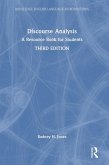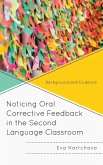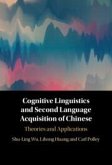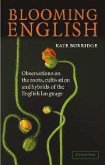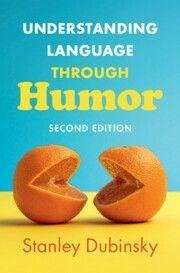
Entertaining usage of language is all around us and can explain more about how language works than we realise. This lively and engaging book explains key linguistic concepts, illustrated throughout with humorous and entertaining examples. Providing an accessible yet comprehensive survey of the field, it is especially helpful for students who might struggle with an overly technical text. Now in its second edition, it has been extensively updated and expanded to be more comprehensive and include culturally relevant content, from memes to smartphone autocorrect errors, to misheard song lyrics. It…mehr
Entertaining usage of language is all around us and can explain more about how language works than we realise. This lively and engaging book explains key linguistic concepts, illustrated throughout with humorous and entertaining examples. Providing an accessible yet comprehensive survey of the field, it is especially helpful for students who might struggle with an overly technical text. Now in its second edition, it has been extensively updated and expanded to be more comprehensive and include culturally relevant content, from memes to smartphone autocorrect errors, to misheard song lyrics. It includes four new chapters on lexical meaning, onomastics, writing systems, and language in the digital world. Key linguistic terminology is clearly introduced throughout, ensuring that students are well equipped for more technical and formal courses in their later studies. With thorough coverage of nearly all linguistic subfields, the book is an ideal text for an introduction to linguistics or language.
Stanley Dubinsky has taught Linguistics at the University of South Carolina since 1991. He has lived 'a life in language,' with a BA in Spanish & Latin American Literature and Asian Studies (from Hebrew University - Jerusalem), an MA in Chinese Literature, and a PhD in Linguistics (both from Cornell).
Inhaltsangabe
1. Introduction 2. Talking to Garfield: human and animal communication 3. Did I hear that right? The sounds of language 4. Twisted words: word structure and meaning 5. How words mean: connecting words to meanings 6. The rule of names: naming people, peoples, and places 7. Fitting words together: phrase structure and meaning. 8. Meaning one thing, saying another: indirect speech and conversational principles 9. Kids say the darndest things: children acquiring language 10. Variety is the spice of life: language variation 11. Making language visible: writing and writing systems 12. LOL (Language Online): language in the digital world 13. So long, and thanks for all the fish!
1. Introduction; 2. Talking to Garfield: human and animal communication; 3. Did I hear that right? The sounds of language; 4. Twisted words: word structure and meaning; 5. Fitting words together: phrase structure and meaning; 6. Meaning one thing and saying another: indirect speech and conversational principles; 7. Fitting the pieces together: the structure of discourse; 8. 'Kids say the darndest things': children acquiring language; 9. Variety is the spice of life: language variation; 10. Cross-cultural gaffes: language and culture; 11. The language police: prescriptivism and standardization; 12. So long, and thanks for all the fish.
1. Introduction 2. Talking to Garfield: human and animal communication 3. Did I hear that right? The sounds of language 4. Twisted words: word structure and meaning 5. How words mean: connecting words to meanings 6. The rule of names: naming people, peoples, and places 7. Fitting words together: phrase structure and meaning. 8. Meaning one thing, saying another: indirect speech and conversational principles 9. Kids say the darndest things: children acquiring language 10. Variety is the spice of life: language variation 11. Making language visible: writing and writing systems 12. LOL (Language Online): language in the digital world 13. So long, and thanks for all the fish!
1. Introduction; 2. Talking to Garfield: human and animal communication; 3. Did I hear that right? The sounds of language; 4. Twisted words: word structure and meaning; 5. Fitting words together: phrase structure and meaning; 6. Meaning one thing and saying another: indirect speech and conversational principles; 7. Fitting the pieces together: the structure of discourse; 8. 'Kids say the darndest things': children acquiring language; 9. Variety is the spice of life: language variation; 10. Cross-cultural gaffes: language and culture; 11. The language police: prescriptivism and standardization; 12. So long, and thanks for all the fish.
Es gelten unsere Allgemeinen Geschäftsbedingungen: www.buecher.de/agb
Impressum
www.buecher.de ist ein Internetauftritt der buecher.de internetstores GmbH
Geschäftsführung: Monica Sawhney | Roland Kölbl | Günter Hilger
Sitz der Gesellschaft: Batheyer Straße 115 - 117, 58099 Hagen
Postanschrift: Bürgermeister-Wegele-Str. 12, 86167 Augsburg
Amtsgericht Hagen HRB 13257
Steuernummer: 321/5800/1497
USt-IdNr: DE450055826