
Andere Kunden interessierten sich auch für
 Quantum Leap: From Dirac and Feynman, Across the Universe, to Human Body and Mind271,99 €
 Quantum Reality148,99 €
 Reality Reloaded24,99 €
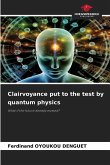
 Clairvoyance put to the test by quantum physics29,99 €
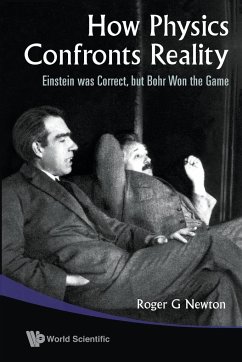
 HOW PHYSICS CONFRONTS REALITY29,99 €
 Physics and the Nature of Reality113,99 €
 Time Travel: A Reality in Mesoscopic Physics61,99 €
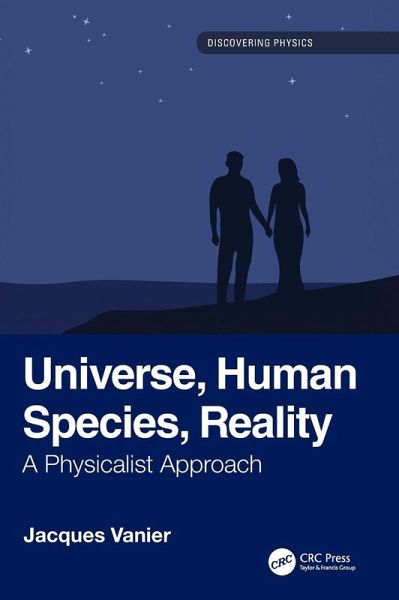
Universe, Human Species, Reality: A Physicalist Approach describes the functioning of the material universe with the use of intermediate mathematical language. The book uses a physicalist approach in the sense that it is based entirely on physical phenomena and on reality, and does not use philosophical or theological argumentation based on abstract reasoning not anchored in physical observations.
Using these observations, the book develops the argument that the principle of least action plays a most important role in the functioning of the universe. Furthermore, if we extend our study, we may find an answer to some questions that have not been answered yet. As examples, we may mention a few of those, such as, the exact nature of the Big Bang, the essence of life, and the nature of the intellect-brain gap.
This book should be of interest to undergraduate students in physics and biology, and to the general science reader.
Key Features
Addresses our understanding of the complete basic physics of the universeUses a physicalist approach, rather than a philosophical and theological approach, in studying the nature of the universeGives a rather unique conclusion relative to the functioning of the universe including Homo sapiens
Using these observations, the book develops the argument that the principle of least action plays a most important role in the functioning of the universe. Furthermore, if we extend our study, we may find an answer to some questions that have not been answered yet. As examples, we may mention a few of those, such as, the exact nature of the Big Bang, the essence of life, and the nature of the intellect-brain gap.
This book should be of interest to undergraduate students in physics and biology, and to the general science reader.
Key Features
Addresses our understanding of the complete basic physics of the universeUses a physicalist approach, rather than a philosophical and theological approach, in studying the nature of the universeGives a rather unique conclusion relative to the functioning of the universe including Homo sapiens