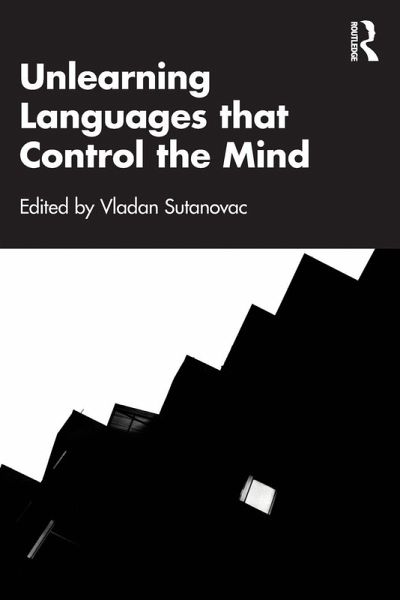
Originally an edited collection, ULCM is to be read as a continuous multi-voiced work on what takes place when we forget that unlearning is a part of our existence as much as learning.
Originally an edited collection, ULCM is to be read as a continuous multi-voiced work on what takes place when we forget that unlearning is a part of our existence as much as learning.
Vladan Sutanovac is a cognitive scientist, cognitive/experimental (ethno) pragmatist, cognitive semanticist and philosopher of language and mind. He holds a PhD in intercultural/cognitive pragmatics, cognitive/ethnosemantics and philosophy of language and mind; a soon¿in¿hand MSc in cognitive science; Mag. phil. in applied linguistics; and MA in English language and literature. His research focuses on the investigation of cognitive underpinnings of linguistic cultures, speech act use and abuse, meaning¿making practices across cultures as well as the micröphenomenological and neurophysiological underpinnings of affective perception/plasticity and affective disorders (with application in non¿invasive therapeutic practice).
Inhaltsangabe
1. Analyzing the processes and Consequence of the Russian Encroachment of Body, Mind, and Soul in Fiction (Zainab Faiz) 2. From Language to Psychology and Back Again: The role of language and emotions in political and psychological mind engineering - Decolonising the indigenous mind? (Daria Schwalbe) 3. Manufacturing consent through linguistic interpellation one "spin" at a time: exploring the dialogic architectonics of a mind as a "spin room" (Vlad Shu) 4. Engineering adaptive conspiracies: online cults and the case of QAnon (Rita Gsenger) 5. The Green Spectacle: On the Relationship Between Capitalism and Nature (Vincenzo Maria Di Mino) 6. Clarks' Doll Experiment Revisited: Omnipresent Ideology and the Two Paths of Pressurization (Jonathan Brownlee) 7. Bastions against "Rehabilitation" and Sanctuaries for Memory: Analyzing the Power of Prison Diaries from Kenya, China, and Argentina (Vivienne Tailor) 8. The Rhetoric of Fear and Safetyism and how this rhetoric acts on subjects and calls into being authoritative power structures (David Stubblefield) 9. Advertising Activism: Exploring Advertisements of Cultural Productions of West Bengal during Bangladesh Liberation War 1971 (Tiyasha Sengupta) 10. Taiwanese and Chinese: Ethnic disparity created by political ideologies (Chris Shei) 11. The economic mind psychological and biological bases: A cognitive-complex approach (Daniela Cialfi)
1. Analyzing the processes and Consequence of the Russian Encroachment of Body, Mind, and Soul in Fiction (Zainab Faiz) 2. From Language to Psychology and Back Again: The role of language and emotions in political and psychological mind engineering - Decolonising the indigenous mind? (Daria Schwalbe) 3. Manufacturing consent through linguistic interpellation one "spin" at a time: exploring the dialogic architectonics of a mind as a "spin room" (Vlad Shu) 4. Engineering adaptive conspiracies: online cults and the case of QAnon (Rita Gsenger) 5. The Green Spectacle: On the Relationship Between Capitalism and Nature (Vincenzo Maria Di Mino) 6. Clarks' Doll Experiment Revisited: Omnipresent Ideology and the Two Paths of Pressurization (Jonathan Brownlee) 7. Bastions against "Rehabilitation" and Sanctuaries for Memory: Analyzing the Power of Prison Diaries from Kenya, China, and Argentina (Vivienne Tailor) 8. The Rhetoric of Fear and Safetyism and how this rhetoric acts on subjects and calls into being authoritative power structures (David Stubblefield) 9. Advertising Activism: Exploring Advertisements of Cultural Productions of West Bengal during Bangladesh Liberation War 1971 (Tiyasha Sengupta) 10. Taiwanese and Chinese: Ethnic disparity created by political ideologies (Chris Shei) 11. The economic mind psychological and biological bases: A cognitive-complex approach (Daniela Cialfi)
Es gelten unsere Allgemeinen Geschäftsbedingungen: www.buecher.de/agb
Impressum
www.buecher.de ist ein Internetauftritt der buecher.de internetstores GmbH
Geschäftsführung: Monica Sawhney | Roland Kölbl | Günter Hilger
Sitz der Gesellschaft: Batheyer Straße 115 - 117, 58099 Hagen
Postanschrift: Bürgermeister-Wegele-Str. 12, 86167 Augsburg
Amtsgericht Hagen HRB 13257
Steuernummer: 321/5800/1497
USt-IdNr: DE450055826