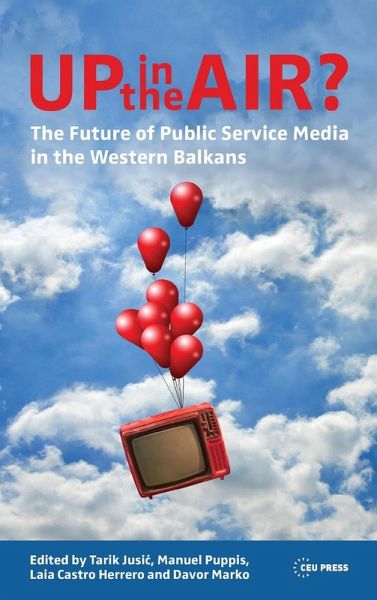
The agenda for transition after the demise of communism in the Western Balkans made the conversion of state radio and television into public service broadcasters a priority, converting mouthpieces of the regime into public forums in which various interests and standpoints could be shared and deliberated. There is general agreement that this endeavor has not been a success. Formally, the countries adopted the legal and institutional requirements of public service media according to European standards. The ruling political elites, however, retained their control over the public media by various…mehr
The agenda for transition after the demise of communism in the Western Balkans made the conversion of state radio and television into public service broadcasters a priority, converting mouthpieces of the regime into public forums in which various interests and standpoints could be shared and deliberated. There is general agreement that this endeavor has not been a success. Formally, the countries adopted the legal and institutional requirements of public service media according to European standards. The ruling political elites, however, retained their control over the public media by various means. Can this trend be reversed? Instead of being marginalized or totally manipulated, can public service media become vehicles of genuine democratization? A comparison of public service media in seven countries (Albania, Bosnia & Herzegovina, Croatia, Kosovo, Montenegro, North Macedonia, and Serbia) addresses these important questions.
Tarik Jusic is Lecturer and Guarantor of the study program at the School of Communication and Media, University of New York in Prague, Czech Republic. Manuel Puppis is Professor at the Department of Communication and Media Research (DCM), University of Fribourg, Switzerland. Laia Castro is Senior Researcher and Teaching Associate at the Department of Communication and Media Research, University of Zurich, Switzerland, and Lecturer at Universitat Internacional de Catalunya, Barcelona. Davor Marko is Balkans program manager at Thomson Foundation in Belgrade, Serbia, and research fellow at the Centre for Media, Data and Society, Central European University.
Inhaltsangabe
List of Tables, List of Figures, Preface and Acknowledgments, Chapter 1. Challenges and Prospects of Public Service Broadcasting in the Western Balkans Laia Castro Herrero, Tarik Jusi?, Davor Marko, and Manuel Puppis PART I: WESTERN BALKAN MEDIA SYSTEMS Chapter 2. Public Service Media in Albania: RTSH's Reforming Struggles Blerjana Bino Chapter 3. The Future of Public Service Broadcasting in Bosnia and Herzegovina Nidara Ahmetaevi? and Tea Hadiristi? Chapter 4. The Future of Public Service Broadcasting in Croatia Davor Marko Chapter 5. The Future of Public Service Broadcasting in Kosovo Naser Miftari Chapter 6. The Future of Public Service Broadcasting in Montenegro Nata a Rui? Chapter 7. Four Normative Principles for Participatory Public Service Model in North Macedonia Sneana Trpevska and Igor Micevski Chapter 8. The Future of Public Service Broadcasting in Serbia Davor Marko Part II. COMPARATIVE PERSPECTIVES Chapter 9. The Iron Law of Public Service Television Péter Bajomi-Lázár Chapter 10. Overcoming Path Dependencies in PBS Developments in Southeast Europe Zrinjka Peruko Chapter 11. Public Service Broadcasting in Central and Eastern Europe and the Western Balkans: Mission, Values, and Challenges Gregory Ferrell Lowe Chapter 12. Public Service Media in the Context of Adaptation and Change: A Call for Organizational Culture Analysis Micha? G?owacki Chapter 13. Between The Hammer and the Anvil: Public Service Broadcasters in the Western Balkans Squeezed Between Commercialization and Politicization Marko Milosavljevi?and Melita Poler Kova?i? Chapter 14. Digital Switchover and PSM in the Western Balkans Sally Broughton Micova Chapter 15. Prospects for Post Switchover Media Policy in the Western Balkan Countries Kenneth Murphy Chapter 16. State of the Art and the Future of PSM in the Western Balkans Barbara Thomass,List of Contributors, Index
List of Tables, List of Figures, Preface and Acknowledgments, Chapter 1. Challenges and Prospects of Public Service Broadcasting in the Western Balkans Laia Castro Herrero, Tarik Jusi?, Davor Marko, and Manuel Puppis PART I: WESTERN BALKAN MEDIA SYSTEMS Chapter 2. Public Service Media in Albania: RTSH's Reforming Struggles Blerjana Bino Chapter 3. The Future of Public Service Broadcasting in Bosnia and Herzegovina Nidara Ahmetaevi? and Tea Hadiristi? Chapter 4. The Future of Public Service Broadcasting in Croatia Davor Marko Chapter 5. The Future of Public Service Broadcasting in Kosovo Naser Miftari Chapter 6. The Future of Public Service Broadcasting in Montenegro Nata a Rui? Chapter 7. Four Normative Principles for Participatory Public Service Model in North Macedonia Sneana Trpevska and Igor Micevski Chapter 8. The Future of Public Service Broadcasting in Serbia Davor Marko Part II. COMPARATIVE PERSPECTIVES Chapter 9. The Iron Law of Public Service Television Péter Bajomi-Lázár Chapter 10. Overcoming Path Dependencies in PBS Developments in Southeast Europe Zrinjka Peruko Chapter 11. Public Service Broadcasting in Central and Eastern Europe and the Western Balkans: Mission, Values, and Challenges Gregory Ferrell Lowe Chapter 12. Public Service Media in the Context of Adaptation and Change: A Call for Organizational Culture Analysis Micha? G?owacki Chapter 13. Between The Hammer and the Anvil: Public Service Broadcasters in the Western Balkans Squeezed Between Commercialization and Politicization Marko Milosavljevi?and Melita Poler Kova?i? Chapter 14. Digital Switchover and PSM in the Western Balkans Sally Broughton Micova Chapter 15. Prospects for Post Switchover Media Policy in the Western Balkan Countries Kenneth Murphy Chapter 16. State of the Art and the Future of PSM in the Western Balkans Barbara Thomass,List of Contributors, Index
Es gelten unsere Allgemeinen Geschäftsbedingungen: www.buecher.de/agb
Impressum
www.buecher.de ist ein Internetauftritt der buecher.de internetstores GmbH
Geschäftsführung: Monica Sawhney | Roland Kölbl | Günter Hilger
Sitz der Gesellschaft: Batheyer Straße 115 - 117, 58099 Hagen
Postanschrift: Bürgermeister-Wegele-Str. 12, 86167 Augsburg
Amtsgericht Hagen HRB 13257
Steuernummer: 321/5800/1497
USt-IdNr: DE450055826