
Andere Kunden interessierten sich auch für
 US Business Cycles 1954-202031,99 €
 Personal Income During Business Cycles70,99 €
 BUSINESS CYCLES57,99 €
![Business Cycles [Volume One]]( "Business Cycles [Volume One]") Business Cycles [Volume One]31,99 €
Business Cycles [Volume One]31,99 €![Business Cycles [Volume Two]]( "Business Cycles [Volume Two]") Business Cycles [Volume Two]38,99 €
Business Cycles [Volume Two]38,99 € Marxist Theory of Economic Crisis and Cycles26,99 €
 Studies in the Theory of Business Cycles51,99 €


![Business Cycles [Volume One]](https://bilder.buecher.de/produkte/47/47519/47519087m.jpg "Business Cycles [Volume One]")
![Business Cycles [Volume Two]](https://bilder.buecher.de/produkte/47/47519/47519499m.jpg "Business Cycles [Volume Two]")

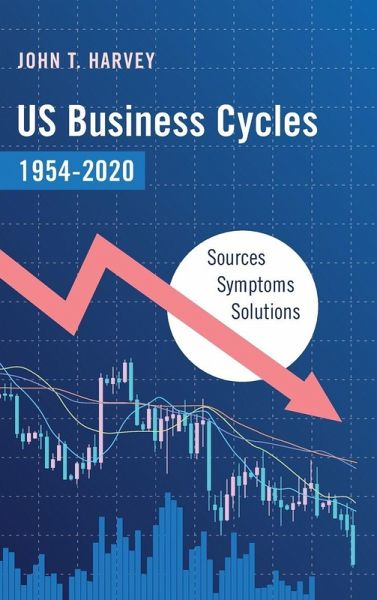
What causes cyclical downturns that wreak havoc on our lives? Most economists will say that they result from random external shocks and that, without these, the economy would sail along beautifully. In US Business Cycles 1954-2020, John Harvey argues that overwhelming evidence points to an internal dynamic, one related to the behavior of economic agents that generates what we call a business cycle. He draws on the work of past Post-Keynesian and Institutionalist scholars to create a current theory of business cycles, one that treats them as systemic and not the result of random chance. He addresses not only unemployment and bankruptcies that are the immediate consequence of the business cycle, but critical social challenges like climate change and elderly care. Examining an extensive history of US fluctuations, Harvey fills a long-standing void within the discipline by offering an alternative theory of income, employment, and price determination.