
Andere Kunden interessierten sich auch für
 Conflicting Philosophies and International Trade Law68,99 €
 The Willing World53,99 €
 The Global Collaboration against Transnational Corruption38,99 €
 The Global Collaboration against Transnational Corruption38,99 €
 Consent and Trade38,99 €
 Clash of the Economic Titans: China and the United States106,99 €
 Turkey's Accession to the European Union76,99 €

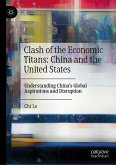
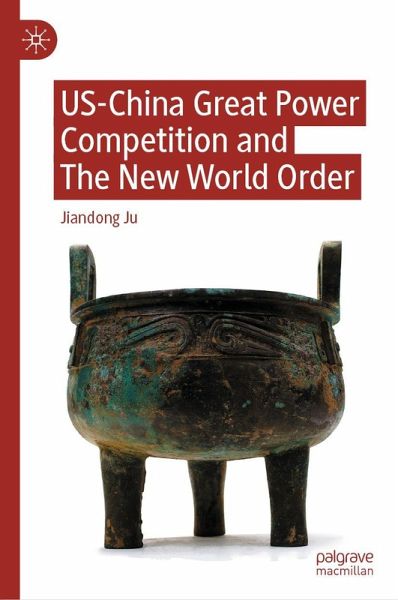
The competition between the U.S. and China, along with the evolving global order, profoundly affects the lives and livelihoods of people worldwide, now and in the future. Why does great power competition emerge? How does it evolve over time? How do great powers compete in critical areas such as industry, trade, technology, finance, security, and global governance? What are China s strategic goals and policies in this competition, and what actions should be taken?
This book offers a reader-friendly yet systematic and professional analysis of nearly all key aspects of contemporary great power competition. It creates a theoretical framework for understanding great power rivalry and provides comprehensive, coherent solutions to the most pressing issues in the competition. Following the outbreak of the U.S.-China trade war in 2018, the author introduced an undergraduate course titled The U.S.-China Trade Disputes and the Re-Architecture of Globalization at Tsinghua University. The course was awarded the National First-Class Undergraduate Course designation by the Chinese Ministry of Education in 2023. The book draws from the author s teaching materials, alongside decades of professional research, teaching, and personal experience. It therefore serves as an invaluable reference for anyone seeking to understand how Chinese society has responded to and navigated great power competition.
This book offers a reader-friendly yet systematic and professional analysis of nearly all key aspects of contemporary great power competition. It creates a theoretical framework for understanding great power rivalry and provides comprehensive, coherent solutions to the most pressing issues in the competition. Following the outbreak of the U.S.-China trade war in 2018, the author introduced an undergraduate course titled The U.S.-China Trade Disputes and the Re-Architecture of Globalization at Tsinghua University. The course was awarded the National First-Class Undergraduate Course designation by the Chinese Ministry of Education in 2023. The book draws from the author s teaching materials, alongside decades of professional research, teaching, and personal experience. It therefore serves as an invaluable reference for anyone seeking to understand how Chinese society has responded to and navigated great power competition.